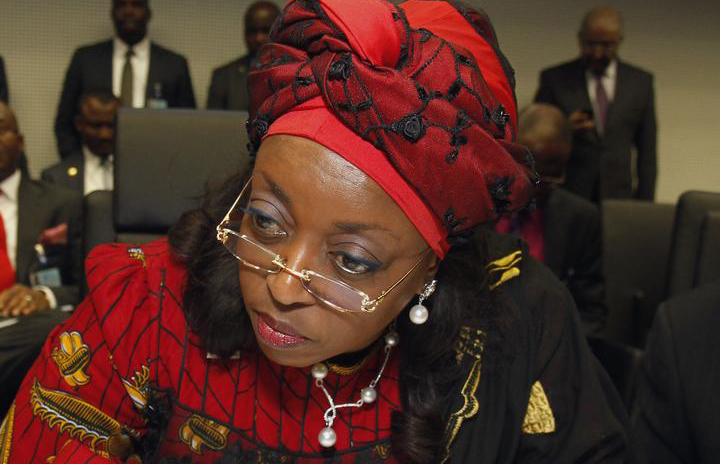
The acquittal of former Petroleum Resources Minister Diezani Alison-Madueke by a UK court has not settled the separate asset-recovery cases involving her in Nigeria, the Human and Environmental Development Agenda (HEDA) said on Sunday.
HEDA said the 17 June verdict of the Southwark Crown Court jury covered only the bribery charges prosecuted under UK law. It said the decision did not determine the outcome of separate investigations, criminal proceedings or forfeiture cases in Nigeria.
The position puts the focus on the legal cases and assets being handled by Nigerian authorities after the UK court decision.
UK verdict limited to British charges
HEDA chairman Olanrewaju Suraju said the British judgment should be respected within the limits of the case heard there.
“The UK judgment should be respected for what it is: a decision on the specific criminal charges for crimes committed under the UK laws that were before the court.


“It should neither be misrepresented as proof of guilt nor as a blanket determination of every allegation, investigation or asset-recovery proceeding connected to the former minister,” Suraju said.
READ RELATED NEWS
Diezani walks free as UK court clears her after 11-year bribery probe
Ex-minister Diezani Madueke bribery trial concludes in UK as jury awaits verdict
Drama as Diezani tells UK Court: “NNPC Funded My Lifestyle”
HEDA said it had monitored Alison-Madueke’s case for years and included it in its Compendium of 100 High-Profile Corruption Cases.
The organisation said its 2020 edition recorded attempts to bring the former minister before a Nigerian court. These included an order directing the Economic and Financial Crimes Commission (EFCC) to produce her for trial.
It also said it had tracked forfeiture proceedings involving properties and other assets connected to Alison-Madueke.
Some of those proceedings involved challenges to EFCC attempts to dispose of forfeited assets, HEDA said.
The organisation said criminal prosecution and asset recovery are separate legal processes. As a result, the outcome of a criminal case does not automatically settle the ownership or status of assets being considered in separate proceedings.
HEDA said the EFCC and other relevant agencies should assess the available evidence independently before pursuing any viable Nigerian cases.
It also said such proceedings must respect constitutional safeguards, including fair hearing and protection against double jeopardy.
Group wants clarity on recovered assets
HEDA said the Alison-Madueke case has an international asset-recovery dimension, with earlier proceedings involving properties and other assets connected to her in the UK and United States.
It asked Nigerian authorities to clarify the status of the various corruption cases and asset-recovery proceedings involving the former minister.
The organisation also demanded greater transparency in the handling of recovered and forfeited assets.
It said Nigerians should know what has been recovered, where the assets are located, how they are being managed and how recovered funds are being deployed.
HEDA said Nigeria should not depend on foreign courts to determine whether Nigerians accused of corruption should face justice.
“Nigeria must not wait for foreign courts to determine whether Nigerians accused of corruption should face justice.
“Our institutions must sustain and improve the investigative capacity, evidence-gathering systems and international cooperation mechanisms required to pursue complex corruption cases, wherever the proceeds may have been moved,” it said.
The important test, for Suraju, is Nigeria’s capacity to handle credible corruption cases and recover public resources through its own legal institutions.
For More News Details, Visit New Daily Prime.