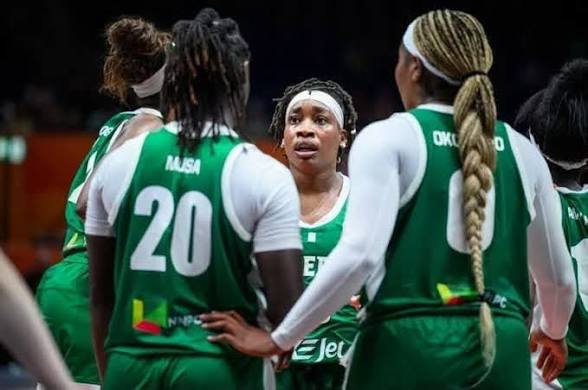
Nigeria’s D’Tigress crashed out of the 2026 FIBA Women’s World Cup after France dismantled them 111-56 in Berlin, closing a group stage that never got off the ground.
The defeat capped a third straight loss at the tournament, following earlier setbacks against South Korea and Hungary, and dropped the African champions to the bottom of their group.
France wasted no time asserting control. The European side stormed to a 31-13 lead after the first quarter, then doubled down before halftime to push the margin to 65-26. By the third quarter, France had stretched the gap to a staggering 95-36, effectively ending the contest long before the final buzzer.
Read also on New Daily Prime:
D’Tigress touch down in Berlin ahead of World Cup group B opener
How D’Tigress won 7th FIBA AfroBasket title, bagged national honour, FG incentives
D’Tigress rallied briefly in the fourth quarter, but the effort barely dented a deficit that had already ballooned beyond recovery. They fell by 55 points, their heaviest loss of the tournament.


The result stings more given the team’s recent trajectory. D’Tigress enter this World Cup as reigning continental champions, having claimed a fifth consecutive Women’s AfroBasket title.
They also broke new ground at the Olympics, reaching the quarter-finals for the first time in program history. That momentum, however, has repeatedly failed to carry over to the World Cup stage a pattern now stretching across three tournament appearances.
Nigeria first competed at the FIBA Women’s World Cup in 2018, where they surprised many by advancing to the quarter-finals still their best showing at the event. That run suggested D’Tigress could translate African dominance into global competitiveness.
Four years later, though, the team never got the chance to build on it. Nigeria qualified for the 2022 World Cup but withdrew after the Federal Government imposed a blanket ban on the country’s national basketball teams, opening the door for Mali to take their place instead.
The suspension cost D’Tigress a crucial cycle of high-level international experience, one that rivals like France, the United States, and Australia used to sharpen their rosters against elite opposition.
Returning in 2026, D’Tigress faced a truer test of where they stand globally and the results exposed the gap.
Losses to South Korea and Hungary signaled trouble early, but the France game revealed just how far Nigeria trails the sport’s traditional powers when it comes to depth, shooting consistency, and in-game adjustments. Continental success has not been enough to close that distance.
The pattern raises pointed questions for Nigerian basketball administrators. AfroBasket titles have become almost routine for D’Tigress, but converting continental supremacy into consistent World Cup performances remains elusive.
Without sustained investment in year-round competitive exposure friendlies against top-tier nations, extended training camps, and international scrimmages Nigeria risks repeating this cycle: dominant in Africa, overwhelmed on the world stage.