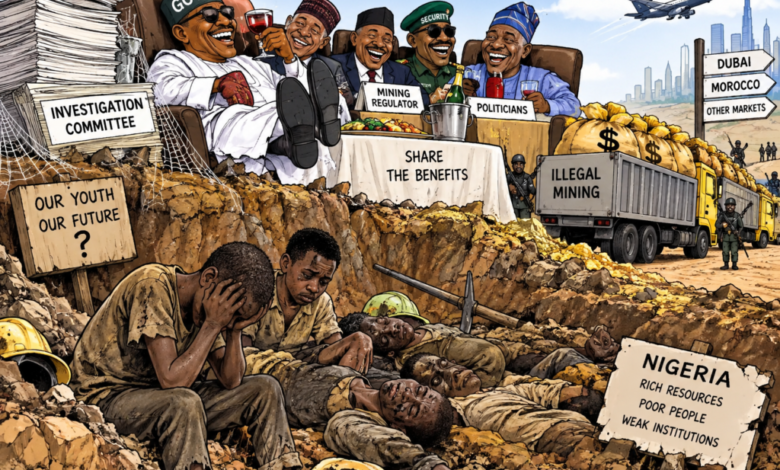
It was once said, in reference to the experience of the United Kingdom, that the best way to bury a problem is to set up a committee. Against this background, it is not out of place to be skeptical about the independence and effectiveness of the investigative panel constituted to probe the deaths of 37 teenagers allegedly involved in illegal mining in Niger State.
This skepticism is not borne out of cynicism. It is rooted in the disturbing reality that mining in Nigeria has, over the years, become intertwined with state capture, criminality and illegal economic networks, exposing the institutional weaknesses of the Nigerian state. Any investigation into such a complex ecosystem must therefore be insulated from political influence and vested interests if it is to uncover the truth.
A political economy has emerged around illegal mining, stretching back decades and becoming increasingly entrenched. It has become even more pronounced against the backdrop of an economic crisis characterised by growth without corresponding development. This contradiction explains, in part, why young Nigerians who ought to be in school or acquiring productive skills are instead working in dangerous mining sites, often without adequate protection, regulation or supervision.
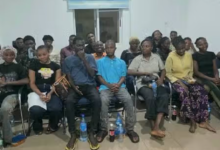
The death of 37 teenagers should not, therefore, be treated simply as another tragic accident. It should compel the country to confront the structural conditions that make such tragedies possible.
The economic consequences are equally grave. Illegal gold mining is booming at a time when gold prices are at record highs and governments around the world are increasing their gold reserves as a hedge against currency turbulence and geopolitical instability. Nigeria, ironically, possesses significant gold deposits but continues to lose substantial economic value through unregulated and criminal exploitation of the resource.
Countries such as Ghana are increasingly recognising the strategic importance of adding value to locally mined gold through processing and refining. Nigeria cannot afford to remain a spectator while other countries develop sophisticated value chains around resources that exist within our own borders. This should be a wake-up call.
The illegal mining economy deprives the government of revenue at a time when it needs more resources to tackle insecurity and fund development. More troubling is the substantial cash flow available to those operating outside the law. The international dimension of the trade also demands scrutiny. The movement of Nigerian gold into international markets raises questions about the supply chains, intermediaries, financing arrangements and foreign beneficiaries connected to the trade.
The security implications should worry every Nigerian. The experiences of Sudan, the Democratic Republic of Congo and other countries where control over natural resources has fuelled armed conflict offer sobering lessons. Resource exploitation, combined with weak institutions, corruption, organised crime and mass youth unemployment, can become a catalyst for instability.
The economics of illegal mining are also incompatible with a strong democratic state. In some areas, criminal operators have created parallel systems of revenue collection, protection and security. In effect, a parallel economy — and potentially a parallel authority — is emerging in parts of the country.
This is why the Niger investigation must go beyond identifying the immediate cause of the deaths. It must examine the entire mining value and supply chain, identify financiers, operators, buyers and exporters, and determine whether officials or regulatory agencies failed in their responsibilities. The financial flows and possible international connections must also be subjected to forensic scrutiny.
We condole with the families of the victims and support calls for proper autopsies and, where necessary, a coroner’s inquest. The families and communities deserve answers and closure. But an investigation that produces no consequences will achieve little.
The government must strengthen mining regulation, improve inter-agency coordination, protect vulnerable communities and ensure that Nigeria derives legitimate economic value from its mineral resources. Where wrongdoing is established, those responsible must face the law.
This is a time for reflection, not propaganda. Illegal mining is a symptom of deeper failures involving poverty, unemployment, corruption, weak regulation and insecurity. Nigeria must confront these structural problems before the illegal mining economy grows beyond the capacity of the state to control it.
The death of 37 young Nigerians must not become another statistic. It must be a turning point. We pray for the repose of the souls of the deceased and demand the corrective measures necessary to prevent a recurrence.
What do you think about this?
Drop your opinion in the comment section.
FOLLOW US & Share this with someone who needs to see this.