Ethiopia’s army chief has accused Eritrea, Sudan and Egypt of supporting forces fighting the federal government as renewed clashes in the northern Tigray region intensify, raising concerns about further instability in the Horn of Africa.
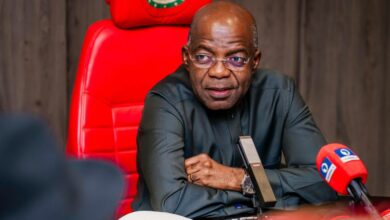
Field Marshal Birhanu Jula, chief of the Ethiopian National Defense Force, said Ethiopia was confronting armed groups that were allegedly supported by external powers.
“We are fighting forces that are organised and allied to serve the interests of external forces,” Jula said in remarks broadcast by the Ethiopian military.
He alleged that Eritrea and the Tigray People’s Liberation Front (TPLF) could not achieve their objectives without external assistance.


“Neither Shaebia (Eritrea) nor the TPLF can achieve anything alone, even if they are allied, unless they are backed, supported and supplied by Sudan, Egypt and other external powers,” he said.
Jula did not provide evidence publicly supporting the allegations.
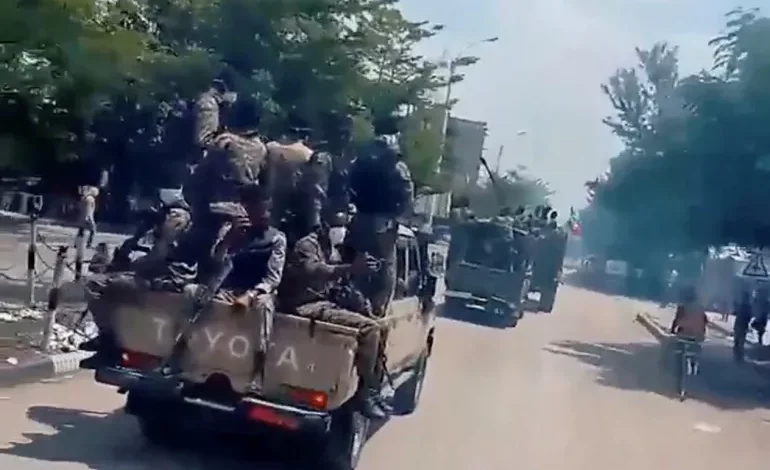
The accusations come as fighting between Ethiopian federal forces and the TPLF has spread across Tigray and into neighbouring Amhara and Afar regions.
GOVERNMENT FORCES CAPTURE STRATEGIC TOWN
The latest fighting has seen significant movement on several fronts.
Ethiopian government forces and allied fighters said they had captured Alamata, a strategically important town in southern Tigray, after days of fighting.
Video verified by Reuters showed soldiers carrying Ethiopian flags in the town, while diplomatic sources also confirmed that Alamata had fallen. The town is about 120 kilometres south of Mekelle, Tigray’s regional capital, and is an important supply route for food, fuel and military equipment.
The development followed an offensive by Tigrayan forces that began last week. The TPLF had seized several airports and advanced into neighbouring Afar and Amhara
READ RELATED NEWS
Ethiopian Airlines’ state-of-the-art A350-1000 fleet arrives Lagos airport
Ethiopia conflict escalates as Sudan rejects support allegations
Ethiopia conflict escalates as Sudan rejects support allegations
In Afar, Tigrayan forces reportedly captured the town of Erebti, while government forces have launched counterattacks.
The renewed fighting represents a serious challenge to the 2022 Pretoria peace agreement, which ended a two-year war between the Ethiopian government and TPLF forces.
SUDAN REJECTS ETHIOPIA’S ALLEGATIONS
Sudan’s armed forces have rejected Ethiopia’s accusation that Khartoum is supporting forces fighting the Ethiopian government.
In a statement, Sudan’s military described the allegations as “baseless” and said Sudan remained committed to international law and the principles of good-neighbourly relations.
Sudan has separately accused Ethiopia of supporting its rival, the Rapid Support Forces (RSF), in Sudan’s ongoing civil war. Those competing allegations have not been independently verified.
Egypt has also rejected suggestions that it is interfering in Ethiopia’s internal affairs.
Egyptian Foreign Ministry spokesperson Nader Zaki said Cairo’s foreign policy was based on respect for the sovereignty, unity and territorial integrity of states.
“Accordingly, any allegations casting doubt on Egypt’s commitment to these established principles are baseless,” Zaki said.
The latest exchange of accusations comes amid already strained relations between Ethiopia and its neighbours over security, regional influence and access to the Red Sea.
HUMAO SITUATION WORSENS
The renewed fighting is also raising humanitarian concerns.
Médecins Sans Frontières has reported a sharp increase in people wounded in the fighting arriving at hospitals in Tigray. The Associated Press reported that MSF had treated hundreds of war-wounded patients at hospitals in the region.
A humanitarian source estimated that about 150,000 people had been displaced in Afar, although the exact figure could not be independently confirmed.
Communications have also been disrupted in parts of Tigray, making it difficult to independently assess developments and humanitarian needs on the ground.
The International Committee of the Red Cross said it had evacuated 161 people from Mekelle to the capital of neighbouring Afar state, including African Union monitors, federal police officers, Ethiopian Airlines employees and Red Cross personnel.
CONCERNS OVER WIDER REGIONAL INSTABILITY
The escalation has raised concerns that Ethiopia’s renewed internal conflict could further complicate already tense relations across the Horn of Africa.
The region is also dealing with Sudan’s prolonged civil war and disputes involving Ethiopia’s relations with Eritrea and Egypt.
For Ethiopia, the immediate challenge is to contain the fighting and prevent the collapse of the Pretoria peace agreement from developing into another prolonged conflict.
For civilians in Tigray, Amhara and Afar, however, the renewed violence has already brought displacement, casualties and disruption to essential services.
With fighting continuing and accusations being exchanged between Ethiopia and neighbouring countries, international attention is now focused on whether diplomatic efforts can prevent the latest escalation from developing into a broader regional crisis.