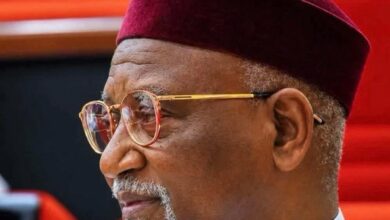
Former Lagos State University Vice-Chancellor, Prof. Ibiyemi Olatunji-Bello, has said public universities would need to charge at least N1m per student annually to achieve financial independence from government funding.
Olatunji-Bello, who completed her five-year tenure as LASU’s ninth substantive Vice-Chancellor on September 19, said the cost of running a modern university had outgrown the revenue generated from the low fees charged by many public institutions.
She made the remarks in an interview with The PUNCH while reviewing her tenure, which began in 2021. LASU also recently held a valedictory session in her honour.
According to the former Vice-Chancellor, LASU’s internally generated revenue increased from about N3bn when she assumed office to N13bn during her tenure. She attributed the rise to new academic programmes, digital services, postgraduate offerings, university ventures, consultancy activities and short-term courses.


Despite the increase, she said the institution could not finance its operations solely from internally generated funds.
“Our payroll right now is over N1bn per month. All the N13bn IGR does not cover our salaries,” Olatunji-Bello said.
She added that LASU spends about N140m monthly on electricity and still has to provide funds to cover other recurrent obligations, including cleaning, security, diesel and general maintenance.
The former VC further disclosed that the university had to supplement its salary bill by about N240m each month, illustrating the gap between revenue and expenditure.
Her position is that universities seeking full financial self-sustainability would have to reconsider the prevailing fee structure.
“Any public university that wants to sustain financial independence will have to charge school fees of not less than N1m per student,” she said.
Olatunji-Bello linked the proposed increase to the cost of maintaining academic standards and the physical environment. She noted that universities operate laboratories, libraries, hostels, power systems and other facilities that require continuous expenditure.
“You can’t have academic excellence without paying for it,” she said, while calling on parents to prioritise the education of their children.
The financial debate comes against the backdrop of LASU’s own experience during Olatunji-Bello’s tenure. She said the university initially generated about N3bn in dedicated revenue, but set successive targets of N7bn, N10bn and eventually N13bn.
Digitalisation played a significant role in the increase, she said. The university moved several processes online and introduced digital services covering admission, screening, academic records and certificate collection. She also said LASU introduced more than 75 postgraduate programmes during the period.
The former VC, however, acknowledged that revenue generation alone could not resolve the institution’s financial pressures.
She said the university’s student population stands at about 85,000, covering postgraduate and part-time students, although roughly 12,000 students are on campus at any given time.
Accommodation also remains limited. Olatunji-Bello said about 8,000 students are currently housed in university-owned facilities and hostels operated through public-private partnerships.
Her five-year tenure also produced changes in research and innovation. She said LASU established a N5m competitive internal research grant for academic staff, while seven members of staff secured more than N29m through the Lagos State Research and Innovation Council between 2022 and 2025.
The university also secured a N3bn TETFund Centre of Excellence in 2026, which she said was the only one of its kind in the South-West.
Olatunji-Bello highlighted the institution’s digital transformation as another major achievement. She said students can now obtain certificates online within minutes, while an instant verification system allows third parties to authenticate LASU certificates without requiring a physical visit.
She also disclosed that LASU has an artificial intelligence policy approved by its Senate. The policy permits the use of AI for academic purposes but requires ethical use and appropriate acknowledgement where the technology is deployed.
Her administration did not complete every project it conceived. She identified the proposed Central Research Laboratory as one major unfinished project and said the Innovation Hub also needed completion.
Olatunji-Bello, who described the 2024 students’ protest over examination arrangements as the lowest point of her tenure, said her administration managed industrial relations through regular engagement with the university’s four major unions.
She also cited LASU’s recognition by the JAMB admission process and its performance in the UI GreenMetric sustainability ranking among the achievements of her tenure.
As she leaves office, she said the Lagos State Government should complete outstanding infrastructure projects and continue supporting the university’s development.
Her proposed N1m annual fee therefore comes from a larger argument about the economics of public higher education: whether universities can maintain expanding academic programmes, growing student populations, research facilities, digital infrastructure and rising operating costs while depending on relatively low student charges and government subventions.
Olatunji-Bello’s figures suggest that even a substantial increase in internally generated revenue may not, by itself, close that gap.
READ RELATED NEWS UPDATES
Two LASU dons vie for deputy vice’s post
LASU curriculum change leaves students battling missing, conflicting results
Sanwo-Olu expands LASUCOM, converts isolation centres for medical training