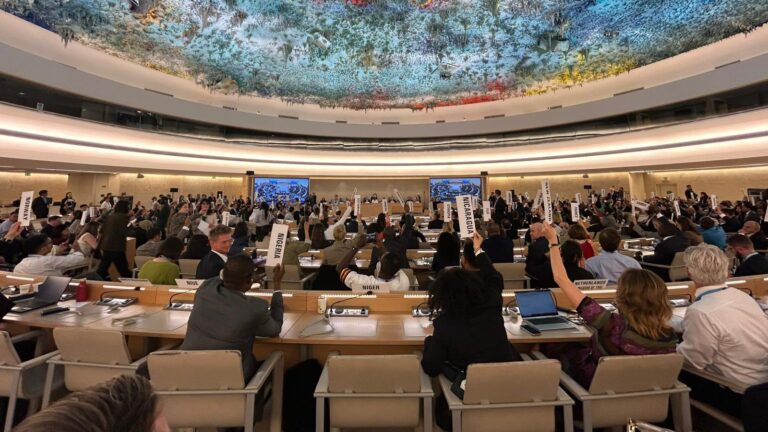
World leaders meeting in New York on Friday, 25 September, 2026, were told that a critical part of the global pandemic plan remains unfinished, and time is running out to complete it.
UN Deputy Secretary-General Amina Mohammed made the warning at the second UN General Assembly High-Level Meeting on Pandemic Prevention, Preparedness and Response.
She said the unfinished part is called the Pathogen Access and Benefit-Sharing system, a plan meant to help countries share dangerous germs and the vaccines made from studying them.
This matters now because countries must agree on it before the World Health Assembly meets in May 2027, or the wider Pandemic Agreement cannot move forward for countries to consider and ratify.


What the unfinished deal is about
The Pathogen Access and Benefit-Sharing system is an add-on to the WHO Pandemic Agreement, a treaty countries adopted to prepare better for future outbreaks.
The system would allow countries to quickly share samples of dangerous germs with pandemic potential. In return, they would get fair access to any vaccines, medicines or test kits made from studying those germs.
Without this system working properly, poorer countries could struggle to get vaccines on time, even if they were the ones who shared the virus samples that helped create those vaccines.
READ RELATED NEWS
Consumption of unsafe food kills 15m people yearly — WHO
WHO, UNICEF, Gavi restart cholera vaccines after three years
UN: Cervical cancer curable with early screening, vaccination
Speaking on behalf of UN Secretary-General António Guterres, Mohammed said the system was central to making the whole Pandemic Agreement work.
“The Pathogen Access and Benefit Sharing System, under negotiation, is critical to unlocking the full potential of the WHO Pandemic Agreement. There is no time to waste,” she said.
She asked member states to speed up the talks.
“I call on Member States to accelerate these actions. Let’s get it done. Let’s deliver the Pandemic Agreement the world is waiting for,” Mohammed said.
Why this comes down to Covid-19’s cost
WHO Director-General Dr Tedros Adhanom Ghebreyesus told the meeting that COVID-19 caused more than 20 million excess deaths between 2020 and 2023. He said the pandemic also wiped more than $10tn (£8tn) from the world economy.
Tedros said the pandemic showed weak points in how countries protect global health.
“The COVID-19 pandemic exposed and exacerbated the fault lines of global health security, and taught the world many painful lessons,” he said.
He said the commitments made at the meeting show that countries learned from those lessons, including plans to build stronger health systems and expand fair access to vaccines and treatments.
Since the first high-level meeting on this topic in 2023, countries have taken some steps forward. The WHO said governments have adopted the Pandemic Agreement itself and changed the International Health Regulations, a set of global health rules from 2005.
Countries have also built centres to watch out for new disease outbreaks, share germ samples for research, and make vaccines and test kits locally instead of depending only on other nations.
Implications
If countries cannot agree on the pathogen-sharing system before May 2027, the whole Pandemic Agreement could stall, since nations would have nothing firm to take home and approve.
This would leave the world in a similar position it was in before COVID-19, with unclear rules on how germ samples and vaccines get shared during an emergency.
Poorer nations, which often supply virus samples for research, could again find themselves last in line for vaccines, as happened during COVID-19.
Health leaders at the meeting said this must not be allowed to happen again, and called for pandemic readiness to stay a serious priority even when there is no active outbreak.
What readers should know
Dr Khalilur Rahman, President of the UN General Assembly, told the meeting that the world already has the knowledge and tools needed to fight future pandemics.
“We have the knowledge, we have the tools, we have the science and expertise, and we have the hard lessons of COVID-19,” he said.
He asked leaders to use these lessons to protect families and honour people who died during COVID-19.
Ambassador Amar Bendjama, President of the UN Economic and Social Council, said pandemic readiness also supports wider global development goals set for 2030.
He said his council can help bring together governments and other groups to work in a more organised way on this issue.
The declaration from the meeting also spoke about a One Health approach, which looks at how human health, animal health and the environment are all connected, and stressed that countries must keep working together across borders to stop future disease threats before they spread widely.
For More News Details, Visit New Daily Prime.