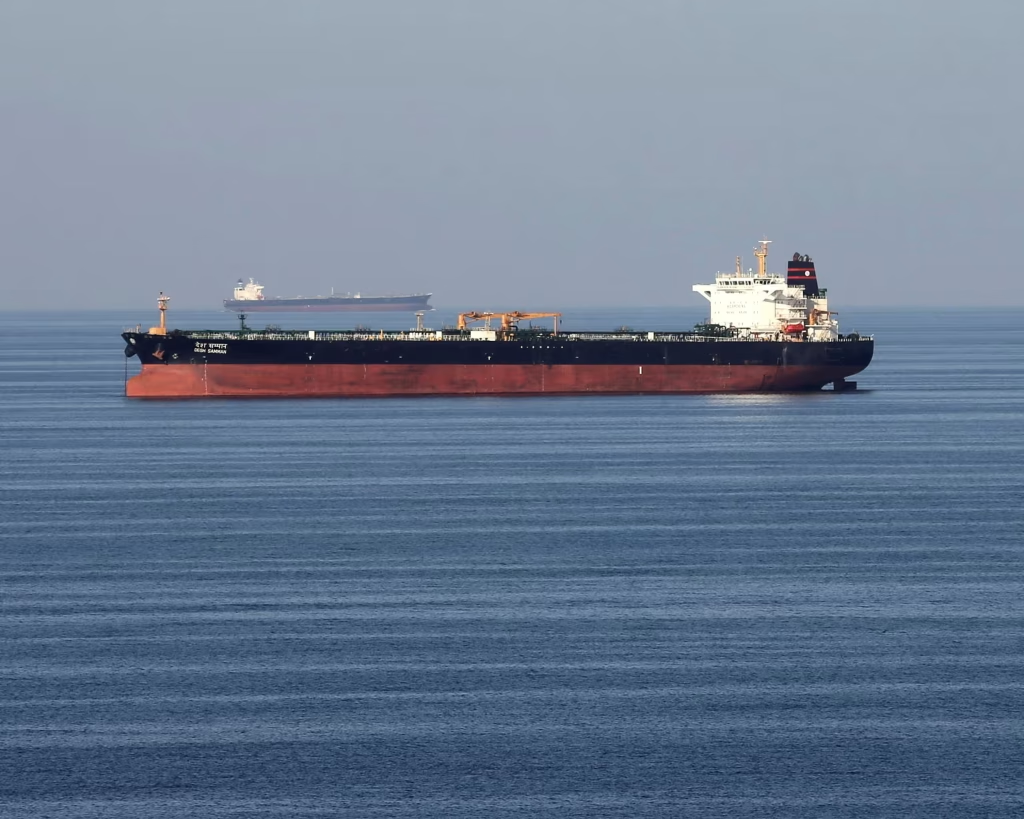
A fresh attack on a vessel in the Strait of Hormuz has heightened concerns over the security of global oil supplies, as tensions in the Middle East continue to threaten one of the world’s most important energy routes.
The United Kingdom Maritime Trade Operations (UKMTO), a British navy-affiliated maritime security organisation, said on Sunday that it had received a report of a projectile striking a vessel while it was transiting the Strait of Hormuz.
READ RELATED NEWS :
Oil prices near $100 as US-Iran tensions disrupt hormuz shipments
Saudi Arabia Condemns Iran’s Targeting of Tanker in Strait of Hormuz
UKMTO said the vessel caught fire following the incident and that its crew was evacuated. The agency did not immediately identify the vessel or establish who was responsible for the attack.
The incident has renewed concerns about the safety of commercial shipping through the strategic waterway, which connects the Persian Gulf with the Gulf of Oman and serves as a major route for crude oil and petroleum product exports from the Middle East.


Any prolonged disruption to shipping through the strait could have significant consequences for international energy markets because of the large quantities of oil normally transported through the waterway.
Concerns about energy supplies had already intensified after a drone attack prompted Saudi Arabia to temporarily shut its East-West oil pipeline. The pipeline provides an alternative route for Saudi crude exports that bypasses the Strait of Hormuz and has the capacity to transport about four million to five million barrels of oil per day.
U.S. President Donald Trump has blamed Iran for the attack on the Saudi pipeline, although Tehran has not accepted responsibility. Speaking to reporters in Dublin on Saturday, Trump said when asked whether Iran was responsible: “I think they are, probably they are.”
The latest vessel incident comes as diplomatic efforts continue to address the disruption to shipping in the region. Iran has announced that it will participate in talks hosted by Oman concerning navigation through the Strait of Hormuz.
The waterway has become a major focus of international concern because of its importance to global energy supplies. Shipping activity has fallen sharply from normal levels amid heightened security risks, according to Reuters.
The reduction in traffic has raised concerns among oil traders, governments and shipping companies that a prolonged crisis could tighten supplies and push energy prices higher.
Oil prices have already risen sharply as markets react to the possibility of further disruptions. Brent crude has recently traded above $100 a barrel, reflecting concerns that attacks on vessels and energy infrastructure could restrict the movement of oil from major producing countries.
Higher crude prices could also increase pressure on fuel costs and government budgets in countries that depend heavily on imported petroleum products.
For oil-importing countries, any sustained disruption through the Strait of Hormuz could create additional pressure on fuel supplies and raise the cost of transporting goods and services.
Shipping companies and energy traders are therefore closely monitoring developments around the waterway. Further attacks or restrictions on commercial traffic could deepen concerns about global oil supplies and place additional upward pressure on crude prices.
The latest incident has added another layer of uncertainty to an already fragile energy market, with the security of the Strait of Hormuz likely to remain a major international concern as efforts continue to prevent further disruption to maritime trade.