The Independent National Electoral Commission (INEC) has warned political parties and candidates in Oyo State against using hate speech, abusive language and inflammatory statements during political campaigns.
The commission said politicians who violate the provisions of the Electoral Act 2026 could face financial penalties and imprisonment if convicted.
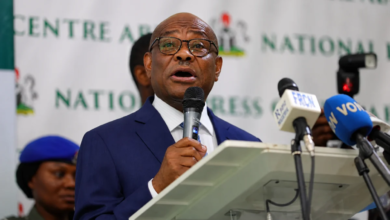
Politics Nigeria reports that the warning was issued by the Resident Electoral Commissioner (REC) in Oyo State, Professor Adeniran Tella, during a stakeholders’ meeting with political parties at the INEC office in Agodi, Ibadan, on Thursday.
Tella specifically warned that a candidate found guilty of violating the relevant provisions could be fined up to N5 million or sentenced to 12 months in prison.


Political parties found guilty of the offence could also be fined N10 million for a first offence.
The REC said the commission had become concerned about the growing use of abusive and inflammatory language in political activities as preparations for the 2027 general elections continue.
He urged political parties and their candidates to ensure that their campaigns remained focused on issues and programmes rather than personal attacks, ethnic divisions or religious sentiments.
“I urge you to abstain from all forms of hate speeches. The Commission has observed, with deep concern, a rise in abusive, intemperate and inflammatory languages during political campaigns.
“Let me be unequivocal: INEC has the statutory responsibility to monitor campaigns and enforce compliance with the Code of Conduct for Political Parties. While we are not a security agency, we shall not hesitate to apply sanctions within our administrative authority,” Tella stated.
He referred the political parties to Section 96 of the Electoral Act 2026, which places restrictions on the language that can be used during political campaigns.
The provision prohibits campaign messages or slogans that could injure religious, ethnic, tribal or sectional feelings.
It also prohibits abusive, intemperate, slanderous or base language, including statements or insinuations capable of provoking violent reactions.
Under Section 96(7), an aspirant or candidate convicted of an offence under the section is liable to a maximum fine of N5 million or imprisonment for 12 months. A political party is liable to a N10 million fine for a first offence, with further financial penalties for subsequent offences.
Tella warned political actors not to treat the provisions as mere guidelines, stressing that the commission has the responsibility to monitor campaigns and ensure that political parties comply with the established rules.
“Please note that convicted candidates will face fines of up to N5 million or 12 months’ imprisonment, while political parties will face fines of N10 million for a first offense,” he warned.
INEC has in recent weeks raised concerns over several issues that could affect the electoral process, including misinformation, disinformation, voter apathy and vote buying.
Tella had also called for stronger voter education across Oyo State and other parts of the country.
He stressed that the credibility of the 2027 elections would depend not only on activities on election day but also on how well citizens understand the electoral process before the polls.
The commission has continued to engage political parties and other stakeholders as part of efforts to prepare for the elections.
The Oyo REC said INEC would also maintain established channels of communication with political parties.
According to him, correspondence and official inquiries from parties should move from their national secretariats to INEC’s national headquarters in Abuja and then to the Resident Electoral Commissioner in the relevant state.
He said the arrangement was intended to ensure proper coordination and reduce confusion in the communication between the electoral body and political parties.
Tella also assured the parties that INEC would provide a level playing field during the electoral process.
He said the commission would remain impartial, transparent and accountable in carrying out its responsibilities.
INEC had earlier clarified that its responsibility includes monitoring political campaigns and enforcing compliance with the Code of Conduct for Political Parties.
In a separate warning earlier this month, the commission said campaign rhetoric could become electoral intimidation when it involved threats, coercion, hate speech or calls capable of provoking violence.
It also warned against statements intended to frighten voters or discourage particular groups from participating in elections.
At the Oyo stakeholders’ meeting, security agencies also cautioned political actors against conduct capable of creating tension before, during or after elections.
Representatives of the Nigeria Police Force, Nigeria Immigration Service and Department of State Services advised political parties to avoid violence, intimidation and inflammatory statements.
They urged the parties to encourage their supporters to respect the law and maintain peace throughout the electoral process.
The Inter-Party Advisory Council (IPAC) also used the meeting to appeal to political parties to ensure that information and directives discussed at the stakeholders’ meeting reached their members at the grassroots.
Mrs Olajumoke Odususi, who represented IPAC, urged the parties to take the message beyond their state and national leadership and ensure that their members at the local level were properly informed.
The meeting brought together representatives of political parties, civil society organisations, security agencies and religious bodies.