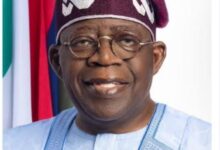
The presidential candidate of the African Democratic Congress (ADC), Atiku Abubakar, has accused President Bola Tinubu of deflecting attention from Nigeria’s worsening cost-of-living crisis by attacking his economic proposals instead of addressing the hardship facing millions of Nigerians.
In a statement issued on Tuesday through his Senior Special Assistant on Public Communication, Phrank Shaibu, Atiku said the president’s latest statement on X devoted “a substantial part” to criticising his position on the economy while deliberately refusing to mention his name.
According to Shaibu, Nigerians know Tinubu was responding to Atiku because of his calls for policies aimed at reducing the cost of fuel and easing the economic burden on citizens.
“Bola, Nigerians know exactly whose policy you were attacking. You were responding to Atiku Abubakar because he has chosen to stand with millions of Nigerians being crushed by the cost-of-living crisis,” Shaibu said.
LEADERSHIP reports that the statement was a response to Tinubu’s recent remarks on economic policy, in which the president criticised Atiku’s proposals to reduce the cost of energy and dismissed the possibility of returning to the era of fuel subsidy.
He added that Atiku had no interest in engaging the president in a personal exchange, insisting that his priority remained ordinary Nigerians struggling with rising living costs.
“Atiku has more important people to engage directly: the mother struggling to feed her children; the civil servant whose salary disappears into transportation; the farmer paying more to move produce to market; the student being pushed into debt simply to remain in school; and millions of Nigerians whose daily reality bears no resemblance to the prosperity advertised in your tweets.”
The former vice president questioned Tinubu’s recent promise that his administration would, “in the next few weeks,” introduce cheaper transportation, boost food production and provide relief for vulnerable Nigerians.
Shuaibu argued that the promise contradicted the government’s previous insistence that the hardship Nigerians had endured since the removal of fuel subsidy was the unavoidable cost of economic reforms.
“Why did Nigerians have to suffer for more than three years before your government discovered that economic growth must reach ‘the dining table and the pocket’?” he asked.
“You cannot condemn cheaper living when Atiku proposes it and rename the same objective Renewed Hope when you promise it. That is not economic consistency. It is a political convenience.”
Shuaibu also faulted the current petrol price in Nigeria, describing it as unacceptable for one of Africa’s largest oil producers.
The statement claimed that Nigerians pay significantly more for petrol than citizens of several oil-producing countries despite earning much lower incomes.
According to the statement, Saudi Arabia sells petrol at about ₦778 per litre, Kuwait sells it for about ₦872 per litre, Algeria sells it for about ₦475 per litre, Angola sells it for about ₦441 per litre and the United Arab Emirates also sells petrol below Nigeria’s estimated ₦1,400 per litre.
“These countries did not conclude that oil production requires punishing citizens at the pump. Nigeria has turned that advantage upside down.”
He further cited Libya, saying the country sells petrol for roughly ₦34 per litre despite years of political instability.
“How did your celebrated reform leave Nigerians paying vastly more for fuel while enjoying a lower standard of human development? That is not merely a pump-price debate. It is an affordability scandal.”
He argued that the current fuel price had rendered the ₦70,000 minimum wage largely ineffective.
According to him, a worker earning the statutory minimum wage would spend ₦56,000 to purchase just 40 litres of petrol at ₦1,400 per litre.
“That is 80 per cent of an entire month’s minimum wage. Before that worker buys food, pays rent, electricity, school fees or medical bills, four-fifths of his monthly wage can disappear into just 40 litres of petrol.”