The Kaduna State Government says it has recovered more than 500,000 hectares of farmland previously controlled by bandits, potentially reopening large areas of agricultural land to farmers after years of insecurity.
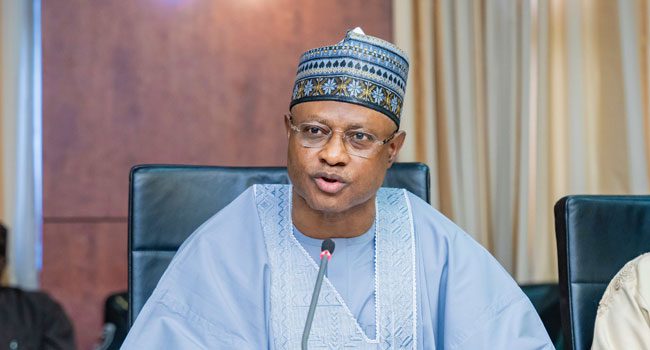
The Commissioner for Information and Culture, Ahmed Maiyaki, disclosed this on Sunday at a gala night hosted by his ministry for members of the Kano Correspondents’ Chapel of the Nigeria Union of Journalists.
The journalists were in Kaduna for their 2026 retreat, themed, “2027 General Elections: Navigating Legal, Security and Ethical Challenges in the Media.”
Maiyaki said the recovery of the land formed part of the security gains recorded under the administration of Governor Uba Sani during its first three years.


“I’m happy to tell you that the present administration under the able leadership of Governor Uba Sani has, within the past three years, recovered over 500,000 hectares of land from bandits,” he said.
The commissioner linked the development directly to the state’s agricultural prospects; he noted that insecurity had previously prevented farmers from reaching their fields.
“As you know, without security you cannot achieve anything. Before now, farmers in such areas were unable to go to their farms due to the activities of the bandits,” Maiyaki said.
His comments highlight the economic significance of reclaiming the territory. In communities affected by armed attacks, farmland can become inaccessible even when it has not been physically destroyed. Farmers may abandon cultivation because travelling to their fields exposes them to abduction, extortion, or attacks.
Restoring access to such land can therefore revive agricultural activity while reducing the pressure on farmers who have been forced to cultivate smaller or safer plots.
Security and food production
Maiyaki also said insecurity had previously affected movement along the Kaduna-Abuja route,l because of which some travellers avoid the road because of attacks.
He declared that the situation had significantly improved, and that travelling between the two locations is no longer constrained by the security conditions that prevailed in the past.
“I’m happy to say that that has now become a thing of the past because the security situation in Kaduna State has greatly improved,” he said.
The commissioner said security would continue to receive priority because it provides the foundation for economic and social development.
The state government is also combining its security efforts with agricultural support.
The administration distributed 500 trucks of fertiliser free of charge to at least 150,000 farmers across Kaduna for the 2026 farming season, according to Maiyaki.
He said the government distributed 400 trucks in 2024 and another 500 trucks in 2025, before providing the same quantity in 2026.
The intervention is intended to support food production at a time when insecurity, high input costs, and other economic pressures have placed significant strain on agricultural households.
If farmers can safely access previously abandoned land while receiving subsidised production inputs, the combination could increase cultivation and strengthen food supply within the state.
Education gains also highlighted
Maiyaki also presented education as another area where the administration had recorded progress.
He said the number of out-of-school children in Kaduna had fallen from 550,000 to 187,000.
The commissioner attributed part of the effort to measures designed to reduce the cost of movement for students and civil servants.
In July 2025, the state government purchased 100 compressed natural gas buses which it deployed to provide cheaper transportation.
Maiyaki said at least 3.5 million people had travelled on the buses since their introduction, while users had collectively saved no less than N3.8m.
He added that the Nigeria Labour Congress (NLC) had confirmed that workers saved about 40 per cent of their income through the transport scheme.
The figures presented by the commissioner place the reclamation of farmland within a larger account of the state government’s priorities, linking security with agriculture, education, and transport.
Thus, the return of farmers to land previously inaccessible because of bandit activity could be one of the most consequential outcomes of improved security.
The challenge now is to sustain that access.
Recovering territory from armed groups does not automatically restore an agricultural economy. Farmers also need continued protection, functioning roads, access to inputs, markets, and confidence that they can cultivate and harvest without being forced from their fields again.
Maiyaki’s disclosure therefore carries significance beyond the headline figure of 500,000 hectares. It points to the potential economic value of security when land that had effectively been taken out of production can be brought back into the farming cycle.
For a state seeking to expand food production, the real measure of the security gain may ultimately be whether those fields stay accessible long enough for farmers to plant, harvest, and earn a living from them.
READ RELATED NEWS UPDATES
Kaduna pay review for traditional rulers enters final stage, says Zazzau Emir
Kaduna expands support for violence victims with homes, scholarships
Kaduna deploys 1,000 armed forest guards in new push against rural insecurity