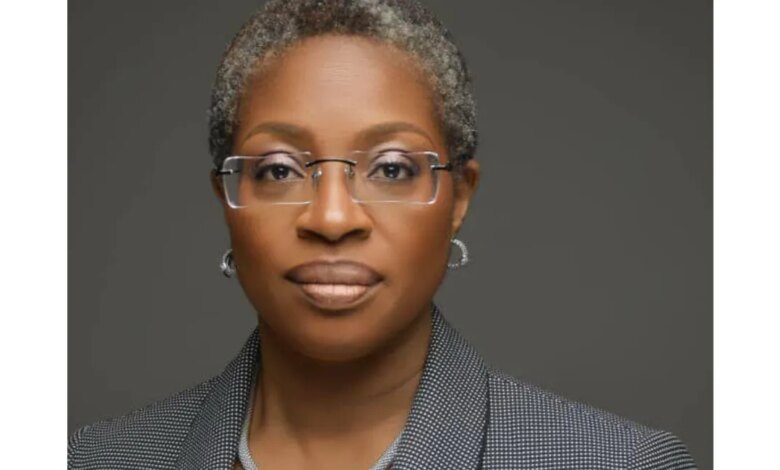
The President of the Nigerian Bar Association, Oyinkansola Badejo-Okusanya, SAN, has defended citizens’ right to record police officers while performing their lawful duties, saying law enforcement agencies should not be afraid of transparency.
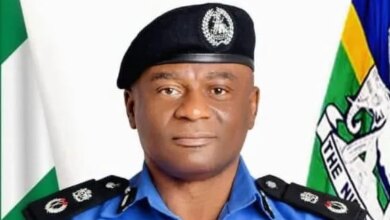
Badejo-Okusanya spoke while engaging the Inspector-General of Police, Tunji Disu, in a discussion on the legality and limits of recording police officers during official duties.
She said the issue required frank engagement between lawyers and the police, noting that both professions were partners in the effort to build a safe society that respected the rule of law.
The NBA President argued that members of the public should not automatically be prevented from recording police officers carrying out their duties, although she stressed the need to protect the privacy of officers and other individuals within the limits of the law.

“We should not be afraid of being transparent while carrying out our duties. That’s why the USA introduced body cameras for its police officers. It makes for a better society,” she said.
Badejo-Okusanya said body cameras provided a means of monitoring police conduct because officers knew their actions could be reviewed.
According to her, such measures could help identify officers involved in misconduct and ensure that appropriate sanctions were imposed, thereby discouraging others from engaging in similar acts.
She, however, acknowledged that members of the public could abuse the right to record officers, particularly where their privacy was being invaded.
“Policemen sitting down somewhere eating and people are recording them and intruding on their privacy. You know, if you don’t bring up these things and then you think about it, if you don’t put yourself in those shoes, you don’t really know these things,” she said.
She said the solution was not to reject measures promoting transparency but to establish clear legal boundaries around the right to record police officers.
Badejo-Okusanya cited the use of body cameras by police officers in the United States as an example of how transparency could strengthen accountability and public confidence in law enforcement.
“And so, as I was saying to the IGP earlier on, when the US introduced body cams for police officers, it was in order to promote that so that you yourself, you have a check,” she said.
“You know that whatever you’re doing, you have a body camera that is recording it.
“And therefore, it makes for a better society because we regulate ourselves and the few bad eggs are able to be caught and punished appropriately to serve as a deterrent.”
The NBA President said Nigeria should similarly explore progressive measures while ensuring that appropriate safeguards were put in place.
She noted that existing laws could be strengthened or properly interpreted to balance transparency in policing with individuals’ right to privacy.
“So what we need to do is not run away from these kind of progressive moves. We just need to understand the limits,” she said.
Badejo-Okusanya added that the Cybercrimes Act and other relevant laws could be reviewed or interpreted to clearly define the circumstances under which recording a police officer would amount to an infringement on privacy.
She said lawyers and police authorities should work together to establish the limits of the right and prevent its abuse.
The NBA President also expressed her willingness to continue engaging the police leadership on the matter, describing the discussion with Disu as an opportunity for a more robust conversation on the legal boundaries surrounding the recording of police officers.
She further commended Disu for his efforts in Lagos, noting that the IGP had highlighted how dialogue and cooperation could produce positive results.
The development followed comments by Disu questioning the legality and limits of citizens recording police officers while on official duty.
The IGP had said a recent court judgment on the matter appeared to have encouraged Nigerians to record police officers in different situations, describing the development as “very, very demoralising” for the force.
Disu also alleged that some people had extended the practice to recording police officers in places such as restaurants, rather than limiting it to situations where officers were performing official duties.
He subsequently appealed to the NBA to participate in a police symposium in Owerri, Imo State, where the legality and limits of recording police officers would be discussed.
Titilope Adako is a talented and intrepid journalist, dedicated to shedding light on the untold stories of Osun State and Nigeria. Through incisive reporting, she tackles a broad spectrum of topics, from politics and social justice to culture and entertainment, with a commitment to accuracy, empathy, and inspiring positive change.
What do you think about this?
Drop your opinion in the comment section.
FOLLOW US & Share this with someone who needs to see this.