Nine miners have died after heavy rainfall flooded a mining pit in Nahuta Village, Gwana District, Alkaleri Local Government Area of Bauchi State, while the tragedy continues to add to a growing string of fatal incidents in Nigeria’s mining sector.
The Bauchi State Police Command confirmed the deaths where it said the miners were working at Pit Three of Zurfi Mining Company when floodwater overwhelmed the underground site.
Police spokesman, Superintendent Nafiu Habib, said the incident occurred on September 25, after heavy rainfall began around 3pm. The company’s Purchase Manager, Kasim Abdulsalam, reported the incident to the police two days later.
According to Habib, one of the trapped workers, identified as Abner, was rescued but suffered electrocution. He was taken to General Hospital Kashere in neighbouring Gombe State, where a doctor pronounced him dead.


The scale of the incident became clearer during the subsequent rescue operation.
“The DPO Alkaleri led a team of detectives to the scene where three water pump generators were seen evacuating water from the pit to enable rescue of remaining victims,” Habib said.
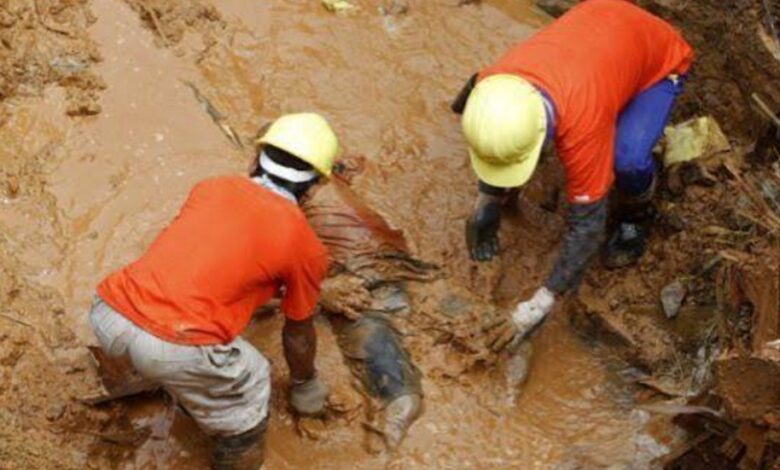
He added that the remaining eight miners were recovered from the flooded pit on September 28 and taken to General Hospital Kashere, where they were also confirmed dead.
The deceased were identified as Hamidu Ali, 40, and Saidu Abubakar, 29, both from Nasarawa State; Olije Abdulrazak, 25, from Kogi State; Musa Abdullahi, 29, Abdulrahman Mu’azu, 23, and Jafar Abbas, 24, from Bauchi State; Jose Ukese, 28, from Nasarawa State; and Haruna Alkali, 30, from Kebbi State.
READ RELATED NEWS UPDATES
Police said post-mortem examinations were conducted before the bodies were released to relatives for burial according to Islamic and Christian rites.
The immediate rescue effort also highlights how quickly a flooded mine can become inaccessible. Three water pumps had to be deployed to drain the pit before rescuers could reach the workers. The operation involved police personnel and other responders.
In February, a mining disaster in Kampani Zurak, Wase Local Government Area of Plateau State reportedly killed at least 33 miners after workers were exposed to carbon monoxide underground. A National Institute for Legislative and Democratic Studies policy brief subsequently identified mine ventilation, occupational safety, regulatory oversight and emergency response as major concerns arising from the incident.
Another mining-related incident occurred in Kano in July, where three artisanal miners died after inhaling toxic fumes from a water-pumping machine while working inside a pit that had accumulated water following heavy rainfall.
The Bauchi deaths therefore raise a question that extends beyond the intensity of the rainfall: how prepared are mining sites to deal with sudden flooding during active operations?
Nigeria’s mining regulations already contain environmental and safety provisions governing mine sites. The Minerals and Mines Regulations require measures relating to mine walls, water channels and environmental stability, underscoring the regulatory responsibility attached to mining operations.
However, the Bauchi police said investigation into the incident is still underway. This means it is too early to establish whether the flooding resulted solely from the rainfall or whether shortcomings in mine planning, drainage, warning systems, electrical safety or emergency preparedness contributed to the deaths.
That distinction will be important because the available account establishes what happened, but the investigation must establish why nine workers were unable to escape once the pit began filling with water.
Recent mining fatalities have also triggered renewed scrutiny of regulatory enforcement. Following the deaths of 37 suspected illegal miners in NSCDC custody in Niger State earlier this month, the Federal Government constituted an independent committee to investigate the circumstances surrounding that separate incident.
The Bauchi case is different because the deaths occurred during mining operations rather than in government custody. Yet both incidents have placed the safety of people involved in Nigeria’s mining economy under renewed public attention.
Police said investigations into the Nahuta tragedy are continuing.
Until the findings are released, the confirmed facts remain that heavy rainfall flooded Pit Three, nine miners died, rescue teams had to pump water from the excavation, and families were left to receive the remains of workers who had gone underground to earn a living.