The Executive Chairman of the Niger State Universal Basic Education Board, NSUBEB, Dr. Ibrahim A. Liman, has warned communities benefiting from government-funded school projects against allowing the facilities to deteriorate through vandalism, misuse or neglect.
Liman said communities must take ownership of the schools once handed over, stressing that government investment in education infrastructure could only deliver lasting benefits if residents helped to protect and maintain the facilities.
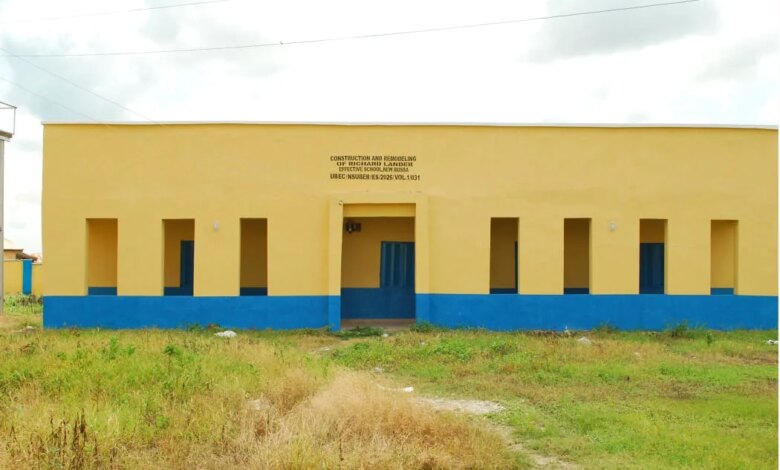
His warning came as NSUBEB inspected two completed projects under its Effective Legacy School Programme at Zango Primary School in Kontagora and Richard Lander Primary School in New Bussa, ahead of their handover.
“Communities must take ownership of these facilities and ensure they are protected. Government can provide the infrastructure, but its sustainability requires the cooperation of the people,” he said.


The chairman made the call as NSUBEB inspected two completed projects under its Effective Legacy School Programme in Kontagora and New Bussa, which are now set for handover.
The completed projects are at Zango Primary School, Kontagora, and Richard Lander Primary School, New Bussa, two of seven projects being implemented under the programme.
Liman had directed Full-Time Member III, Samuel Jonathan Mokotso, and Full-Time Member V, Mohammed Mamman Auna Dan Sokoto, to inspect the projects and ensure they complied with approved specifications and standards before handover.
During the inspection at Zango Primary School, Kontagora, Mokotso called on the benefiting community to protect the facilities and ensure they are used for their intended purpose.
He said the intervention was part of efforts to improve the learning environment for pupils across Niger State, while commending the state government under Governor Umaru Mohammed Bago for its investment in basic education infrastructure.
Liman stated, “Our focus is not limited to infrastructure but also included improving teaching and learning, strengthening community participation and implementing institutional reforms in the basic education sector.”
The two completed projects are among seven schools under the Effective Legacy School Programme, with the remaining five at various stages of completion.
The development also comes as NSUBEB commences the renovation and rehabilitation of about 400 basic schools across communities in the state.