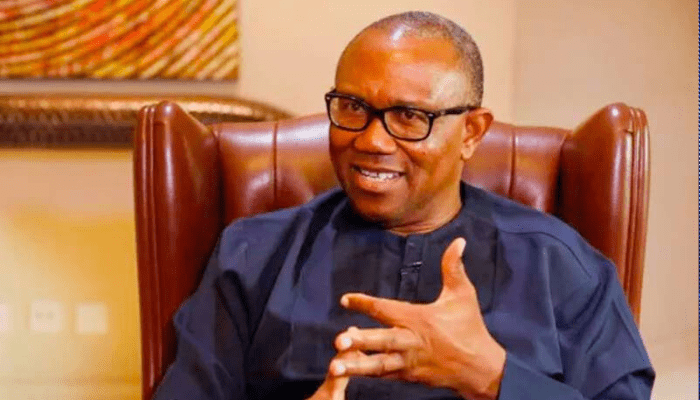
Nigeria Democratic Congress (NDC) presidential candidate Peter Obi has denied borrowing money or issuing bonds on behalf of the Anambra State Government during his eight years as governor.
Obi made the clarification amid his ongoing disagreement with Anambra State Governor Chukwuma Soludo over claims concerning the financial obligations he left behind after leaving office.
Speaking on Arise Television’s Prime Time on Thursday night, Obi said he did not approach any bank or financial institution to obtain loans or issue bonds throughout his tenure.
“Let me categorically say again, I, Mr Peter Obi, didn’t approach any financial institution to borrow money or issue bonds on behalf of Anambra State in the eight years I was in government,” he said.


The former governor also disputed claims that his administration left unpaid salaries, gratuities or pensions that were due when he left office.
READ RELATED STORY
Peter Obi doesn’t have a plan for Nigeria — Datti Baba-Ahmed
Tippers seized as NSCDC arrests three over Anambra sand mining
Anambra govt arraigns eight Pastors over alleged violation of law
VIDEO: NDC Rivers vows to resist alleged manipulation of 2027 election
“On the day I left office, I was not owing any salary, gratuity or pension that was scheduled to be paid by the government,” he said.
He further claimed that his administration did not owe contractors or suppliers who had completed, certified and verified their work.
“We are not owing any contractor or supplier who has executed his job, certified and verified, not one. And that is the way I left,” he added.
The comments come amid a renewed public debate over the financial position of Anambra State during and after Obi’s administration.
Obi served as governor from 2006 to 2013, while Soludo became governor in 2022. The two have exchanged claims and counterclaims over the state’s finances and inherited obligations.
Obi’s latest remarks represent his position on the matter, while the specific claims concerning the state’s debts and liabilities remain part of the wider public dispute.