34
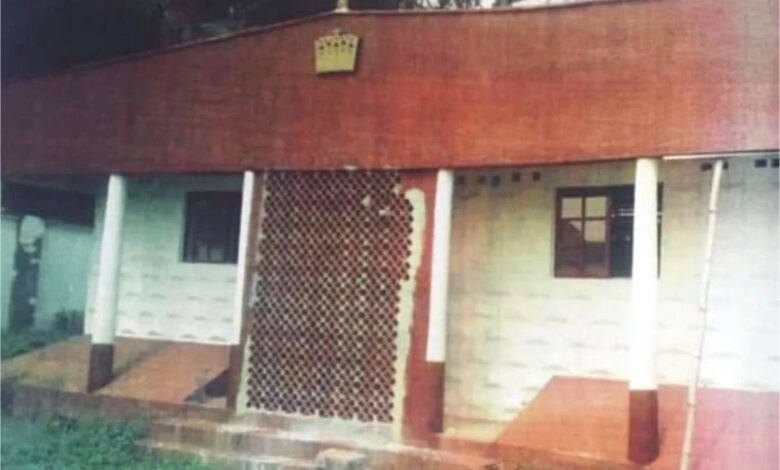
St Anthony’s Catholic Church ,historically known as St. Anthony’s Monastery or Satoni in Ode-Itsekiri is approximately 334 to 336 years old, having been built between 1690 and 1692.Located in Ode-Itsekiri ,also called Big-Warri in Delta State,it is widely regarded as the first Catholic mission or monastery built in Nigeria.
Deep in the riverine creeks of the Niger Delta, on an island only accessible by boat, stands the church. Its walls are old, its bell is older. But for Catholics across Nigeria especially itsekiris, this is hallowed ground.
The church is widely recognized as the oldest Catholic Church and mission station in Nigeria. St Anthony Catholic Church predates every other Catholic structure in the country by over 300 years and it has witnessed Portuguese missionaries, kings, slave trade, civil war, and now oil politics.


Here is the full story of the church and how it is run today.
The story begins with the Kingdom of Warri. In 1570, Portuguese Augustinian and Capuchin missionaries arrived at the invitation of the Olu of Warri, Olu Dom Domingos. The Olu and many chiefs were baptized. A chapel dedicated to St. Anthony of Padua was built in Ode-Itsekiri, the ancestral home of the Itsekiri People.
In 1570 the first Catholic Mass and baptism in Nigeria was recorded at Ode-Itsekiri. In the 1600s,the mission trained the first Nigerian Priests and Catechists. Reports also have it that the Olu’s son was even sent to Portugal for priestly training. In the1700s, the mission collapsed due to lack of priests after Portugal stopped sending missionaries and the Church went dormant for 200 years.
In 1903, catholicism returned when Italian missionaries from the SMA, Society of African Missions, revived the mission and rebuilt the church.
In 1995, the church was fully re-established and held under the Catholic Diocese of Warri.
The late Pope John Paul II referenced the Warri mission in 1982 as “the seed of faith in Nigeria’
HOW ST. ANTHONY ODE-ITSEKIRI IS RUN TODAY
Because Ode-Itsekiri is an island community, running the church is very different from a City Parish. The Bishop of Warri ,His Lordship, Most Rev. Anthony Ewherido has overall authority. He appoints the parish priest and approves all major decisions.
A priest appointed by the Bishop, usually from the Diocese of Warri clergy lives on the mainland in Warri and travels to the island for Masses. As of 2025, the parish is under the care of priests from St. Paul’s Parish, Warri, who rotate duties.
Diocese of Warri Ode-Itsekiri falls under Warri Diocese, which is an appendage of Benin Ecclesiastical Province headed by the Archbishop of Benin City. And because priests cannot live on the island full-time, lay leaders run the day-to-day affairs of the church.The Parish Council Chairman, elected by parishioners coordinates activities and communicates with the Diocese.
However,the CWO – Catholic Women Organization runs charity, cleans the church, and organizes feasts.
Knights and Ladies of St. Anthony offers major financial and security support. Sunday Mass is once a week, usually 10am, said by a visiting priest. During weekdays, a catechist leads prayers.
Feast Day on June 13, feast of St. Anthony, is the biggest event in the church calendar. Thousands, including the Olu of Warri, pilgrims, and tourists, come by boat to worship there.
Perhaps one notable feature of the church is no collection plates like in city churches.The church depends on donations during the feast, support from the Diocese, Itsekiri indigenes at home and abroad, and oil companies doing CSR. Access to this place; priests, materials, generator fuel comes by boat from Warri. This makes running costs very high.
Modern day Catholics still consider the church as very important till this day.This is because the church has many history to it. For instance,the church compound has the ruins of the 1570 chapel and old Portuguese artifacts. The Diocese and Delta State Government are working to make it a heritage tourism site.It is also a symbol of Inculturation, proof that Catholicism and Itsekiri culture have lived together for almost 4 centuries. The Olu of Warri is still the grand patron of the church. It is widely believed that it is from this one island, the Catholic faith spread to other riverine communities in Delta, Edo and Ondo States.
However,running a more than 300-year-old Island church comes with unique problems like insecurity and Oil Pollution. Fishing, the main occupation of the locals has been affected by oil spills.
St. Anthony’s Catholic Church, Ode-Itsekiri is not the biggest or richest church in Nigeria. But it is the oldest root. It is run through a partnership, a Bishop in Warri, a visiting priest, and a resilient community of people who keep the lamps burning on an island with no roads.
As the bell of St. Anthony rings across the Warri River every Sunday, it is a reminder that Nigerian Catholicism started here, deep in the creek s of Ode itsekiri in Warri, Delta State.
Wole Alakija
08055001823
What do you think about this?
Drop your opinion in the comment section.
FOLLOW US & Share this with someone who needs to see this.
