“The Man Behind the Stars: How Bola Abimbola Shaped King Sunny Adé, Kollington, Pasuma, Osupa”.

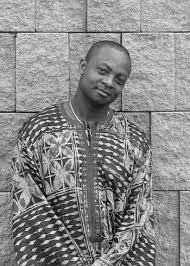
Bola Abimbola is one of the Nigerian musicians whose influence stretches far beyond his work as a vocalist and recording artist. For many music lovers, particularly those who followed the industry in the late 1990s and early 2000s, Abimbola was the creative force working behind the scenes on some of the era’s biggest sounds.
A vocalist, recording artist and record producer, Abimbola played a significant role in shaping the music of major Nigerian artistes including King Sunny Adé, Alhaji Ayinla Kollington, Wasiu Alabi Pasuma, Saheed Osupa, Shina Akanni and several others.
Born around 1968 in Lagos, Abimbola began his musical journey at the age of 19 with his first recording, “Silifa Bamijo,” released in 1987. The record featured a Yoruba-language version of Michael Jackson’s “Don’t Stop Till You Get Enough,” immediately demonstrating his ability to fuse Nigerian musical identity with international influences.
From there, Abimbola built a reputation not only as a performer but as a highly sought-after studio creative.


His fingerprints could be found on a string of important projects that helped define the Nigerian music landscape of the 1990s and early 2000s.
His credits include Wasiu Alabi Pasuma’s “Computer” (1992), “Orobokibo” (1993) and “The Man” (1994); Shina Akanni’s “Merit” (1993) and “Fuji Scorpio” (1995); and Saheed Osupa’s “Master Blaster” (1993) and “Stainless and Masterbkaster” (1995).
His relationship with the legendary King Sunny Adé was equally significant, with Abimbola associated with projects including “The Way Forward” (1996) and “Seven Degrees North” (2000).
He also worked on Alhaji Ayinla Kollington’s “Tukasa” (1997), while his credits extended to projects by Kingsley Ogunde and other established musicians.
These collaborations established Abimbola as one of the important musicians operating behind the scenes at a time when Nigerian music was undergoing a major transformation.
While the artistes were the faces on album covers and the voices audiences heard, producers and studio musicians such as Abimbola were helping to shape the arrangements, sounds and production techniques that gave those records their identity.
His own discography includes “Buyanga” (1998), “Crisis” (2001) and “Ara Kenge” (2006), demonstrating that his career was never limited to production alone.
Abimbola also took his music beyond Nigeria, touring and recording as a solo artist and collaborating with internationally respected musicians, including percussionist Sikiru Adepoju and Puerto Rican percussionist Giovanni Hidalgo.
His contribution was recognised in 1998 when he received two Nigerian Fame Awards, winning Best Video and Artist of the Year.
For a generation of Nigerian music fans, however, his most enduring legacy may be the work that happened away from the spotlight.
Bola Abimbola was, in many ways, the man behind the music—the producer, vocalist and studio architect whose creative contributions helped shape the sound of King Sunny Adé, Kollington Ayinla, Pasuma, Saheed Osupa and several other major artistes during a defining era of Nigerian music.