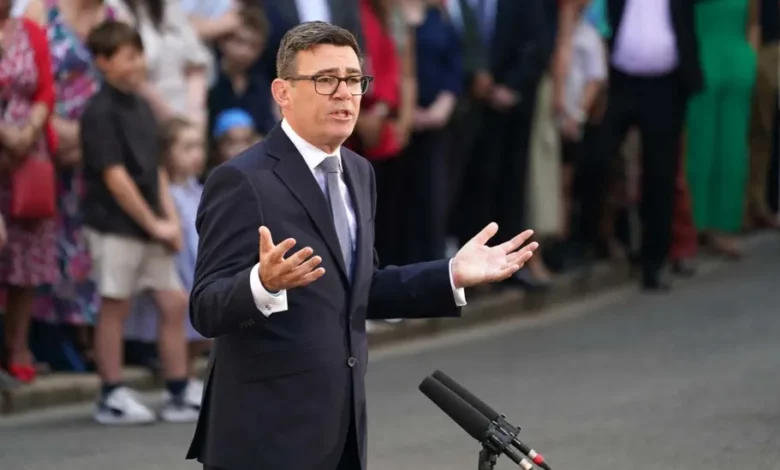
Some senior Downing Street advisers are urging Prime Minister Andy Burnham to consider an early UK general election in spring 2027, according to reports, as Labour weighs whether to seek a fresh mandate less than three years after the last national vote. Burnham has, however, repeatedly ruled out a snap election, meaning no early poll has been announced or scheduled.
The debate matters directly to Nigerians living in Britain because Nigerian citizens can qualify to vote in UK parliamentary elections as Commonwealth citizens if they meet the residence, immigration, age and registration requirements.
The Telegraph reported that several senior figures in Burnham’s team believe an election next spring could give the Prime Minister an opportunity to campaign on his own programme rather than remain tied entirely to Labour’s 2024 manifesto, which was drawn up under former prime minister Sir Keir Starmer.
One government source told the newspaper there was a “diverse opinion across Government” about the timing of an election and said Labour would be “naive not to be contemplating all scenarios”.


However, a No 10 source was equally clear about Burnham’s current position, saying the decision ultimately belongs to the Prime Minister and that he has ruled out an early election.
Why some Labour figures are discussing an early election
Burnham became Prime Minister on 20 July 2026, after succeeding Starmer, and has since begun setting out a different political and economic direction for the government.
Supporters of an early election argue that a fresh Labour manifesto could give Burnham greater room to pursue policies that were not included in the programme on which Labour won power in 2024.
The Telegraph reported that some advisers believe existing manifesto commitments on taxation, fiscal policy and Britain’s relationship with Europe restrict how far the new Prime Minister can change direction without seeking a new mandate.
Burnham has recently declined to rule out putting a future change in Britain’s relationship with the European Union in Labour’s next manifesto, although his government has not adopted rejoining the EU as current policy.
An early election could therefore give the government an opportunity to present voters with a programme more closely associated with Burnham’s leadership. But that is the argument of those advocating an election, not an indication that the Prime Minister has decided to call one.
What the latest polling actually shows
The renewed discussion follows large-scale constituency modelling from YouGov.
The MRP model reported this week allocated 241 seats to Labour, 130 to the Conservatives and 123 to Reform UK, with the Liberal Democrats on 71 and the SNP on 40. Under that model, no party would hold an overall House of Commons majority.
An MRP poll — short for multilevel regression and post-stratification — uses national polling data alongside demographic and geographic information to estimate results at constituency level.
It is important to treat those numbers as a polling snapshot rather than an election result or prediction. Voter preferences, candidates, campaigns and political events can change substantially before polling day.
It was reported that supporters of a spring election also believe economic conditions would need to improve first, particularly energy prices and the wider cost-of-living pressure linked to instability in the Middle East.
Burnham’s first Budget is due on 28 October, giving voters a clearer indication of the economic programme his government intends to pursue.
Could Burnham legally call an election next year?
Yes. An early general election would be constitutionally possible, but the decision has not been taken.
Under the Dissolution and Calling of Parliament Act 2022, the Prime Minister can request that the King dissolve Parliament. A separate House of Commons vote is no longer required simply to call an early election.
The previous general election took place on 4 July 2024. If no earlier election is called, the latest date for the next general election is 15 August 2029, according to the Institute for Government.
This means an election in spring 2027 would be a political choice rather than something required by the electoral timetable.
Burnham has previously said that holding an immediate election would interrupt the government’s work. Reports in July said he had ruled out using a snap poll to obtain a fresh mandate after entering Downing Street.
What an early election would mean for Nigerians in the UK
An early election would have practical implications for thousands of Nigerian residents, although no verified official figure shows exactly how many Nigerians are currently eligible and registered to vote in UK parliamentary elections.
Nigeria is a Commonwealth country. The Electoral Commission says a qualifying Commonwealth citizen living in the UK can register to vote if they have permission to enter or remain in the country, or do not require such permission.
To vote in a UK general election, a person must also be registered, aged 18 or over on polling day, resident at a UK address and not legally excluded from voting.
That means eligible Nigerian citizens living in Britain do not necessarily need British citizenship to vote in a UK parliamentary election.
Anyone who has moved home, changed their name or changed nationality may need to register again. The government’s online registration service normally takes about five minutes to complete.
For now, there is no reason for voters to prepare for a specific spring polling date because one has not been announced.
Related news
Former UK Prime Minister Tony Blair urges Andy Burnham to rejoin the EU
SNP plans Westminster boycott if Burnham blocks Scottish independence vote
Starmer faces pressure as Andy Burnham returns to Westminster