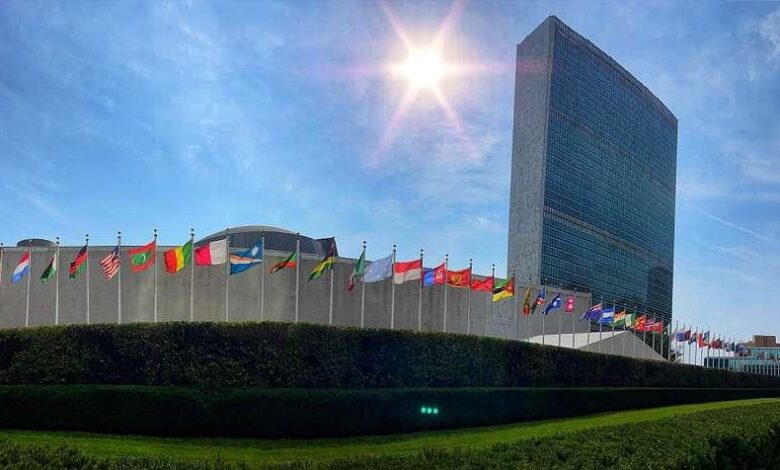
World leaders are arriving in New York as the United Nations prepares to open its high-level General debate this week, with wars in the Middle East and Ukraine, artificial intelligence and growing pressure on the UN dominating the agenda.
US President Donald Trump is expected to return to the UN podium for the second consecutive year, while leaders and diplomats confront a series of international crises that have placed renewed pressure on the organisation’s ability to respond to conflicts and other global challenges.
The high-level General Debate is scheduled to begin on September 22 and continue through September 28, according to the United Nations. Discussions are expected to focus heavily on international security, with the wars in the Middle East and Ukraine among the major issues facing governments.
The Middle East conflict is expected to receive particular attention as fighting involving the United States, Israel and Iran continues to affect regional stability and international energy supplies.


UN Secretary-General António Guterres has also warned about the wider consequences of the conflict and the difficulties of finding a military solution.
“It’s very difficult to have a military solution for that problem,” Guterres said, referring to the situation involving Yemen and the wider regional crisis. He said the UN envoy for Yemen was making efforts to advance negotiations.
Iranian President Masoud Pezeshkian is scheduled to address the General Assembly on Wednesday, September 23, while Israeli Prime Minister Benjamin Netanyahu is expected to speak on Thursday.
The Palestinian issue will also feature prominently. Palestinian President Mahmoud Abbas will not attend the gathering in person after the United States denied him a visa. The General Assembly has instead approved his participation through a video address.
Russia’s war in Ukraine is another major issue on the agenda. Ukrainian President Volodymyr Zelenskyy and Russian Foreign Minister Sergei Lavrov are expected to address the General Assembly.
Guterres has highlighted the effects of the war on civilians, food security and energy prices, particularly the disruption of trade through the Black Sea.
READ RELATED STORY
NDC sanctions movement director over unauthorised elections team
Iran adviser: Hormuz to stay closed until Trump, Netanyahu leave power
“The effective blockade existing in the Black Sea is creating enormous problems,” Guterres said, calling for safe routes for Ukrainian and Russian exports of food, fertilisers and energy.
Artificial intelligence is also expected to receive greater attention during the gathering. Guterres has called for international safeguards to manage the risks associated with rapidly developing AI technology.
He has urged countries leading AI development to establish “common guardrails” to prevent a race that could eventually create serious global dangers.
China’s President Xi Jinping is not expected to attend the New York gathering. Instead, he is due to hold talks with Trump in Washington, adding another significant diplomatic engagement to a week dominated by international tensions.
The gathering comes as the UN also faces financial and political pressure, including questions about its ability to deal effectively with major conflicts and the future leadership of the organization as Guterres’ term ends later this year.