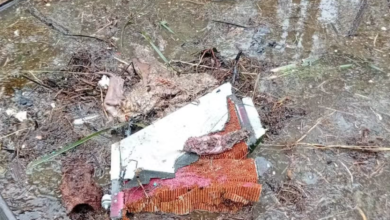
Gloria Akpan, a trader in Ikotun, has grown used to the smell of refuse around the market. What she has not grown used to is the waiting. “Sometimes, when the Lagos Waste Management Agency (LAWMA) comes, they don’t pack everything. We call them to return, but they keep postponing. The waste stays there, smelling and attracting flies. People eat and sell around this place, and it can affect our health,” she said.
The smell can become so strong that breathing becomes a task. “You can’t breathe well when the smell becomes strong,” Akpan added. For traders like her, the refuse affects the atmosphere in which they work and the people who come to buy from them.
Akpan is not the only person dealing with the problem. Around Ikotun Market and the Ejigbo Road axis, residents and traders say rubbish is being left on roads, medians and in front of shops. The city’s waste problem appears to have entered its “please, come back tomorrow” era, except tomorrow keeps postponing itself.
Lagos roads have taken on a new job. They still carry buses, motorcycles, traders and people trying to get home before traffic ruins their evening. But now, they also carry refuse that has nowhere else to go.


Residents around Ikotun Market and the Ejigbo Road axis appear to have resorted to dumping waste along the road because proper collection services are unavailable or unreliable. As the rubbish gathers, people who live, work and travel through the area are left with the smell, the mess and the consequences of a waste management system that appears to be struggling.
The rubbish does not arrive with a timetable either. A trader finishes selling food, a resident clears out the house, a shop owner sweeps the day’s dirt into a bag, and somehow everything must find a destination. When the collection service fails to show up, the roadside becomes the place where the problem is parked.
By morning, another heap has joined the previous one. Pedestrians squeeze past the rubbish, traders open their shops beside it, and the rest of the city carries on as though this is a perfectly normal way to live.
For the people who spend hours around these roads, the smell has become part of the working environment.
The complaints around Ikotun and its neighbouring communities did not begin this month.
On June 15, 2026, residents around Ikotun, Idimu, Ejigbo and Egbeda complained about refuse accumulating along streets and major roads. The complaints came after LAWMA announced that its licensed operators had evacuated 418,500 tonnes of waste across the state in May, an average of 13,200 tonnes daily.
The LAWMA figures suggest that large amounts of waste were being removed across the state. But residents in the affected communities said rubbish was still piling up in public spaces. For them, the issue was whether waste was being collected from their streets before it became another heap.
On July 5, Foundation for Investigative Journalism (FIJ) reported that LAWMA had cleared waste that had remained for more than three weeks along the Egbeda–Ikotun Road. The clearance followed an initial report documenting the rubbish left behind after the state’s environmental sanitation exercise.
The removal provided temporary relief, but it also exposed a now familiar pattern. After waste is cleared, residents resume their daily activities, and the rubbish begins to accumulate again when consistent collection arrangements fail.
The problem is difficult for traders whose businesses depend on people stopping to buy things. A customer who approaches a stall and meets a strong smell may decide to keep moving. Rain can make the situation worse, spreading dirty water and waste across the road.
Joseph Adeyinka, a trader on Agege-Ipaja Road, said the smell from the refuse near his stall sometimes affects business. “Some people will come, notice the smell and leave without buying anything,” he said.
“When it rains, the whole place becomes worse because the water carries the dirt around, and we have to stand there selling in the mess.”
Adeyinka said traders have complained to the people responsible for collecting the waste, but the response has been slow. “They will tell us they are coming, but you may wait for days. When they eventually come, they may not clear everything.”
For him, the problem also affects income. “Some days, business is already slow, and the smell makes it worse. A customer may buy quickly and leave, or decide not to stop at all. We still pay for our shops and come here every day, so it is frustrating when the environment makes it harder to sell.”
The Big Daily is your weekday shortcut to the biggest news shaping Nigeria. We cut through the noise, connect the dots, and explain why the news actually matters, all in one quick read.
LAWMA is responsible for waste management in Lagos, including collection and disposal through licensed private-sector operators. The agency says its goal is to create a cleaner, healthier and more environmentally sustainable Lagos, with an efficient waste management system built around recognised practices and customer-focused services.
It has also warned residents against dumping refuse on roads, medians, drains and other unauthorised locations.
The warning is understandable. Rubbish on the road can obstruct movement, attract pests, block drainage and create unpleasant conditions for people living and working nearby. But enforcement alone cannot solve a collection problem.
If the collection point is too far away, the operator does not arrive as scheduled, or residents cannot afford private waste collection, the rubbish still has to go somewhere. A ban on roadside dumping may tell people where they should not leave their waste. But it does not automatically provide a reliable place they can dump it.
The waste piling up on Lagos roads is also connected to what happens after collection.
On June 21, 2026, The Punch published an investigation into conditions at the Olusosun Landfill in Ojota, described as Lagos’ largest dumpsite. The report documented damaged internal roads, broken-down equipment, and queues of waste trucks waiting to discharge their loads. Some trucks reportedly spent days waiting, causing delays in waste evacuation across the state.
When trucks cannot discharge waste efficiently, the consequences can move down the line. Waste collection vehicles may be delayed, and rubbish can remain in neighbourhoods for longer than expected.
On Tuesday, July 28, 2026, LAWMA Managing Director Muyiwa Gbadegesin inspected the rehabilitated Road E and two newly constructed waste-charging platforms at Olusosun. The road had been repaired by Zoomlion Nigeria Limited as part of its corporate social responsibility initiative.
Gbadegesin said the repairs would improve access for compactor trucks and reduce delays within the facility. He also clarified that Olusosun had not been shut down, despite reports or assumptions to that effect. The government was gradually winding down operations at the landfill while reclaiming additional space to support waste disposal during the transition.
The next day, Wednesday, July 29, LAWMA announced the commissioning of the rehabilitated road and the new disposal platforms. The agency said the additional space would help tackle the accumulation of refuse on Lagos roads.
Its wider plan includes transfer loading stations at Olusosun and Solous III, with each facility designed to process 2,500 metric tonnes of waste daily. According to the agency, the projects are part of its move towards a more integrated waste management system.
The repairs and new facilities address problems within the disposal chain. But the residents who deal with rubbish beside their homes and businesses still need to know how those improvements will affect collection on their streets.
In August, LAWMA cleared refuse heaps that had reportedly remained along the Ejigbo–Idimu axis for about four months. The clearance followed a report by The Punch.
The clearance was not the end of it because on September 8, six-month-old refuse was discovered around the Dorcas and Silva Estate along the same axis. The following day, on September 9, Governor Babajide Sanwo-Olu declared a state of emergency on waste collection in the state.
Removing the waste was necessary. Leaving it on the roadside for months was the problem in the first place. A clean-up can remove an existing heap, but it does not necessarily prevent another one from forming. That requires regular collection, functioning equipment, accessible disposal arrangements and a clear process for residents to report missed services.
There is also a health and environmental concern. Refuse left in public spaces can attract pests, obstruct drainage and expose people to contaminated surroundings. Decomposing waste can also release gases, including methane, which is a harmful greenhouse gas.
LAWMA’s response to the complaints around Ikotun Market and Ejigbo Road should go beyond a general reminder against indiscriminate dumping of refuse.
The agency needs to clarify whether affected areas across the state have assigned collection operators, how frequently the operators are expected to collect waste, and whether residents have reported missed pickups. It should also explain what residents are expected to do when collection services fail and whether accessible disposal points are available.
The government has a responsibility to enforce environmental rules. Residents also need a system that makes compliance practical. Otherwise, the same cycle will continue. A collection service misses its schedule, waste accumulates, residents look for somewhere to leave it, LAWMA clears the pile after complaints, and the road eventually starts carrying rubbish again.
At Ikotun Market and every other affected area in Lagos, the problem is not that residents do not know refuse belongs in a proper disposal system. It is that the system often leaves them waiting, while the rubbish keeps piling up. LAWMA can clear the heaps, issue warnings, and announce new facilities, but residents need a collection service that works before the next pile appears. A clean Lagos cannot depend on emergency clearances every time the rubbish becomes too difficult to ignore.
What do you think about this?
Drop your opinion in the comment section.
FOLLOW US & Share this with someone who needs to see this.