35
President Bola Tinubu has a soft spot for FCT Minister, Nyesome Wike. That is a well known fact. In Nigeria’s notoriously unpredictable political landscape, few relationships have generated as much curiosity as that between President Tinubu and Nyesom Wike.
Think about it. Wike is not a member of the All Progressives Congress (APC). He remains a prominent figure from the Peoples Democratic Party (PDP). Yet, he occupies one of the most politically significant positions in the Tinubu administration and has continued to publicly campaign for the President’s re-election in 2027. That unusual political arrangement tells its own story.
For President Tinubu, Wike is valuable not simply because he is a Minister. His importance lies in his political experience, his network, his ability to mobilise across party lines and, particularly, his influence in Rivers State and the wider South-South political space.

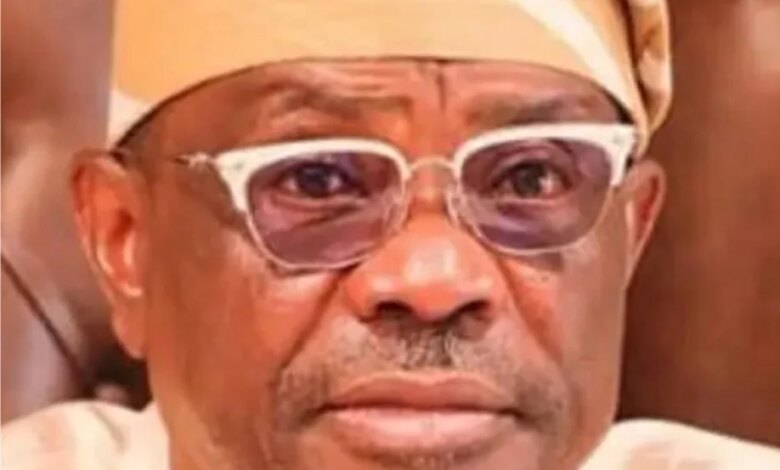
In March 2026, Wike said that the only presidential candidate his political group had endorsed was Tinubu. One major reason Tinubu values Wike is that Wike understands how Nigerian politics actually works. The former Rivers governor has spent decades operating within the political establishment. He understands party structures, governors, legislators, local government networks and the importance of grassroots mobilisation.
Wike himself has repeatedly emphasised that elections are ultimately won at polling units, wards and local governments—not merely through television appearances or social-media campaigns. That is precisely the kind of political understanding that can be useful to a sitting President preparing for a difficult national election.
Tinubu is an experienced political strategist himself. His political history demonstrates that he values people who can build structures, negotiate alliances and deliver political results. Wike fits that description. Perhaps, Wike’s greatest political asset to Tinubu is his ability to operate outside the traditional APC structure. Wike emerged from the PDP and was one of the most powerful figures in that party before the 2023 presidential election. His relationship with the PDP presidential candidate, Atiku Abubakar, deteriorated badly after the party’s internal crisis following the 2022 presidential primary.
Wike and members of his political group subsequently refused to support Atiku in the 2023 presidential election. Instead, Wike became one of the prominent opposition figures appointed into Tinubu’s cabinet. That was a significant political development. It demonstrated that Tinubu could bring a major opposition politician into his administration without requiring him to immediately abandon his political identity. By 2026, Wike was openly promoting Tinubu’s re-election. This has helped create an unusual political phenomenon: politicians who are formally outside the APC but politically aligned with the President. Wike has described this broader alignment as a “Rainbow Coalition,” and in August 2026 he predicted that the coalition supporting Tinubu could become even larger.
There is also the Rivers factor. Rivers is strategically important politically and economically. It is one of Nigeria’s most influential South-South states, with substantial economic importance and a long history of producing major political players. Wike was governor of Rivers State from 2015 to 2023 and remains a major political actor there. His influence over Rivers politics has been demonstrated repeatedly, although the extent of that influence is contested and has changed over time. The political crisis between Wike and his successor, Siminalayi Fubara, became one of the biggest political disputes of the Tinubu administration.
President Tinubu personally intervened at various stages of the crisis. Wike confirmed in February 2026 that Tinubu had brought key actors together in another attempt to resolve the dispute. This illustrates another reason the President cannot simply treat Wike as an ordinary minister. Wike is connected to a political structure capable of affecting the balance of power in Rivers State. Another important factor is Loyalty in political moments. Wike has not hidden his support for Tinubu’s second-term bid.
In May 2026, he argued that Rivers State should support Tinubu because, in his assessment, the state had benefited substantially from federal appointments and opportunities under the administration. In March, he again stated that Tinubu was the only presidential candidate his political group had endorsed. And as recently as August 2026, Wike was still publicly predicting the expansion of the political coalition backing the President. For a President preparing for re-election, such public commitment from a major opposition-origin politician has obvious political value. Wike provides Tinubu with something different from the conventional APC politician: a voice capable of presenting support for the President from outside the traditional APC camp.
Another reason Tinubu likes Wike is because he knows the Opposition from the Inside. This may be one of his greatest advantages. Like spent years inside the PDP establishment. He knows its personalities, rivalries, strengths and weaknesses. He understands the ambitions of many of the politicians currently positioning themselves against Tinubu. That makes him potentially useful as a political intelligence source—not necessarily in the literal sense of intelligence gathering, but in understanding how opposition politicians think and organise.
The emergence of various opposition alliances ahead of 2027 makes this even more relevant. Tinubu does not necessarily need everybody around him to be an APC traditionalist. He needs people who understand the political battlefield. Wike does. The FCT Ministry has given Wike a national platform. There is another dimension to the relationship: the office itself. As FCT Minister, Wike controls one of the most visible ministerial portfolios in Nigeria.
Abuja is not merely the nation’s capital. It is the centre of government, diplomacy, major construction activity and national political networking. Wike’s profile as FCT Minister has therefore given him a national platform far beyond Rivers State. His infrastructure activities in Abuja have also kept him in the national conversation. For Tinubu, having a politically experienced figure managing such a strategically important territory can be valuable. Tinubu’s broader political strategy has frequently involved reaching beyond traditional party boundaries.
His administration has included politicians from different political backgrounds.The Wike appointment was perhaps the most dramatic example. A man who had been one of the strongest PDP figures in the country became a minister under an APC President. That appointment sent a powerful message: Tinubu was prepared to build a broad political coalition rather than restrict his administration to traditional APC loyalists. The subsequent development of the Rainbow Coalition has taken that strategy even further.
There is another reason the relationship is fascinating. Wike is not generally regarded as a politician who is easily controlled. He has a reputation for speaking forcefully and pursuing his political interests aggressively. That independence can create friction, but it can also make him useful. A politician who is prepared to take unpopular positions may sometimes be more effective in political negotiations than someone whose every move must be approved by a party hierarchy.
Tinubu and Wike are both experienced political operators. Their relationship therefore appears to be based less on sentiment and more on political calculation, mutual usefulness and shared interests. The Rivers crisis provided perhaps the clearest demonstration of the importance of the Wike-Tinubu relationship. The President repeatedly became involved in attempts to settle the confrontation between Wike and Fubara. The dispute was not merely a personal disagreement. It threatened to destabilise the political structure of one of Nigeria’s most important states. By February 2026, Tinubu had again intervened, bringing Wike and other key actors together.
By July and August 2026, the political temperature had changed significantly, with Wike declaring reconciliation with Fubara and welcoming him back into the political family. That reconciliation could potentially benefit Tinubu by reducing the risk of a destructive internal battle among politicians who are now broadly aligned with his political project.
Ultimately, the strongest explanation for the Tinubu-Wike relationship is 2027. President Tinubu needs Votes. He needs alliances. He needs governors and former governors. He needs support in the South-South. He needs politicians capable of negotiating with people outside his traditional political base. And he needs to prevent opposition forces from consolidating into a single formidable bloc. Wike can potentially contribute to all 4 objectives. His political network cuts across party lines. His influence is strongest in Rivers but extends beyond the state. His public support for Tinubu is unmistakable, and he has continued to promote a broader coalition around the President. That makes him difficult to ignore.
The Tinubu-Wike relationship should therefore not be interpreted simply as a friendship between two politicians. It is better understood as a political partnership built around overlapping interests. Tinubu needs political allies capable of reaching constituencies outside the traditional APC structure. Wike needs a powerful national platform and a political environment in which his influence remains relevant. Both men understand the importance of political structures. Both understand that elections are won through networks. And both understand that Nigerian politics is frequently about building coalitions that cut across formal party boundaries. That is why, despite occasional speculation about disagreements, the political relationship between the President and the FCT Minister remains significant.
What do you think about this?
Drop your opinion in the comment section.
FOLLOW US & Share this with someone who needs to see this.