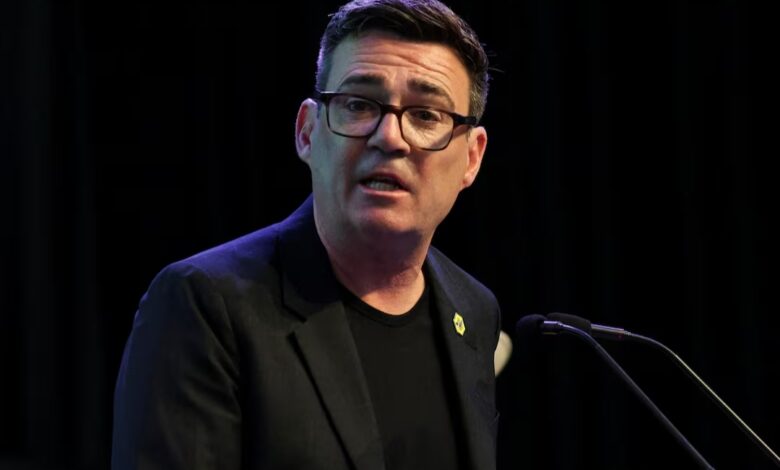
Prime Minister Andy Burnham has reopened one of Britain’s most divisive political debates after suggesting that a referendum could be needed before the UK restores freedom of movement with the European Union (EU).
His comments have raised fresh questions about whether Britain could eventually reverse parts of Brexit, ten years after voters chose to leave the European Union in the historic 2016 referendum.
Speaking to broadcasters on Monday, 26 October, Burnham was asked whether his government could restore free movement without seeking approval from the British public.
He answered “no”, while insisting he would “never move ahead of the British public when it comes to Brexit”.
However, sources cited by the BBC indicated that no final government decision had been made on whether a separate referendum would be required.
The development comes ahead of a UK-EU summit scheduled for 20 November, when Burnham is expected to seek closer cooperation with European leaders on trade, immigration and economic relations.
Burnham says Britain needs an honest Brexit debate
The Prime Minister has called for an open national discussion about Britain’s future relationship with the EU, arguing that the country’s economic and immigration challenges have changed significantly since the Brexit referendum.
He believes the UK should examine different options rather than rule out closer European cooperation permanently.
Speaking in an interview with the Sunday Times, Burnham welcomed an “honest discussion” about restoring freedom of movement.
He suggested that immigration patterns had changed since Britain left the EU, with more migrants now coming to settle permanently rather than arriving for shorter periods.
Burnham also argued that the UK’s ability to cooperate with European countries on immigration had weakened since Brexit.
He linked some of those difficulties to the loss of arrangements that previously helped Britain return certain asylum seekers to other European countries.
However, his comments should not be interpreted as an announcement that freedom of movement is returning. No such policy change has been agreed.
Will Britain hold another Brexit referendum?
The possibility of another national vote has become a major question following Burnham’s latest remarks.
The Prime Minister has ruled out significant changes to Britain’s EU relationship during the current Parliament, which is expected to run until the next general election, due by 2029.
He has also reiterated his commitment to Labour’s 2024 election manifesto, which rejected a return to the EU single market, customs union and freedom of movement.
Nevertheless, Burnham has indicated that future options could include closer economic cooperation, rejoining the customs union, returning to the single market or even holding another referendum on EU membership.
The Prime Minister has not committed his government to any of these options.
Speaking on ITV’s Good Morning Britain, he made clear that he was not proposing to rejoin the EU during this Parliament, but maintained that Britain’s existing arrangements were not necessarily the best available.
Why freedom of movement remains controversial
Freedom of movement was among the most disputed issues during the 2016 Brexit referendum.
Before Britain left the EU, citizens of member states generally had the right to live, work and study in the UK, while British citizens enjoyed similar rights across the bloc.
Supporters argued that the arrangements supported economic growth, helped businesses recruit workers and gave people greater opportunities to live abroad.
Opponents expressed concerns about immigration levels, pressure on public services and the government’s ability to control its borders.
Freedom of movement remains a fundamental requirement for full participation in the EU single market.
This means any future British government seeking to rejoin the single market would have to address the issue of migration.
Burnham has nevertheless indicated that he would not recommend joining the Schengen passport-free travel area or replacing the pound with the euro.
Badenoch and Farage reject return to EU free movement
The Prime Minister’s comments have drawn criticism from opposition parties.
Conservative leader Kemi Badenoch has argued that controlling immigration was one of the main reasons British voters supported Brexit.
She believes restoring freedom of movement would undermine the decision made in 2016.
Reform UK leader Nigel Farage has also strongly opposed the possibility, describing a return to free movement as a betrayal of Brexit voters.
However, the Liberal Democrats have maintained that rebuilding closer links with Europe could boost Britain’s economic performance.
The disagreement shows that immigration and EU membership remain politically sensitive issues, even a decade after the referendum.
November EU summit could shape Britain’s next move
Attention is now turning to the UK-EU summit on 20 November, where Burnham is expected to meet senior European officials, including European Commission President Ursula von der Leyen.
The Prime Minister wants to secure practical improvements in trade arrangements, particularly for farmers and food manufacturers, while strengthening immigration cooperation.
Any wider agreement, however, would require negotiations with European leaders and could face political opposition at home.
For millions of British citizens, particularly young people hoping to work or study in Europe, the debate could eventually determine whether some of the opportunities available before Brexit might return.
For businesses, the question is whether closer European cooperation could reduce trading barriers and improve access to workers and markets.
For voters concerned about immigration, the central issue remains how Britain would maintain control over its borders.
Read related news:
UK could gain £150bn by re joining EU, Goldman Sachs Says
Former UK Prime Minister Tony Blair urges Andy Burnham to rejoin the EU
Firms urge Starmer to deepen EU trade ties
Brexit vote under fresh scrutiny as UK PM points to Russia