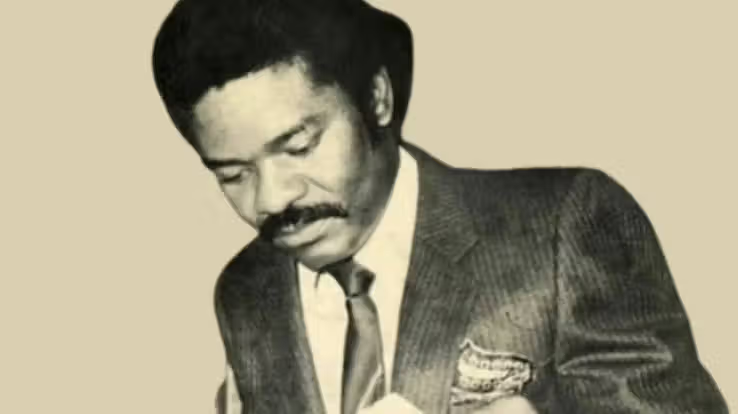
Forty years after Nigerian investigative journalist Dele Giwa was killed by a parcel bomb at his Lagos residence, the identity of those responsible for his assassination remains unresolved, despite a court order directing the Federal Government to investigate the murder.
Giwa, the founding editor-in-chief of Newswatch magazine, was 39 when an explosive package delivered to his home at 25 Talabi Street, Ikeja, Lagos, detonated on 19 October 1986.
His killing, which occurred under the military government of General Ibrahim Babangida, shocked Nigeria and became one of the country’s most widely discussed unresolved murder cases.
Today, Monday, 19 October 2026, marks exactly four decades since the assassination, yet no one has been convicted of the crime.


The anniversary has renewed questions about why the killing remains unresolved and what became of a February 2024 Federal High Court judgment ordering fresh investigations.
In a further development, the Federal Government sought permission in December 2025 to appeal the judgment after the deadline for doing so had expired, according to court documents reported by TheCable in January 2026.
What happened before Dele Giwa’s assassination?
The days preceding Giwa’s death have remained central to discussions about the murder.
Before the attack, he had written about the Second-Tier Foreign Exchange Market, a foreign exchange policy introduced during the Babangida administration.
The policy sought to determine exchange rates and allocate foreign currency through market mechanisms.
Giwa questioned its potential consequences and warned about public anger if the government’s economic reforms failed.
He subsequently came under questioning by security officials.
Ajibola Kunle Togun, then deputy director of the State Security Service (SSS), was among the officials who met him.
According to accounts of the period, Togun maintained that he found nothing objectionable in Giwa’s economic commentary.
However, Ray Ekpu, Giwa’s colleague and fellow Newswatch founder, provided a different account.
Ekpu said security officials raised concerns that Giwa intended to report on the circumstances surrounding the removal of Ebitu Ukiwe, who had served as Babangida’s second-in-command.
He also recalled allegations that Giwa was working with labour organisations and other groups to encourage political unrest.
Separately, Halilu Akilu of the Directorate of Military Intelligence questioned Giwa over allegations concerning discussions about arms importation.
These were allegations made in the course of security questioning, not findings that Giwa had committed any offence.
On 16 October 1986, three days before his assassination, Giwa appeared at the headquarters of the SSS.
Reports also indicate that Akilu contacted Giwa’s residence on 18 October and spoke with his wife, Funmi, about a possible visit.
Another telephone conversation between Akilu and Giwa was reported on the morning of the killing.
However, the contacts and allegations surrounding the journalist’s final days do not establish who planned or carried out the bombing.
Responsibility for the assassination has never been determined through a criminal conviction.
The Gloria Okon mystery and disputed assassination claims
One of the theories that emerged after Giwa’s death concerned Gloria Okon, a woman arrested in Kano over alleged drug trafficking in the 1980s.
Reports and rumours circulating at the time suggested that Okon possessed information that could implicate individuals connected to the military government.
Some accounts claimed she died in custody, while others alleged she had secretly been taken to the United Kingdom.
A further theory suggested that Giwa had travelled to London, discovered her whereabouts and was preparing to publish an interview before his assassination.
However, these allegations were never established as the motive for his murder.
Yakubu Mohammed, one of Newswatch’s founding editors, later challenged the account.
In his memoir, Beyond Expectations, Mohammed disputed the claim that Giwa had travelled to London to interview Okon.
He argued that the speculation had diverted attention from a proper investigation into the circumstances of the killing.
His account highlights the difficulty of separating documented events from allegations that have circulated for decades.
Although several theories have emerged, none has resulted in a criminal conviction for Giwa’s murder.
Media Rights Agenda renews demand for justice
As Nigeria marks the 40th anniversary of Giwa’s death, Media Rights Agenda (MRA) has renewed its call for the Federal Government to implement a court order directing an investigation into the killing.
In a statement issued on Monday, 19 October 2026, the organisation said the anniversary should go beyond remembering the journalist and become an opportunity to demand accountability.
MRA’s Deputy Executive Director, Ayode Longe, expressed concern that the assassination had remained unresolved for four decades.
The organisation said the continued absence of accountability raised wider questions about the protection of journalists and the government’s commitment to investigating attacks against media workers.
It urged the Attorney-General of the Federation, the Nigeria Police Force and other relevant authorities to explain what steps had been taken to comply with the court’s judgment.
MRA also called for a fresh examination of historical investigation files, witness statements and documentary evidence.
According to the organisation, modern investigative methods should be considered where appropriate, even though the passage of time could make some evidence difficult to recover.
The appeal was reported on Monday by the International Centre for Investigative Reporting (ICIR).
Court orders investigation into Dele Giwa’s murder
On 16 February 2024, the Federal High Court in Abuja directed the Federal Government to investigate Giwa’s assassination and take steps towards prosecuting those responsible.
Justice Inyang Ekwo delivered the judgment in a case brought by Media Rights Agenda, marked FHC/ABJ/CS/1301/2021.
The organisation had asked the court to enforce the fundamental rights of journalists, including their rights to life, safety and freedom of expression.
The court’s decision also addressed other unresolved killings of journalists in Nigeria.
It directed the government to take measures to prevent attacks against media workers, investigate violations and ensure access to appropriate remedies.
The judgment represented a legal development in the longstanding campaign for accountability.
However, an order to investigate does not establish the identity of an offender or guarantee a conviction. Investigators would still need credible evidence capable of supporting criminal proceedings.
Why the Federal Government moved to appeal
The legal dispute took another turn when the Federal Government sought an extension of time to challenge the 2024 ruling.
According to court documents reported by TheCable on 19 January 2026, the government filed an application at the Court of Appeal in Abuja after the prescribed period for lodging an appeal had expired.
The application sought permission to proceed with an appeal against the judgment ordering investigations into Giwa’s murder and other attacks on journalists.
However, filing an application does not mean that the court has granted it or overturned the earlier decision.
The latest status of that application was not established in the reports reviewed.
It also remains unclear what investigative steps, if any, have been taken in response to the Federal High Court’s order.
Why Dele Giwa’s murder still matters after 40 years
Giwa’s assassination remains significant not only because of how he was killed but also because of the questions surrounding the protection of journalists in Nigeria.
His work at Newswatch, which he co-founded with Ray Ekpu, Dan Agbese and Yakubu Mohammed in 1984, helped establish the magazine as a platform for political reporting and scrutiny of public affairs.
His murder raised concerns about the dangers facing journalists who investigate powerful institutions.
Four decades later, Media Rights Agenda argues that the failure to resolve his case risks reinforcing a perception that attacks on journalists can go unpunished.
The organisation’s renewed demands also raise an important question about the effectiveness of court orders when investigations remain unresolved.
For Giwa’s family, former colleagues and Nigerians seeking answers, the passage of time has not established who was responsible for his death.
What happens next in the Dele Giwa murder case?
Several questions remain unanswered following the 40th anniversary.
It is not publicly established from the reports reviewed whether investigators have reopened the murder file, interviewed surviving witnesses or recovered additional evidence.
The current status of the Federal Government’s application to appeal the 2024 judgment also requires confirmation.
Media Rights Agenda has called for the authorities to provide a public account of any progress made and explain the steps necessary to bring the case towards resolution.
Until credible evidence establishes responsibility and lawful proceedings determine guilt, the identity of those behind the assassination remains unresolved.
Forty years after a parcel bomb ended Dele Giwa’s life, the question that has endured since 19 October 1986 remains: Who killed Dele Giwa, and will Nigeria ever secure justice for his murder?
Read related news
Probe Dele Giwa, Kudirat Abiola, Bola Ige deaths, Soyinka urges Tinubu
I know nothing of Dele Giwa death; IBB
Newswatch co-founder Mohammed revisits Gloria Okon story, Dele Giwa’s murder