Nigeria has called for greater international support to manage its growing humanitarian responsibilities, revealing that it is hosting more than 142,000 refugees and asylum seekers from 42 countries while dealing with over 6.7 million internally displaced people.
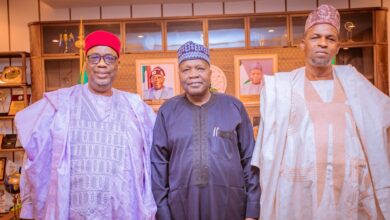
The Minister of Humanitarian Affairs and Poverty Reduction, Dr Bernard Doro, made the appeal at the 77th session of the United Nations High Commissioner for Refugees (UNHCR) Executive Committee in Geneva, Switzerland.
The meeting, which began on 12 October and runs until 16 October 2026, brings countries together to discuss refugee protection, humanitarian funding and support for people forced to flee their homes.
In a statement issued on Tuesday, 13 October, by the ministry’s Director of Information and Public Relations, Janet McDickson Noah, Doro said Nigeria remained committed to protecting refugees despite the pressure on its resources. He disclosed that, as of September 2026, Nigeria had received more than 24,000 returnees, in addition to the refugees and internally displaced people requiring protection and assistance.
The minister stressed that international cooperation was essential to helping countries facing displacement challenges. “No host country can do this alone,” Doro said, calling for increased burden-sharing among governments and international institutions. Over 7,000 Nigerian refugees return home


Doro announced that more than 7,000 Nigerian refugees had voluntarily returned home in 2026 under agreements involving Nigeria, neighbouring countries and UNHCR. He said another 14,000 Nigerian refugees in Cameroon had registered their intention to return, while arrangements covering 2,000 Nigerians in Niger were being finalised.
According to the minister, improvements in security in some parts of Nigeria have created opportunities for displaced citizens to return to their communities. However, the return arrangements remain voluntary, meaning those who have registered are not necessarily expected to return immediately.
Doro thanked Cameroon, Chad and Niger for accommodating Nigerians who fled across their borders.
He also disclosed that resettlement cities had been established in seven locations across Nigeria to support internally displaced people.
The initiative, he explained, is intended to help displaced families rebuild their lives while allowing camps to close gradually, where conditions permit, without compromising safety or dignity. Nigeria pledges continued refugee protection
The minister reaffirmed Nigeria’s commitment to the principle of non-refoulement, which prohibits returning refugees or asylum seekers to places where they could face persecution or other serious threats. He said Nigeria had not recorded any case of refoulement in 2026 and maintained that its borders remained open to people fleeing persecution.
Doro also pointed to the country’s asylum framework under the National Commission for Refugees, Migrants and Internally Displaced Persons Act 2022. He announced that Nigeria had domesticated the Kampala Convention in 2026, with states beginning to take steps towards implementation.
The convention provides a regional legal framework for protecting and assisting people displaced within their own countries. The minister said Nigeria was also pursuing measures to prevent statelessness and meet commitments made under the Global Compact on Refugees.
Refugees to benefit from farming, skills and identity programmes
Beyond emergency assistance, Doro said Nigeria was introducing measures to help refugees become economically independent. He explained that refugees in five states were receiving access to farmland, agricultural inputs and vocational training to improve their livelihoods.
Former refugees from Liberia and Sierra Leone had also integrated into Nigerian communities, with some now operating businesses, according to the minister. Doro said the National Commission for Refugees, Migrants and Internally Displaced Persons had established a Public-Private Partnership Department to attract support for programmes aimed at reducing dependence on humanitarian assistance.
He added that refugees, internally displaced people and host communities were being enrolled in Nigeria’s national identity system. The registration process is intended to improve access to banking services, education and other essential public services. Ten mobile documentation buses are also expected to reach people living in remote communities. The minister urged other countries to recognise Nigeria’s Convention Travel Documents and make visa applications easier for eligible holders.
Doro seeks African banks’ support as UNHCR faces funding crisis
Doro called on UNHCR to explore new sources of humanitarian financing through partnerships with regional financial institutions, including the African Development Bank and the ECOWAS Bank for Investment and Development. His appeal comes amid significant financial difficulties facing the UN refugee agency.
According to Reuters, UN High Commissioner for Refugees Barham Salih disclosed on 12 October that the agency had secured only $3 billion of the $8.5 billion required for its operations in 2026. The funding gap has already affected humanitarian services and forced the organisation to reduce its workforce.
Doro said Nigeria had reaffirmed its five commitments made under the Global Refugee Forum in 2023 during a review in December 2025. He stressed that greater international responsibility-sharing, including expanded refugee resettlement opportunities and alternative legal pathways, was necessary to ease pressure on host nations.
The minister also congratulated Salih, who assumed office as UN High Commissioner for Refugees on 1 January 2026, and acknowledged the contribution of his predecessor, Filippo Grandi. He thanked international donors for their assistance and reaffirmed Nigeria’s commitment to maintaining its partnership with UNHCR.
Read related news:
Humanitarian Ministry partners with UNHCR to strengthen core mandate
Barcelona to Wear Coldplay Logo for ‘El Clasico’ in Collaboration with Spotify and UNHCR
UK unveils new refugee sponsorship scheme
Doro unveils Nigeria’s poverty reduction strategy at UNGA 2026