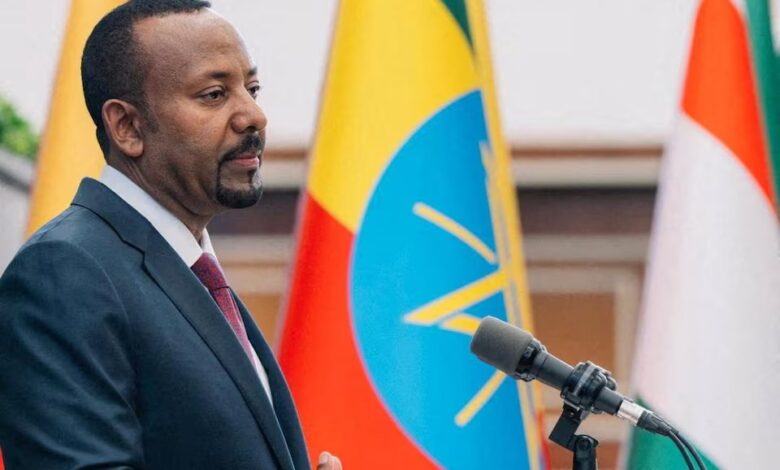
Ethiopian Prime Minister Abiy Ahmed has established a caretaker administration in the northern Tigray region, with elections expected within six months,as fresh clashes threaten to derail ongoing efforts to restore peace in the war-affected region.
The interim government is expected to serve for six months, during which it will work to restore stability, rebuild damaged infrastructure and prepare the region for what the federal government describes as free and transparent elections.
The announcement, made on Friday, October 16, comes amid fresh clashes between Ethiopian federal troops and an alliance led by the Tigray People’s Liberation Front (TPLF), which began an offensive against Abiy’s government last month.
The fresh clashes have raised fears of another large-scale conflict in Tigray, where communities are still recovering from the destruction caused by the 2020–2022 war.


In a statement shared on social media, Abiy called on the people of Tigray to move beyond years of violence and pursue a more stable political future.
“To attain the peace that has long eluded them, to secure their right to self-administration, and to finally enjoy the fruits of development which have been out of reach for many years the people of Tigray must break free from this cycle of conflict,” he said.
The prime minister’s office said the interim administration would also work to restore public services and help displaced residents return to their communities.
READ RELATED STORY
Ethiopian forces retake Tigray’s main airport as fighting spreads
Ethiopia accuses Eritrea, Sudan, Egypt of backing Tigray rebels as fighting intensifies
Why Reuben Abati’s voice still matters in Nigerian politics
FRESH CLASHES RAISE CONCERNS ACROSS THE REGION
The TPLF dominated Ethiopian politics for decades before Abiy took office in 2018. The relationship between the federal government and the Tigray leadership subsequently deteriorated, culminating in the 2020–2022 war, which caused extensive destruction and a severe humanitarian crisis.
Tensions have also escalated between Ethiopia and neighbouring Eritrea. Addis Ababa has accused the Eritrean government of supporting forces fighting against Ethiopia, allegations that Asmara denies.
Ethiopia has also accused Egypt and Sudan of backing the rebel alliance. Both countries have denied the allegations.
The worsening relations between the countries have heightened concerns that the conflict could spread beyond Ethiopia and further destabilise the Horn of Africa.
HUMANITARIAN CHALLENGES PERSIST
Tigray continues to face significant humanitarian challenges following years of conflict, displacement and damage to essential services.
According to figures cited in recent reporting, approximately 750,000 people from the region remained internally displaced as of February. The area has also faced food insecurity and drought-related pressures.
The caretaker administration’s stated priorities include rebuilding damaged infrastructure, restoring public services and creating conditions for displaced residents to return home.
The federal government’s six-month timetable sets out its immediate objective, but the continuing conflict and unresolved political tensions leave questions about how quickly normal governance can be restored.