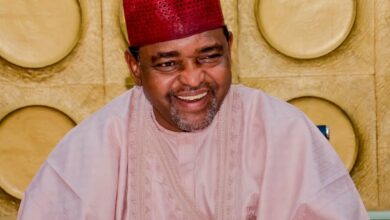
Former President Goodluck Jonathan has urged Nigerian politicians to place national interest above party loyalty, stressing that the country’s unity and development must take precedence over individual and sectional interests.
Jonathan made the call on Tuesday at the 5th National Conference of the Forum of Former Deputy Governors of Nigeria in Abuja. He was represented at the event by a former Deputy Governor of Adamawa State, Bala Ngilari.
The former President identified divisions along ethnic, religious and regional lines as major obstacles to Nigeria’s political development, calling on political leaders to rise above such differences and embrace a more inclusive approach to governance.
He maintained that Nigeria must always take precedence over any political party, individual or sectional interest, urging politicians to promote competence, integrity and national unity in the discharge of their responsibilities.


“One major obstacle to Nigeria’s political development is division along ethnic, religious and regional lines. We must rise above these differences and promote politics founded on competence, integrity, inclusion and national interest,” Jonathan said.
READ RELATED STORY
Jonathan backs Opobo royal transition, confirms attendance at Jaja VI Coronation
Tinubu has exhausted Nigerians’ patience ahead of 2027— Adebayo
Akande: Buhari backed Osinbajo’s presidential ambition
He also urged former deputy governors to deploy their wealth of experience in promoting national cohesion and mentoring younger politicians, particularly those preparing to assume leadership positions.
Drawing from his own political career, Jonathan noted that his experience as deputy governor and governor of Bayelsa State, before becoming Vice-President and subsequently President, had given him an understanding of the demands and challenges of public office.
According to him, effective leadership requires patience, loyalty, consultation and teamwork, while sustainable governance depends on strong institutions rather than the influence of individuals.
“The experience teaches patience, loyalty, consultation and teamwork. Above all, it reminds us that governance is not about one individual but about strong institutions and service to the people,” he added.