**The SAN cites a 1984 court ruling, insisting that INEC’s exclusive power to declare results does not prevent the media and citizens from publishing verified results already in the public domain.**
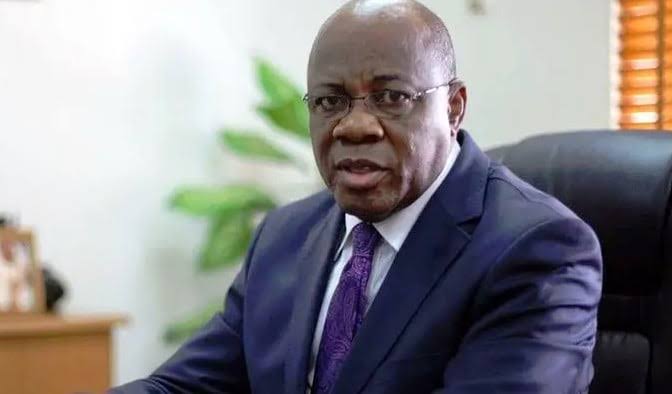
Senior Advocate of Nigeria (SAN), Olisa Agbakoba, has said journalists, political parties and members of the public have the right to publish election results that have been announced at polling units, provided the information is authentic and not falsified.
Agbakoba argued that the Independent National Electoral Commission’s (INEC) exclusive authority to declare election results should not be confused with the right to report or publish results made available through the electoral process.
The Press Nigeria reports that the legal practitioner made the submission during an interview on Arise Television on Wednesday, as debate continues over election result reporting and the use of technology in Nigeria’s electoral process.


According to Agbakoba, a 1984 court decision in the case of the Nigeria Union of Journalists (NUJ) versus the Federal Electoral Commission (FEDECO) affirmed the right to publish election results.
“Already in 1984, Mr Justice Candid Johnson, in the case concerning NUJ and FEDECO, affirmed the right to publish results. I think the confusion is that we confuse declaration of results. That’s the only power that INEC has exclusively: to declare the results,” he said.
Agbakoba explained that election results pass through several stages of collation, beginning at polling units and progressing through wards, local government areas and state-level collation before the final announcement.
He maintained that once a presiding officer publicly announces the results at a polling unit, journalists and other observers can report the figures without necessarily waiting for INEC’s final declaration.
“He’s read it, and I can tell you that political parties are going to set up AI processes whereby they’ll be able to pick from the IReV the results. Because the IReV is simply a compilation of all the results coming from the polling units,” he said.
The lawyer predicted that artificial intelligence and digital tools could accelerate the process of gathering and publishing election results, particularly through INEC’s Results Viewing Portal (IReV).
However, he stressed that speed must not come at the expense of accuracy, warning that anyone publishing election results must ensure that the figures are authentic.
“The question is whether I’m holding all the results in my hand, authenticated. Because Section 124 warns that if you publish fake results, in fact, the punishment for publishing fake results is in the Act,” Agbakoba said.
He argued that the provision prescribing punishment for publishing false election results should not be interpreted as a blanket prohibition against publishing genuine results before INEC’s final announcement.
“The fact that I have announced the result doesn’t mean that that is the result,” he added, while discussing the distinction between the publication of results and their formal declaration by the electoral commission.
Agbakoba also referred to Nigeria’s June 12, 1993 presidential election, which is widely remembered for its perceived credibility but was annulled before the final official declaration of the outcome.
He maintained that election results made publicly available through the electoral process can be reported and discussed without being treated as an official declaration by INEC.
“There’s no question that the media particularly are entitled to publish results. In any event, the matter has been decided. It has not been appealed. And the case is NUJ versus FEDECO, now INEC. And I think that is the decision that binds everybody, including INEC,” he said.
Agbakoba’s position places renewed focus on the distinction between reporting publicly announced polling-unit results and formally declaring an election winner, a responsibility vested in the appropriate electoral authorities under the law.
His comments also highlight the growing role of digital platforms, independent verification and artificial intelligence in election reporting, particularly as political parties and media organisations seek faster access to results.
Nevertheless, journalists and other publishers must verify the authenticity of the figures they release and distinguish clearly between polling-unit results, ongoing collation and INEC’s final declaration to avoid misleading the public.
**Editor’s note:** The specific 1984 judgment and the current legal provisions cited by Agbakoba should be independently verified before publication, particularly in relation to the scope of the ruling and the application of Section 124 of the Electoral Act.