CP Bakori says organisers had the right to assemble but argues police needed details to protect participants and residents
The Kano State Police Command has explained its intervention at a meeting organised by the ‘Tinubu Must Go’ movement, saying concerns over public safety and the anticipated attendance of about 700 people informed its actions.
The Commissioner of Police, Ibrahim Adamu Bakori, said the organisers had the right to assemble but argued that notifying the police would have enabled the command to make adequate security arrangements for the gathering.
The Press Nigeria reports that Bakori made the clarification in an interview with DCL Hausa following allegations by the movement’s convener, Abba Hikima, that police officers prevented members from accessing a private venue they had hired for the meeting on Sunday.

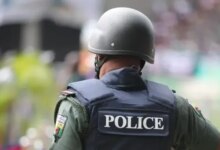
In a live video shared on his verified Facebook page, Hikima alleged that about 10 mobile police vehicles had been deployed to the venue to prevent the gathering from taking place.
“They have been stationed here in order to prevent us from accessing the private venue which we paid for; we are to gather here to exercise our civic rights… This is even the more reason why Tinubu must go,” he said.
The lawyer maintained that the organisers did not require police permission to hold the meeting, citing a Court of Appeal decision on citizens’ rights to peaceful assembly. He accused the police leadership of allowing political considerations to influence its duties.
“The Court of Appeal decision stands. I do not need to inform any security agent to hold my rallies. Next time, we are going to protest; next time we are going to demonstrate; next time we are going to hit the ground,” Hikima added.
Responding, Bakori said he contacted Hikima on Saturday night after learning about the planned gathering through social media.
“What happened is that, in the first place, it is their right to come and organise their gathering. Nobody will stop them, and the law does not require them to inform us,” the commissioner said.
He added, however, that advance notification would help the police assess security requirements, prevent possible attacks and ensure the event did not result in a breach of public peace.
Bakori said he asked Hikima to postpone the meeting and meet with the command to discuss the nature of the gathering and the necessary security arrangements.
According to the commissioner, Hikima promised to consult other organisers and get back to him, but subsequent calls went unanswered.
Bakori also said the expected turnout made it important for the command to understand the arrangements for the event, including the identities and accommodation plans of those travelling into Kano.
“If 700 people are coming into Kano, we need to know the details. This is not the first time political groups from different parties have organised activities in the state. They usually write to us, and we provide security for them,” he said.
When asked whether the police had information linking those expected at the meeting to criminal activities, Bakori referred to an incident in Sabon Gari about two weeks earlier.
He claimed that officers recovered weapons from some individuals who said they had travelled to Kano for political activities. According to him, some suspects were arrested and investigations were ongoing.
“Two weeks ago, some people came to Sabon Gari claiming they were there for political activities. We seized weapons, arrested some of them, and we are still investigating the matter,” he said.
The commissioner said the incident contributed to the command’s concern about another gathering expected to attract hundreds of participants when details of its arrangements had not been established.
He maintained that the intervention was intended to protect both the organisers and residents of Kano State, rather than to suppress opposition political activity.
“There is nothing political about this. It is about understanding the situation and protecting the people of Kano State and Nigeria,” Bakori said.
He further stated that the command had previously provided security for activities organised by Hikima after receiving information about them.
Bakori urged the movement’s convener to engage with the police ahead of future gatherings, saying such cooperation would help ensure the safety of participants and the wider public.
The disagreement, however, raises questions about the balance between citizens’ constitutional rights to peaceful assembly and the police’s responsibility to maintain public order.
While the police commissioner acknowledged that the law did not require the organisers to obtain permission or notify the command, he argued that advance communication was important for security planning. Hikima, meanwhile, insists that the police intervention infringed on the organisers’ civic rights.
The circumstances surrounding the deployment of officers, the decision to prevent access to the venue and the legal basis for the intervention remain central to the dispute.
**The Press Nigeria — Accountability. Development. Public Interest.**