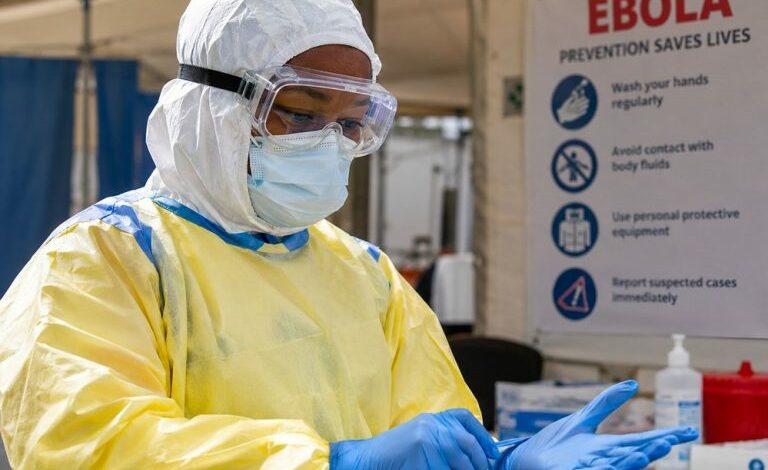
Nigeria could declare its Ebola outbreak over on December 7 if no new confirmed or probable cases emerge and health authorities validate the required 42-day period without renewed transmission, the Federal Government has said.
The Coordinating Minister of Health and Social Welfare, Professor Muhammad Ali Pate, disclosed the provisional date on Monday, stressing that the outcome depends on continued contact monitoring and confirmation by the Nigeria Centre for Disease Control and Prevention (NCDC) and the World Health Organisation (WHO).
“If no further confirmed or probable cases are detected, Nigeria could progress towards declaring this outbreak over under WHO criteria, potentially as early as 7 December 2026,” Pate wrote on X.
He cautioned that any additional case could reset the countdown, making the proposed date subject to change.


The government confirmed Nigeria’s Ebola case in the Federal Capital Territory on October 20. According to the WHO, the patient had travelled from Uganda, developed symptoms on October 7 and sought medical attention four days later, on October 11, before her infection was confirmed.
The NCDC said on Sunday that it was monitoring 53 primary contacts linked to the confirmed case. Their monitoring is critical because health officials must establish whether anyone exposed to the patient develops symptoms and requires testing or further investigation.
RELATED NEWS:
Why December 7 matters
The WHO’s outbreak-ending protocol requires 42 consecutive days without a new confirmed case after the last patient tests negative for Ebola, or dies, under the applicable conditions. Authorities must also meet the required surveillance and response criteria before declaring transmission over.
The December 7 date is therefore not a guaranteed deadline. It depends on the applicable countdown, the results of contact tracing and validation by health authorities. Any new case could alter the timeline.
The distinction matters because a patient’s evacuation from Nigeria does not automatically end the risk of local transmission. Health officials must still account for possible exposures and ensure that contacts are monitored throughout the required period.
Patient improves as Switzerland takes precautions
The development follows the evacuation of the female patient and her husband to Switzerland on Monday.
Pate said the patient was clinically much improved, stable, conscious and communicating, with her laboratory results approaching baseline levels.
The Swiss Federal Office of Public Health said the patient was receiving treatment at Geneva University Hospital, while her husband, identified as a close contact, was isolated at Zurich University Hospital.
Swiss authorities said the country faced no public-health risk from the case, adding that both hospitals had specialised isolation facilities and trained personnel to manage infectious diseases safely.
Switzerland’s Federal Councillor Elisabeth Baume-Schneider also thanked Nigerian doctors and healthcare workers for caring for the two nationals before their evacuation.
The test for Nigeria
The immediate priority is to complete contact monitoring, detect any new infection quickly and prevent further transmission. The 53 identified contacts represent a defined group requiring follow-up, not 53 confirmed infections.
Nigeria’s prospects of meeting the December target will depend on surveillance quality, prompt testing and transparent reporting. Until the WHO criteria are satisfied, the country cannot formally declare the outbreak over.
The countdown offers a potential endpoint, but public-health vigilance will determine whether Nigeria reaches it safely.
For More News Updates, Visit New Daily Prime News