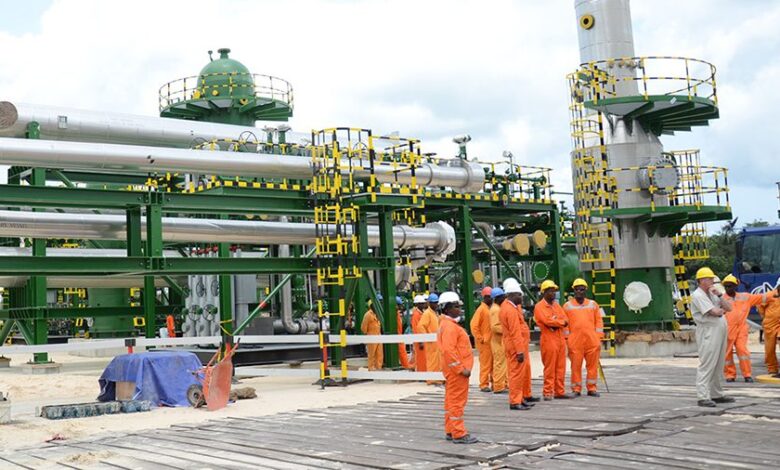
Nigeria’s 30-day petrol discount at NNPC filling stations is intended to give motorists and public transport operators temporary relief from high fuel costs, but the measure does not mean petrol has been fixed at ₦1,350 per litre nationwide.
The Nigerian National Petroleum Company Limited says the discount will continue until 31 October 2026 across its retail stations nationwide. The company insists the intervention is a commercial discount on its retail margin rather than the return of the petrol subsidy abolished in 2023.
For Nigerians struggling with transport and other costs linked to petrol prices, three questions matter most: how much will consumers actually pay, who benefits from the discount, and what happens when the temporary relief ends?
Is petrol now ₦1,350 per litre?
No. One of the most important distinctions is that the ₦1,350 figure announced by the Federal Government is not a nationwide pump price.


Finance Minister and Coordinating Minister of the Economy Taiwo Oyedele said the government is negotiating a ceiling of ₦1,350 per litre on the ex-gantry or landing cost of petrol as part of a broader mechanism designed to reduce sudden price movements.
That is the price at an earlier point in the supply chain, before retail costs and margins are added. It should therefore not be reported as an official ₦1,350 pump price for motorists.
Under the proposed mechanism, the ceiling would be reviewed monthly.
Oyedele said the aim is to prevent every sharp movement in international crude oil prices or the naira exchange rate from immediately producing an equally sharp increase at filling stations. The actual pump price motorists encounter can therefore vary.
How does the NNPC petrol discount work?
The government says NNPC Retail is temporarily giving up some or all of the margin it normally adds when selling petrol to customers.
According to Oyedele, retailers generally buy petrol and add a margin covering their retail operations and profit.
Under the temporary arrangement, NNPC is reducing that margin and passing the saving to motorists.
The finance minister said the retail margin represents less than five per cent of the pump price. He maintained that the cost of the discount is being borne by NNPC Retail rather than the federal budget or the Federation Account.
This is why the government rejects claims that it has quietly restored petrol subsidy.
Under the former subsidy system, public money was used to cover part of the difference between the market cost of petrol and the price paid by consumers.
The present scheme, according to the government, involves NNPC accepting a smaller retail return for a limited period.
Who benefits from the 30-day relief?
The discount applies to petrol sold through NNPC Retail stations nationwide, rather than every filling station in Nigeria.
That means motorists who buy petrol from private marketers are not automatically entitled to the same discount.
Public transport operators have been identified as a priority group.
Oyedele said the government wants commercial transporters who benefit from lower fuel costs to pass some of those savings to passengers through reduced fares.
However, the announcement does not automatically compel bus, taxi or other commercial transport operators to reduce fares.
That could become one of the practical tests of the scheme: whether cheaper petrol at participating NNPC stations produces noticeable savings for passengers rather than stopping at the filling station.
The relief may also depend on the availability of NNPC stations and fuel supply in different parts of the country.
Why is government intervening now?
The Federal Government says the measures are designed to cushion households and businesses against renewed volatility in global energy markets.
Officials argue that rapid swings in crude prices and exchange rates can make business planning difficult and quickly increase transport and distribution costs.
The government has therefore announced other measures alongside the NNPC discount, including plans to accelerate the use of compressed natural gas, or CNG, and consideration of additional support for vulnerable workers.
The Presidency has also defended the intervention after criticism from former Vice-President Atiku Abubakar, who questioned why the relief would initially last only 30 days.
In a statement on 11 October, presidential adviser Sunday Dare defended the government’s approach and maintained that the petrol discount formed part of a wider framework rather than a reversal of the subsidy-removal policy.
The big question: what happens after 31 October?
This is where uncertainty remains.
NNPC has clearly stated that the current discount will continue until 31 October, but neither that statement nor the government’s initial announcement guarantees that the retail discount will continue at the same level afterwards.
The phrase used by the finance minister — “for the next 30 days in the first instance” — leaves open the possibility that the arrangement could be reviewed or extended, but no automatic extension has been announced.
That means motorists should not assume that the lower NNPC price will become permanent.
The proposed ₦1,350 landing-cost ceiling is a separate part of the government’s plan and is expected to be reviewed monthly. It is designed to moderate volatility rather than permanently guarantee a particular retail price.
The real test will therefore come after October: whether international oil prices and the naira allow petrol prices to remain relatively stable, whether NNPC extends its margin discount, and whether the wider price-modulation mechanism works without creating a new financial burden for government.
Read related news:
NNPC extends ₦66 fuel discount to October 31 — who qualifies?
Oyedele: NNPC petrol discount funded by profit cut, not public money
NNPC: Licensing round not Ojulari’s mandate