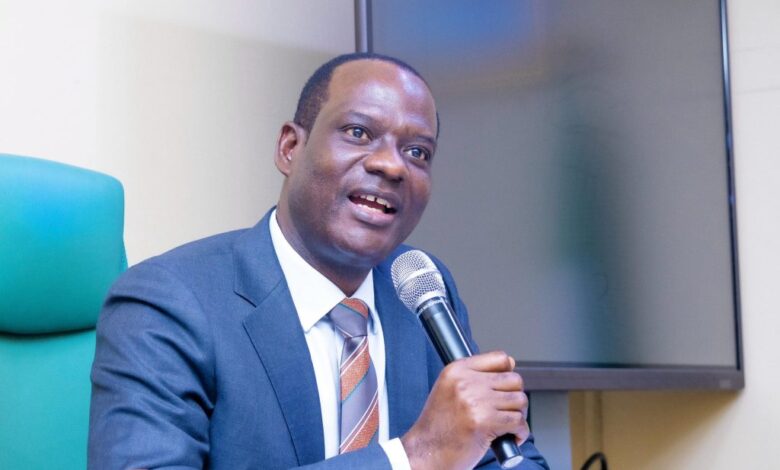
The Minister of Finance and Coordinating Minister of the Economy, Taiwo Oyedele, has warned that returning to petrol subsidy could trigger capital flight, weaken the naira and push the exchange rate towards ₦4,000 per dollar.
Oyedele gave the warning on Monday during a press briefing at the International Monetary Fund (IMF) and World Bank Annual Meetings in Bangkok, Thailand.
He said investors had repeatedly questioned whether the Federal Government would maintain its economic reforms as the country approaches another election cycle.
According to the minister, any indication that President Bola Tinubu’s administration was considering reinstating petrol subsidy could unsettle financial markets, undermine investor confidence and increase borrowing costs.

Oyedele said both domestic and international investors were monitoring the government’s commitment to its economic policies, warning that uncertainty could prompt investors to move their funds out of Nigeria.
“If, for any reason, the President were to say we are merely considering the return of fuel subsidy, capital would react immediately,” he said.
He added that capital flight could place severe pressure on the naira, potentially pushing it towards ₦3,000, ₦3,500 or even ₦4,000 per dollar.
“Airfares would struggle, the naira would come under severe pressure, potentially moving towards 3,000, 3,500 or even 4,000. The very fuel people want subsidised would become far more expensive in naira terms,” Oyedele warned.
The minister explained that the effects could extend beyond foreign investors, as wealthy Nigerians, business owners and middle-class investors might also turn to dollars to protect their assets.
He said increased demand for foreign exchange could further weaken the naira, while higher import costs would translate into rising prices and additional hardship for households.
Oyedele maintained that the government would not reverse its economic reforms, arguing that policy consistency was necessary to sustain investor confidence and economic stability.
READ RELATED STORY
Tinubu appoints Taiwo Oyedele minister of state for finance
NECA backs Tinubu’s nomination of Taiwo Oyedele as finance minister of state
Tinubu swears in 50-year-old economist Taiwo Oyedele as minister
Oyedele clarifies NNPC petrol price decision
The finance minister also rejected suggestions that the Nigerian National Petroleum Company Limited’s temporary reduction in petrol retail margins amounted to a return to subsidy.
He explained that the move was a commercial decision involving a reduction in the company’s profit margin rather than a payment funded by public resources.
According to Oyedele, a company choosing to reduce its profit margin to make a product more affordable should not automatically be described as providing or receiving a subsidy.
Nigeria’s petrol subsidy was declared removed by Tinubu during his inauguration on May 29, 2023, at Eagle Square in Abuja.
“Subsidy is gone,” the President said in his inaugural address, adding that the national budget would no longer provide for the subsidy from June 2023.
The policy was among the major economic changes introduced by the administration, alongside foreign exchange reforms.
The Central Bank of Nigeria subsequently directed deposit money banks to remove the rate cap on the naira at the Investors and Exporters foreign exchange window, allowing the currency to trade more freely against the dollar and other currencies.
The reforms have coincided with significant changes in the exchange rate and increases in transportation and other living costs, although the effects on households have varied.
Oyedele’s latest warning underscores the government’s position that reversing petrol subsidy removal could carry wider financial and economic consequences beyond the immediate cost of fuel.