President Bola Tinubu insists foreign borrowing is necessary to build roads, improve electricity supply and create jobs, but questions remain over Nigeria’s growing debt burden and whether ordinary citizens will benefit.
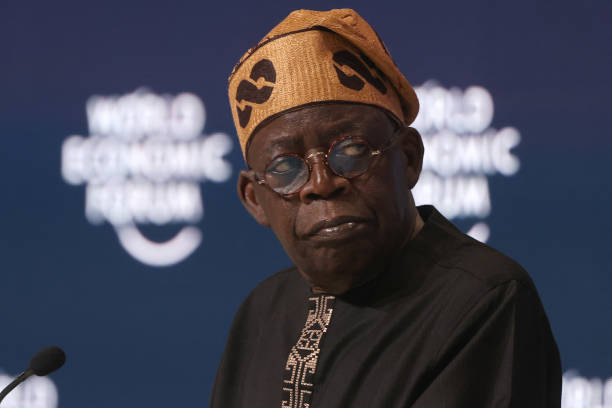
President Bola Tinubu has defended his administration’s decision to seek billions of dollars in fresh foreign loans, insisting that Nigeria cannot achieve its ambition of becoming a $1 trillion economy by 2030 without investing heavily in infrastructure.
His defence comes just two days after he asked the National Assembly to approve an external borrowing package worth approximately $21.7 billion, raising fresh debate about the country’s debt obligations and the economic benefits Nigerians can expect from additional borrowing.
In a policy essay released on Thursday, 29 October 2026, titled From Reforms to Delivery: Our Infrastructure Investment and Growth Strategy, Tinubu argued that the success of government borrowing should be measured by completed projects and their economic contribution rather than the amount borrowed.

The President’s position was communicated by his Special Adviser on Information and Strategy, Bayo Onanuga.
Tinubu said: “The real question is not how much we borrow, but what we build, what value we create and what future we leave behind.”
His comments followed criticism of the government’s borrowing plans, particularly concerns that fresh loans could increase pressure on public finances at a time when many households are struggling with living costs.
Why Tinubu wants Nigeria to borrow more
The proposed external borrowing package covers projects in transportation, electricity, agriculture, healthcare, education, water supply and other sectors.
According to the borrowing request submitted to lawmakers on 27 October, the package includes approximately $20.52 billion and €1.045 billion, equivalent to about $21.7 billion in total at the exchange rate used in contemporary reports.
The request is subject to legislative consideration and should not be confused with loans already disbursed.
Tinubu maintained that Nigeria’s infrastructure challenges were too significant to address without access to long-term financing from international lenders.
He argued that better roads, efficient ports, improved electricity supply and modern transport networks would lower business costs, attract investors and support economic expansion.
Among the major projects highlighted by the President were the Lagos-Calabar Coastal Highway, Sokoto-Badagry Superhighway, Trans-Sahara Superhighway, electricity grid upgrades and the modernisation of commercial ports in Lagos.
Lagos-Calabar Highway could create 250,000 jobs, Tinubu claims
The President identified the Lagos-Calabar Coastal Highway as an example of the economic benefits his administration expects from large-scale infrastructure development.
He projected that the highway could reduce logistics costs along its corridor by between 15 and 20 per cent, while potentially contributing up to two per cent to Nigeria’s gross domestic product through increased trade, tourism and industrial activity.
Tinubu also projected that the project could support approximately 100,000 direct jobs and more than 150,000 indirect jobs in construction, engineering, logistics and related sectors.
These are government projections, not independently confirmed employment outcomes.
The President maintained that connecting different economic regions would make it easier for farmers, manufacturers and traders to move products across the country.
He also argued that infrastructure development could encourage businesses to expand into areas previously constrained by poor roads and unreliable electricity.
Nigeria’s public debt reaches ₦166.79 trillion
Tinubu’s defence comes against a backdrop of rising government debt.
According to the Debt Management Office (DMO), Nigeria’s total public debt reached ₦166.79 trillion in June 2026, up from ₦159.35 trillion in March, representing an increase of ₦7.44 trillion in just three months.
The debt burden could climb to approximately ₦196.72 trillion if President Bola Tinubu’s proposed $21.7 billion foreign borrowing package is fully approved and disbursed.
At an exchange rate of ₦1,379 to $1, the additional loans would be worth ₦29.93 trillion, pushing the country’s debt up by a further 17.9 per cent. However, this New Daily Prime projection assumes no debt repayments, exchange-rate changes or other borrowing.
Will more borrowing improve Nigerians’ living standards?
For millions of Nigerians, the central question is whether the government’s infrastructure investments will translate into better living conditions.
Reliable electricity could reduce the cost of running businesses, while improved roads and ports could make it cheaper to transport food and manufactured goods.
If successfully completed, these projects could create employment opportunities and help attract private investment.
However, infrastructure spending alone does not guarantee higher household incomes or lower poverty.
The government will need to demonstrate that borrowed funds are spent transparently, projects are completed within reasonable budgets and the economic benefits reach communities.
Independent project assessments, public procurement records and regular reporting on expenditure would also help Nigerians evaluate whether the investments justify their cost.
What Nigerians should know
Tinubu has made infrastructure development central to his ambition of building a $1 trillion economy by 2030. His administration believes new foreign loans will accelerate the investments needed to achieve that target.
But the proposed $21.7 billion borrowing package has not yet been fully approved and disbursed, and the economic returns cited by the President remain projections.
Nigeria’s next challenge is to demonstrate that additional borrowing can deliver measurable improvements in electricity supply, transport, employment and household welfare without creating unsustainable repayment pressures.
Ultimately, Nigerians will judge the policy not simply by the number of roads announced or the size of the loans secured, but by whether public investment improves their everyday lives.
Read related news
NDC challenges Tinubu’s $21.6bn loan bid, demands proof of past gains
Tinubu projects 250,000 jobs from Lagos-Calabar highway
Atiku’s aide warns Tinubu against prolonged absence, recalls Yar’Adua’s presidency