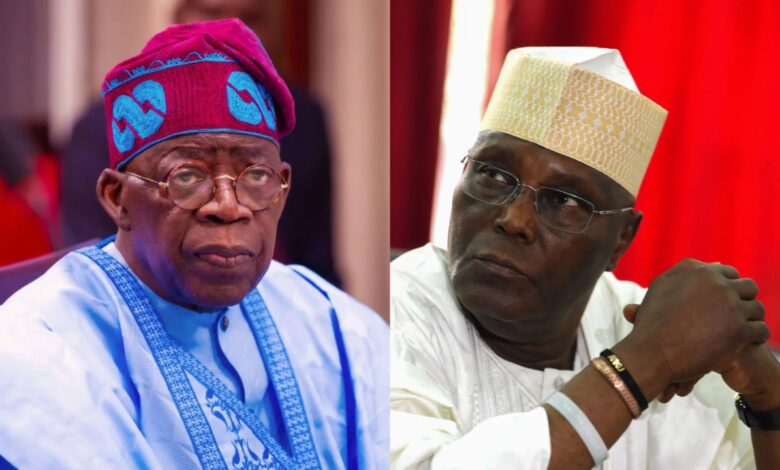
President Bola Tinubu’s 30-day petrol discount has triggered a fresh political confrontation as former Vice-President Atiku Abubakar accuses the administration of copying his fuel production support proposal, while Labour Party’s Peter Obi says the temporary measure offers little relief to struggling Nigerians.
Atiku, the African Democratic Congress (ADC) presidential candidate, likened Tinubu to a student who copied a classmate’s answer and then demanded credit for original thinking. He described the discount as a short-lived economic gesture that lacks the safeguards contained in his proposed production subsidy framework.
The dispute has shifted attention from the announcement itself to a central question: can a temporary reduction at selected filling stations meaningfully ease the cost of living for Nigerians facing expensive transport, food and business operations?
Atiku’s proposal centres on production support linked to petrol refined locally, with safeguards intended to ensure that the benefit reaches consumers. He contends that the government’s 30-day arrangement offers only temporary relief without addressing the underlying pressure on fuel prices.

The Federal Government, however, rejects the suggestion that it has reinstated fuel subsidy. Finance Minister Taiwo Oyedele explained that NNPC Retail is reducing or foregoing its profit margin for the period, rather than using public funds to lower pump prices. The discount took effect on October 1 and is scheduled to run for 30 days.
Under the arrangement, NNPC Retail purchases petrol from suppliers at market prices but temporarily accepts a smaller margin. This differs from the former subsidy system, under which public revenue covered part of the cost of petrol.
Obi, the 2023 Labour Party presidential candidate and now associated with the Nigeria Democratic Congress (NDC), also criticised the initiative. In a post on X, he described it as another reactive approach to governance, saying a discount of less than five per cent could not resolve poverty, unemployment, insecurity or inequality.
The practical reach of the measure is another concern. Motorists who live far from NNPC stations may struggle to benefit, while any savings for commercial drivers may not automatically translate into lower fares for passengers. The government has not established, in the information available, how much the average household will save over the 30 days.
The political dispute has also spilled into a row over respect and public language. The Presidency and Aviation Minister Festus Keyamo criticised Atiku for addressing Tinubu by his first name, “Bola”. Atiku’s spokesman, Phrank Shaibu, dismissed the criticism as “wretched illiteracy”. A resurfaced 2014 video showing Tinubu addressing then-President Goodluck Jonathan by name has since circulated online as a rebuttal.
READ RELATED NEWS UPDATES:
Meanwhile, Edo APC chairman Jarrett Tenebe drew further criticism after defending his earlier AK-47 remark and saying he would spit in Atiku’s face and bite Obi’s ear.
As far as Nigerians are concerned, the decisive test of the petrol discount is not which politician claims credit. It is whether the temporary reduction delivers measurable savings, reaches ordinary commuters and offers relief beyond the final day of the scheme.
For More Details, Visit New Daily Prime News