The United States has urged members of the Group of 20 (G20) to support its approach to global trade, as Washington seeks to address industrial overcapacity and challenge what it describes as unfair trade practices, particularly those associated with China.
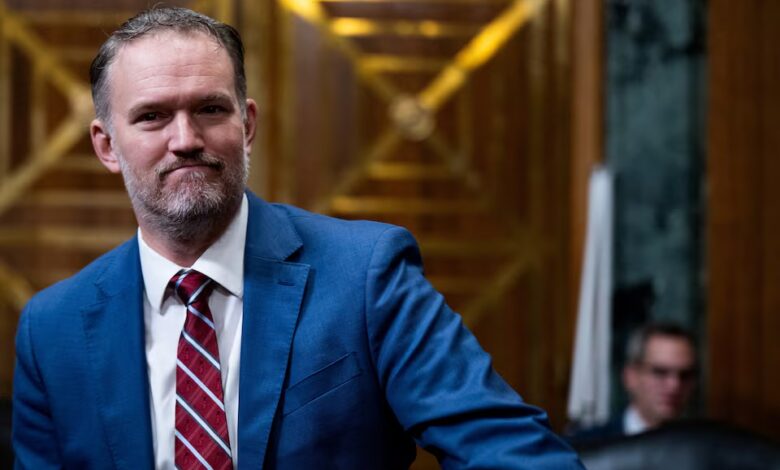
US Trade Representative Jamieson Greer made the call at a G20 meeting of trade ministers in Milwaukee, Wisconsin, where he outlined the Trump administration’s priorities on tariffs, manufacturing and global supply chains.
Greer called on major economies to tackle industrial overcapacity and reconsider aspects of the post-World War II tariff system that governs international trade. He also urged countries to avoid using food and agricultural exports as tools of economic pressure.
WASHINGTON TARGETS CHINA’S INDUSTRIAL POLICIES


Greer specifically criticised China’s industrial policies and subsidies, which Washington says have contributed to excess production and increased exports of goods into international markets.
“When non-market policies and practices allow production to expand far beyond domestic demand, the consequences spill across borders,” Greer said, arguing that excess production can put pressure on producers and workers in other countries.
China has rejected such accusations, arguing that Western governments use concerns about industrial overcapacity to justify protectionist trade measures.
US SEEKS CHANGES TO GLOBAL TRADE RULES
Greer also called for a review of the World Trade Organization’s Most Favoured Nation tariff principle. The system generally requires WTO members to provide the same tariff treatment to other members, subject to certain exceptions.
According to Greer, the current system can restrict governments’ ability to respond to what they consider to be distortive trade practices.
The discussions come as the United States continues to use tariffs as a major part of its trade policy. Greer defended US tariffs imposed on 59 countries and the European Union, arguing that differences in enforcement against forced labour can create unfair price advantages in global markets.
G20 COUNTRIES DISCUSS STEEL TARIFFS
Meanwhile, 28 mostly Western countries agreed on the sidelines of the G20 meeting to work towards imposing additional tariffs on steel from China and other countries considered major sources of excess production.
The agreement came as the OECD-led Global Forum on Steel Excess Capacity called for governments to avoid subsidies that keep loss-making steel mills operating or encourage the construction of new uneconomic plants.
The OECD estimates that excess steel capacity could reach 745 million metric tonnes in 2026, compared with 601 million tonnes in 2025.
China, the world’s largest steel producer, is not a member of the Global Forum, while India, the second-largest producer, is also outside the group.
CANADA SEEKS WIDER TRADING PARTNERSHIPS
The trade discussions have also highlighted differences among G20 members over their relationships with the United States.
Canada, for example, is seeking to expand trade with countries outside the US as Washington introduces new tariffs on some Canadian products.
Canadian Trade Minister Maninder Sidhu said Canada’s non-US trade had increased by 17 per cent over the past year to $33 billion, as Ottawa seeks to diversify its trading relationships.
TRADE TENSIONS REMAIN
The G20 discussions are expected to continue as participating countries consider how to address trade imbalances, industrial subsidies and the future of the global trading system.
The meeting highlights growing disagreements over how major economies should respond to excess production and trade distortions, with the United States pushing for stronger measures while China rejects accusations surrounding its industrial policies.
READ RELATED STORY
Iran war drains US missile arsenal, raising fears over China readiness
US forces leave Iraq after two decades as Iran influence and ISIS concerns grow
Iran awaits US response to seven-day plan to reopen Strait of Hormuz