A Federal High Court in Lagos has ordered commercial banks to place a Post No Debit restriction on accounts operated by the Osun State Government over a $13.92 million and ₦157.5 million arbitration award in favour of Gamji Nigeria Company Limited.
The order is an interim preservation measure, not a final transfer of all Osun government funds to Gamji. The court has adjourned the case to 22 October 2026 for hearing of the next stage of the enforcement proceedings.
The case is important because it raises questions about public finances, the management of a major water project in Ilesa, and whether restrictions on state accounts could affect payments such as salaries, pensions or government contracts.
For readers, the key issue is not simply that Osun’s accounts have been restricted. It is understanding why the restriction was imposed, who Gamji is, what arbitration means, how much is involved and what the court has — and has not — decided.

What exactly did the court order?
Justice D.E. Osiagor granted an interim order directing banks holding Osun State Government funds to place a Post No Debit restriction on the affected accounts.
A Post No Debit, commonly called a PND, prevents withdrawals or transfers from an account.
The order is intended to preserve funds up to $13,924,343.32 and ₦157.5 million while Gamji pursues enforcement of an arbitration award against the state government. This does not mean that Gamji has already received the money.
It also does not mean that every naira belonging to the Osun State Government has been permanently frozen.
The court has, for now, ordered banks to preserve enough funds to cover the amount in dispute while the substantive application is considered.
Who is Gamji Nigeria Company Limited?
Gamji Nigeria Company Limited is the contractor at the centre of the dispute.
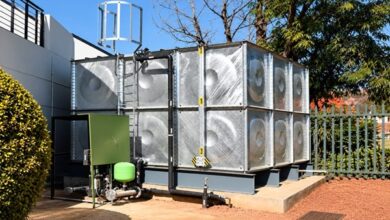
Osun State procurement records show that the company was awarded two contracts connected to the Ilesa Water Supply and Sanitation Project.
One contract, awarded in April 2017, was for the construction of a transmission main and booster pumping station and was valued at about $15.99 million.
A second contract, awarded in June 2017, covered the construction of three 10,000-cubic-metre concrete reservoirs and was valued at about $9.70 million. Both projects were funded by the Islamic Development Bank
So, in simple terms, Gamji is the private contractor that carried out part of the Ilesa water infrastructure project and later entered into a financial dispute with the Osun State Government.
How did the dispute begin?
According to Gamji’s court filings, engineering design changes and variations to the scope of work increased costs and contributed to delays.
The company said later amendments raised the value of the first contract to about $20.24 million and the second to approximately $10.95 million.
Gamji also claimed that 93 per cent of the work had been completed by October 2023 and that a Substantial Completion Certificate was issued in November 2024. Disagreements then arose over extensions of time, price adjustments and increased labour and material costs.
These are Gamji’s claims in the dispute. They should not be presented as independent findings by the Federal High Court.
Why did the case go to arbitration?
Before reaching the Federal High Court, the disagreement went through arbitration.
Arbitration is a legal process used to resolve disputes outside the normal court system.
Instead of a judge deciding the case initially, the parties present their claims and evidence to an independent arbitrator or panel of arbitrators. The arbitrator performs a role similar to a private judge and issues a decision known as an arbitration award.
Gamji said mediation efforts failed before it issued an arbitration notice on 3 April 2025. According to the court report, Osun State accepted the arbitration process and nominated an arbitrator. Preliminary proceedings were held in Lagos in May 2025. The available report does not identify the individual arbitrators by name.
What did the arbitration panel decide?
The arbitral panel delivered its final award on 24 July 2026.
It directed Osun State Government to pay Gamji $13,924,343.32, along with ₦157.5 million in reimbursable arbitration fees.
The panel also awarded 20 per cent annual interest on any outstanding balance after the compliance period expired.
Gamji said the deadline for payment passed on 24 August 2026 without settlement.
The company then approached the Federal High Court seeking to preserve state funds while it attempted to enforce the award.
Why is the Ilesa water project important?
The dispute is tied to a major public infrastructure project intended to improve water supply in Ilesa.
The project has faced difficulties for years. In December 2023, the Osun State Government said it was trying to extend the lifespan of the Islamic Development Bank financing agreement and was also seeking an out-of-court settlement with a contractor involved in the troubled project.
The government said at the time that the project had inherited contractual and financial problems and that negotiations had been difficult.
That background shows that the latest court case did not emerge suddenly. It followed years of disagreement surrounding the execution and financing of the Ilesa water project.
Which banks are affected?
The court order applies to several major banks holding Osun State Government accounts.
They include Guaranty Trust Bank, Access Bank, First Bank, Zenith Bank, United Bank for Africa, Ecobank, Fidelity Bank, Stanbic IBTC, Sterling Bank, Union Bank and Wema Bank, among others.
However, the publicly available report does not show how much money is held in each account.
It also does not establish that every account operated by every Osun government agency is affected.
That distinction is important.
Could salaries and pensions be affected?
This remains one of the biggest unanswered questions.
The available report does not identify which restricted accounts are used for salaries, pensions, healthcare, education or other government obligations.
There is therefore no verified evidence at this stage that civil servants will miss salaries or pensioners will stop receiving payments.
The practical effect will depend on which accounts contain the restrained funds and whether the state has other operational accounts that are unaffected.
Why does the 20% interest matter?
The arbitration award reportedly carries annual interest of 20 per cent on any unpaid balance after the compliance deadline.
That means the state’s financial exposure could increase if the award remains unpaid, depending on how the interest provision is ultimately applied.
Is this the same as the previous EFCC account restriction?
No. the present case is a commercial dispute involving Gamji and an arbitration award.
It should not be confused with any earlier restriction involving the Economic and Financial Crimes Commission.
The legal basis, parties and purpose of the current order are different.
That distinction is important because readers may otherwise assume that all restrictions on Osun accounts arise from the same case.
What happens next?
The Federal High Court has adjourned the matter to 22 October 2026 for hearing of the motion on notice. That hearing should give a clearer picture of Osun State’s legal response and whether the interim restriction will continue, be varied or face further challenge.
The Osun State Government may also seek to challenge the enforcement of the arbitration award, depending on the legal options available to it.
Until then, the current order remains an interim measure.
What readers should know
The most important point is that the court has not handed all Osun government money to Gamji.
It has ordered banks to preserve funds up to $13.92 million and ₦157.5 million while Gamji seeks enforcement of an arbitration award linked to the Ilesa water project.
Gamji is the contractor that handled key parts of that project. An arbitration panel — acting as an independent dispute-resolution body outside the normal court system — awarded the company the money after a contractual dispute.
What remains unclear is whether the restriction will affect salaries, pensions or essential public services, and how Osun State intends to respond before the next hearing.