39
During The 2027 Presidential Elections
Can He Beat TINUBU In His Region?
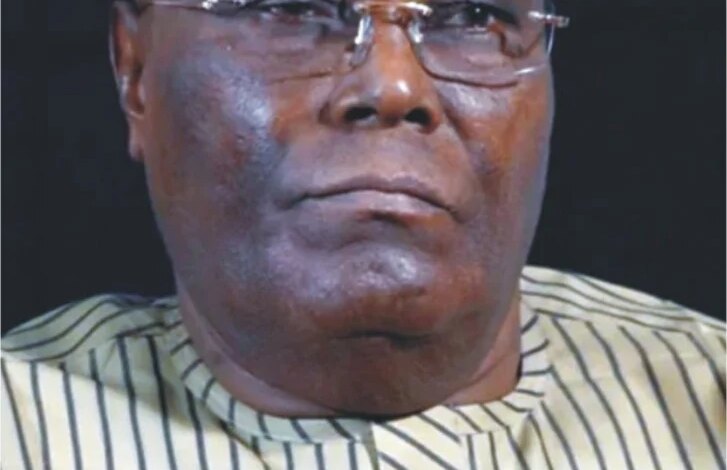
Former Vice President Atiku Abubakar is in the eye of a storm. He is once again seeking the Presidency, this time on the platform of the African Democratic Congress (ADC). But beyond the strength of his northern political network, one of the biggest questions surrounding his 2027 ambition is whether he can make substantial inroads into the South-West, particularly at a time when the region is debating whether President Bola Ahmed Tinubu should complete 2 terms.
The issue has become particularly important because the South-West remains one of Nigeria’s major presidential battlegrounds.
In 2023, Tinubu won 4 of the 6 South-West states, while Peter Obi won Lagos and Atiku won Osun. Across the zone, Tinubu obtained about 2.28 million votes, compared with approximately 941,000 for Atiku and 849,000 for Obi. The 2027 question is therefore whether he can persuade a significant number of Yoruba voters to support a northern candidate after a southern president has served only one term. That is where the politics of zoning and regional rotation becomes critical. Atiku has openly challenged the argument that the presidency should remain in the South for 2 consecutive terms.
In April 2026, he argued that the North had occupied the presidency for fewer years than the South since 1999 and questioned the fairness of applying zoning in determining who should contest. That position has become a major talking point around his candidacy. For Atiku and his supporters, the presidency is ultimately a constitutional contest. There is no constitutional provision preventing a northerner from contesting in 2027.
For many politicians and voters who support rotational presidency, however, the issue is not merely constitutional. It is political. And this distinction could matter enormously in the South-West. Former Kaduna Central Senator Shehu Sani recently put the issue bluntly, arguing that if Atiku wins in 2027, it would effectively end the current rotation between North and South and could generate resentment in the South. That statement is particularly significant because it came from a northern politician.
The central question for Atiku is: Why should a Yoruba voter abandon a sitting Yoruba president after only four years and vote for another northern president?
That is the political argument his campaign will have to confront. Atiku has already begun addressing the issue.
In a South-West engagement in 2025, he appealed directly to Yoruba voters, emphasising his long-standing personal and family connections to the region. He pointed to his marriage to a Yoruba woman and his relationships with people across the South-West as evidence of his affinity with the region. That is clearly part of his strategy. But personal relationships are only one element of presidential politics.
The bigger question is whether Atiku can convert those relationships into votes across six states. One mistake any presidential campaign would make is assuming that the entire South-West will vote as one bloc. The 2023 election demonstrated otherwise. Tinubu lost Lagos to Obi. Atiku won Osun. Tinubu won Ogun, Oyo, Ondo and Ekiti. Therefore, there is no guarantee that every South-West voter will automatically support Tinubu in 2027.
But there is equally no guarantee that opposition voters will automatically transfer their votes to Atiku. That distinction is important. A voter who does not support Tinubu is not necessarily an Atiku voter. That is why the South-West could become one of the most complicated electoral theatres in 2027.
Another issue being raised about Atiku’s chances is the strength of the ADC’s political machinery in the South-West. The argument that the ADC has “no strong figure” in the region, however, needs qualification. The party has been actively building a South-West structure.
In September 2026, Atiku formally affirmed former Osun State Governor Rauf Aregbesola as the ADC’s South-West leader. Atiku said Aregbesola had earned the position through his political experience, mobilisation and organisational capacity. That changes the argument considerably. It would therefore be inaccurate to say that Atiku has no prominent political figure in the South-West. He has Aregbesola. But Aregbesola’s name was missing in Atiku’s campaign council list. No strong South-West name was there.
The more relevant question is: How much of Aregbesola’s former political structure can the ADC actually mobilise for Atiku in 2027 That is a different question. Aregbesola is not an unknown political figure in the South-West. He was governor of Osun State from 2010 to 2018 and previously served as Commissioner for Works in Lagos. His political history gives him familiarity with both Osun and Lagos politics and with the broader progressive political tradition in the South-West. Atiku’s decision to formally recognise him as the zonal leader is therefore strategically significant.
It suggests that the ADC understands the importance of having a Yoruba political heavyweight at the centre of its South-West operation. There are those who say if Atiku wants to make a serious South-West push, Osun may be one of the most interesting states to watch. Atiku won Osun in 2023. He polled 354,366 votes against Tinubu’s 343,945, according to figures cited by The Guardian. That victory gives the ADC a reference point. It can argue that Atiku has already demonstrated that he can win a South-West state. But there is another side to the argument. A presidential victory in Osun in 2023 does not automatically translate into a 2027 victory.
The political circumstances have changed. The ADC must therefore rebuild the coalition that produced Atiku’s Osun performance rather than simply assume it will be repeated. What about Lagos? Lagos presents an even more complicated picture. Peter Obi defeated Tinubu in Lagos in 2023, polling 582,454 votes against Tinubu’s 572,606. This demonstrated that even in Tinubu’s political stronghold, a sufficiently motivated opposition campaign can produce a different outcome. But Atiku did not win Lagos. That matters. The challenge for Atiku is therefore not merely to defeat Tinubu in Lagos. He would need to persuade a large number of voters who supported Obi in 2023—or who may be inclined toward another opposition candidate in 2027—to transfer their support to him. That is an enormous political task. How about Ogun, Oyo, Ondo & Ekiti? These four states present a different challenge. Tinubu won all four in 2023. However, the political landscape is not frozen.
Oyo Governor Seyi Makinde is contesting the presidency, creating a major South-West political variable. Makinde’s candidacy could potentially alter the distribution of Yoruba votes because he is himself a major South-West political figure and sitting governor. His entry means the South-West opposition vote could be divided among several candidates rather than automatically flowing to Atiku.
Makinde’s emergence has been described as a potential challenge to Tinubu’s dominance in the region. Makinde’s presence creates an interesting political equation. If the central opposition objective is to defeat Tinubu, Atiku would need opposition voters in the South-West to eventually rally behind him. But what happens to a Yoruba voter who believes the presidency should remain in the South and therefore prefers a Southern candidate? That voter could find Makinde more attractive than Atiku. This is why the South-West may become one of the most difficult regions for an Atiku campaign. He is competing not only against Tinubu’s APC structure, but potentially against other opposition candidates seeking the same electorate. The ADC has recognised this challenge and has been establishing a regional organisation. The party’s South-West leadership includes figures from Ogun, Ondo, Oyo, Lagos, Osun and Ekiti, with Akinbowale Omole serving as Zonal National Vice-Chairman and other officers drawn from the 6 states.
This means the ADC cannot fairly be described as having no South-West structure. The question is instead whether that structure is sufficiently deep and electorally competitive to challenge the APC’s longstanding organisation in the region. That is a much harder test. APC has a major home-region advantage. Tinubu is from the South-West. He has spent decades building political networks in Lagos and across the region before becoming president. The APC therefore has an established political infrastructure that the ADC is attempting to challenge.
The APC has publicly set an ambitious target of 10 million votes from the 6 South-West states for Tinubu in 2027. But the zoning issue will not disappear. This is perhaps the most difficult hurdle. The South-West has a strong political tradition of negotiating around regional power-sharing. The argument that the South should complete 2 presidential terms has already become part of the 2027 debate.
Atiku’s insistence on contesting despite the zoning argument has generated resistance among politicians who believe the presidency should remain in the South through 2027. Atiku’s response is essentially that zoning is a political convention, not a constitutional requirement. Both arguments will likely feature prominently in the campaign.
What do you think about this?
Drop your opinion in the comment section.
FOLLOW US & Share this with someone who needs to see this.