European Union foreign ministers have accused Russia of prolonging negotiations to end the war in Ukraine while continuing attacks on the country’s energy infrastructure, warning that Moscow must demonstrate genuine commitment to peace.
The warning was issued on Monday, November 16, during a meeting of EU foreign ministers in Brussels, where officials insisted that achieving a ceasefire must take priority over broader discussions about Europe’s future security arrangements.
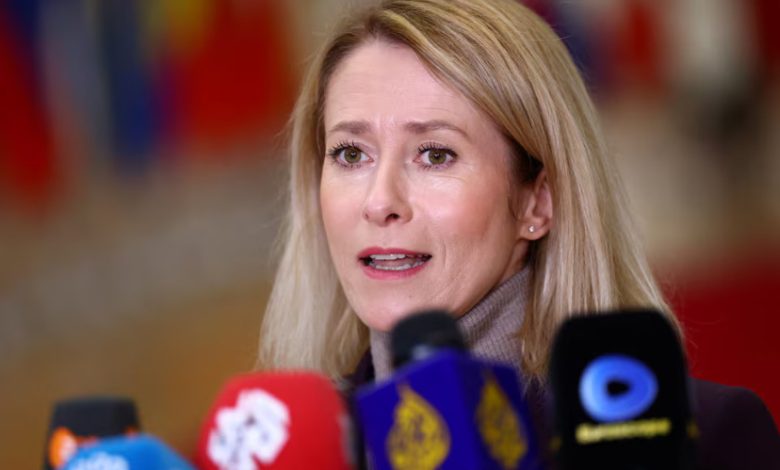
EU foreign policy chief Kaja Kallas said Russia’s continued military escalation undermined diplomatic efforts and showed that a meaningful ceasefire remained out of reach.
“What we need to see is a ceasefire to actually start the talks about anything else. We don’t see that at the moment because it is (Russia) really escalating,” Kallas told reporters.

She also maintained that Russia, as the country that initiated the invasion, must make concessions before negotiations can produce a lasting agreement.
EUROPE REJECTS MOSCOW’S SECURITY DEMANDS
The discussions followed Russia’s recent indication that it would consider European participation in negotiations if European countries demonstrated a genuine willingness to contribute to peace.
However, several EU ministers warned against allowing Moscow to make Europe’s future security arrangements a condition for ending the conflict.
Lithuanian Foreign Minister Kęstutis Budrys cautioned that engaging Russia on the issue before a ceasefire could give Moscow an advantage in negotiations.
“The rules are working, but the problem is that Russia is breaking them,” Budrys said.
European officials also expressed concern that Russia’s proposed security framework could undermine NATO’s military position and weaken existing security arrangements across the continent.
EU leaders have agreed that Britain, France, Germany, Italy and Poland, alongside representatives of EU institutions, should form Europe’s team for future discussions.
READ RELATED NEWS
Five European countries plan Rwanda deportation hub for rejected asylum seekers
South Africa shootings leave 17 dead as police launch investigations
EU STRENGTHENS PRESSURE THROUGH SANCTIONS
Alongside its diplomatic position, the European Union announced additional sanctions targeting Russian individuals and organisations accused of supporting Moscow’s war effort.
EU foreign ministers approved 145 new sanctions designations on Monday, including measures targeting Russia’s oil infrastructure and individuals linked to its business and financial networks.
French Foreign Minister Jean-Noël Barrot also announced that France and Britain would host an international conference in Paris on December 4 to address Russia’s so-called shadow fleet, a network of vessels used to transport Russian oil despite Western restrictions.
The latest measures form part of Europe’s broader strategy to limit Moscow’s financial resources and increase pressure for a negotiated settlement.
UNCERTAIN PROSPECTS FOR PEACE
Despite continued diplomatic engagements involving Russia, Ukraine, the United States and European governments, negotiations have yet to produce a lasting ceasefire.
Major disagreements remain over territorial control, security guarantees and Ukraine’s future relationship with Western military alliances.
European leaders have maintained that Ukraine must participate in decisions concerning its sovereignty and territorial future.
With winter approaching and attacks on critical infrastructure continuing, concerns are growing over the humanitarian and economic consequences of the prolonged conflict.
The EU has therefore urged Moscow to demonstrate genuine willingness to negotiate, insisting that a ceasefire and meaningful concessions must precede broader discussions about Europe’s security.