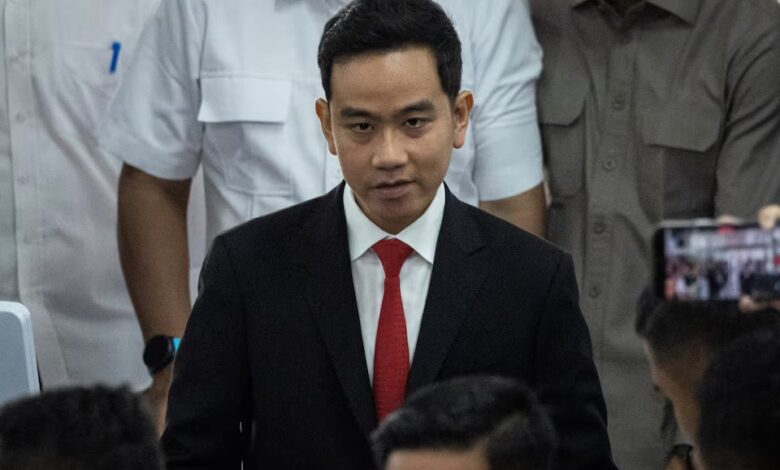
Indonesia’s Vice-President, Gibran Rakabuming Raka, has submitted his resignation to parliament following mounting political pressure over questions surrounding his academic qualifications and eligibility to hold the country’s second-highest political office.
The 39-year-old tendered his resignation letter to the leadership of the People’s Consultative Assembly (MPR) in Jakarta on Thursday, November 12, following weeks of controversy over his overseas educational credentials.
The development comes after Indonesia’s Constitutional Court and Supreme Court issued rulings last month questioning whether documents relating to his overseas education satisfied the requirements for presidential and vice-presidential candidates.
Under Indonesian election law, candidates for the country’s highest political offices must have completed senior secondary education or an equivalent qualification.


However, the controversy surrounding Gibran’s qualifications intensified after the courts found that the documents submitted to establish the equivalence of his overseas education did not meet the required standards.
The dispute subsequently triggered calls for his removal, with approximately 120 lawmakers from eight political parties signing a petition seeking parliamentary action against him.
PARLIAMENTARY PRESSURE MOUNTS
Gibran’s resignation came after weeks of growing criticism over his eligibility, with lawmakers seeking to initiate proceedings that could have resulted in his impeachment.
The parliamentary pressure intensified following the legal challenges, raising the possibility of a prolonged political confrontation within the government.
President Prabowo Subianto acknowledged Gibran’s contributions during his time in office, praising his work across different parts of Indonesia.
“I felt assisted. He did his job well,” Prabowo said in a speech, citing Gibran’s work across Indonesian regions and his former deputy’s “chivalrous attitude.”
Gibran’s departure is particularly significant because he is the son of former Indonesian President Joko Widodo, popularly known as Jokowi.
READ RELATED NEWS
Indonesia prepares to send up to 8,000 troops to Gaza
Russia, Ukraine exchange attacks as US Envoys meet Putin
Iran declares Argentina’s Navy and Air Force terrorist organisations
WHAT HAPPENS NEXT?
Under Indonesia’s constitutional arrangements, the People’s Consultative Assembly must formally address the vacancy and oversee the selection of a replacement.
President Prabowo is expected to nominate two candidates, from whom the Assembly will elect a new vice-president within 60 days.
Meanwhile, former President Widodo has reaffirmed his support for Prabowo’s administration despite the controversy surrounding his son’s departure.
Speaking to reporters in his hometown of Solo, Widodo said political positions were temporary and that he had reminded his son of the importance of understanding this reality.
“We will continue to support President Prabowo’s government, especially programs that serve the interests of the broader public,” Widodo said.
Gibran’s resignation marks an unusual moment in Indonesia’s political history, making him the first vice-president to leave office before completing his term since the country’s democratic reforms began in 1998.
The development has also raised discussions about political accountability, electoral eligibility and the influence of family connections in Indonesia’s democratic institutions.