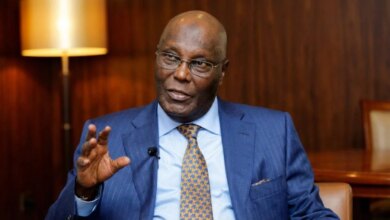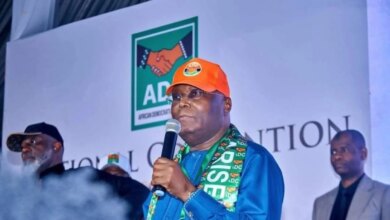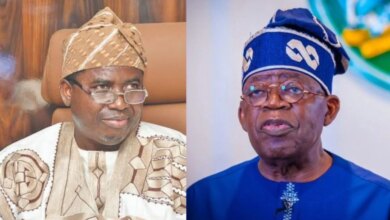
The presidential candidate of the Social Democratic Party (SDP), Prince Adewole Adebayo, has said that the Independent National Electoral Commission (INEC) was not designed to conduct free, fair and credible elections.
Adebayo said the commission’s composition and appointment process made it difficult for it to operate independently.
He made the remarks in an interview with Tribune Newspaper.
Reacting to INEC’s decision to publish the preliminary voters’ register online following pressure from former Vice-President Atiku Abubakar and other stakeholders, Adebayo said the commission had a legal obligation to make the register available but remained structurally unsuitable for credible elections.
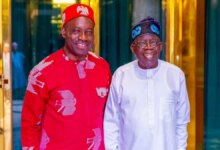
“INEC is not suited for free, fair, and credible election. It is not in nature. INEC is like driving a Toyota Sienna into water and trying to use it as a boat. It is not designed to float,” he said.
He explained that the problem went beyond the character of individuals appointed to lead the commission, arguing that its institutional structure made genuine independence difficult.
According to him, the recommendations of the Justice Muhammadu Uwais-led Electoral Reform Committee, established under the late President Umaru Musa Yar’Adua, offered a better framework for reforming the electoral body.
Adebayo said implementing the Uwais panel’s recommendations would produce an independent INEC whose leadership would not be appointed by a partisan authority, a non-governmental electoral commission and a structure that reflected the collective credibility of political actors.
He also cited Ghana as an example of a country where political parties participate in the electoral process, including the printing of ballot papers.
The SDP candidate, however, maintained that Nigeria could adopt the Uwais panel’s recommendations rather than continue with the present arrangement.
On INEC’s omission of some governorship candidates from its published list, Adebayo said the commission had made an administrative error in interpreting provisions of the Electoral Act concerning the period a candidate must have been a member of a political party before participating in its primary election.
He said he disagreed with a Supreme Court decision that gave the National Assembly powers relating to the determination of political party membership, but acknowledged that the court remained the final judicial authority in the country.
“The error is not of INEC. I disagree with the Supreme Court with utmost respect, but they are the final court in the land,” he said.
However, he accused INEC of selectively removing candidates’ names without first seeking clarification from the affected political parties.
Adebayo explained that where the commission could not find a candidate’s name in a particular party register, it should contact the party to establish whether the candidate had met the required membership period.
He said some of the SDP candidates affected by the omission were missing because INEC consulted the wrong register, adding that the commission acknowledged its mistake after the party provided the correct records.
“Those are the only areas INEC is not acting correctly administratively,” he said.
Adebayo also agreed with Atiku’s concerns over Section 63(2) of the Electoral Act, which permits the counting of ballot papers without official INEC marks under certain circumstances.
He described the provision as wrong and warned that it could create opportunities for electoral irregularities.
The SDP presidential candidate also rejected suggestions that the technological challenges experienced during the 2023 general elections were caused by failures of the Bimodal Voter Accreditation System (BVAS) and the INEC Result Viewing Portal (IReV).
According to him, the technology itself was not responsible for the problems, alleging instead that there was deliberate sabotage or a refusal by officials to comply with the relevant electoral provisions.
“There were no glitches in BVAS and IReV. What happened is that there was deliberate sabotage or refusal to comply with the provisions,” he said.
He compared the situation to a photographer who refuses to take a photograph, arguing that the failure should not be blamed on the camera.
Adebayo said opposition parties and Nigerians must continue to put pressure on INEC to ensure that the commission performs its duties in accordance with the law.
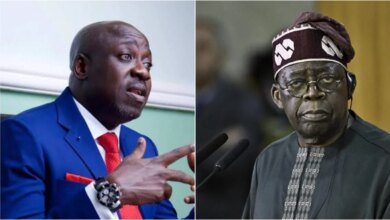
On the economy, the SDP candidate described the removal of petrol subsidy by President Bola Tinubu’s administration as a mistake, arguing that the government should have prioritised domestic crude supply and affordable local refining instead.
He said his party’s manifesto proposed making crude oil available to domestic refineries at no cost, with the government prioritising local consumption before exporting the remaining production.
According to him, increasing the supply of locally refined petroleum products would naturally reduce prices without the need for government price controls or subsidies.
“The problem of petrol, they should not even have removed subsidy at all. The subsidy will have naturally ended if they lower the price and the way to lower the price is to guarantee supply at a reasonable cost,” he said.
Adebayo argued that Nigerians should not be forced to purchase petroleum products at international prices when the country had abundant crude oil resources.
He likened the situation to a farmer who harvests thousands of yams but takes all of them to the market while expecting his family to purchase the same produce at the prevailing market price.
He also rejected the African Democratic Congress (ADC)’s proposal for a targeted, capped and audited subsidy tied to locally refined petrol, describing it as unnecessary.
According to him, the solution was to ensure adequate domestic supply of crude oil to refineries rather than regulate prices.
Adebayo also dismissed the Tinubu administration’s economic policies as reforms, describing them instead as increases in prices and taxes.
“Tinubu has no reform. There’s no reform there. You only have deformation and sabotage,” he said.
He argued that genuine reforms should have clear policy objectives, comply with the Constitution and align with the country’s national development plans.
The SDP candidate particularly criticised the student loan programme, arguing that the government had reduced funding for universities while increasing financial pressure on students through loans.
He said universities should be funded as centres of learning and research rather than turned into profit-making institutions, adding that graduates should not be burdened with debts without corresponding employment opportunities.
On insecurity, Adebayo accused successive governments of exploiting the crisis to divert public funds, while failing to protect communities affected by terrorism and banditry.