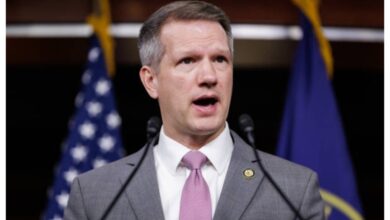
British Conservative Party leader Kemi Badenoch has rejected calls for Britain to formally apologise for its role in the transatlantic slave trade, arguing that African rulers and merchants also participated in capturing, selling and profiting from enslaved people.
Badenoch, who was born in London and raised partly in Nigeria, said it would be unfair to hold today’s British taxpayers financially responsible for atrocities committed centuries ago. She insisted that any examination of slavery must recognise the involvement of different nations and societies rather than concentrate solely on Britain.
Her comments followed Prime Minister Andy Burnham‘s announcement that he was willing to discuss a formal apology ahead of the Commonwealth Heads of Government Meeting in Antigua and Barbuda.
The disagreement has reopened a longstanding debate over historical responsibility, reparations and whether acknowledging Britain’s role in slavery should include financial compensation for affected countries and communities.
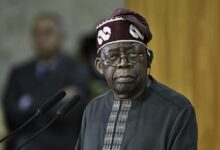
Speaking to Sky News on Sunday, 1 November, Badenoch went further, describing the British Empire as being, in her assessment, a force for good overall, while acknowledging that terrible abuses had taken place under imperial rule.
Badenoch questions why African slave traders are not also being challenged
In a statement published on X, Badenoch questioned whether Caribbean governments demanding an apology from Britain would also seek accountability from the descendants of African rulers and merchants who took part in the trade.
She argued that the history of slavery involved multiple societies, including African kingdoms that supplied captives to European traders.
Badenoch also emphasised Britain’s role in abolishing the transatlantic slave trade, saying the country should receive recognition for helping to end a practice in which it had previously participated.
Her argument focuses on shared historical involvement. However, acknowledging the participation of African traders does not remove the responsibility of European governments and merchants for organising, financing and expanding the Atlantic system of human trafficking and plantation slavery.
Historians recognise that some African rulers and intermediaries sold captives to European traders. They also document Britain’s central role in transporting enslaved Africans across the Atlantic, insuring slave ships and profiting from plantation economies.
The debate is therefore not simply about whether Africans participated, but also about the different roles played by those who supplied captives, those who transported them and the governments and businesses that sustained the trade.
Why Britain’s slavery apology is back on the political agenda
The controversy intensified after Burnham indicated that his government was open to discussing a formal apology for Britain’s involvement in the slave trade.
The Prime Minister acknowledged the suffering caused by slavery and said Britain should confront its historical role while maintaining relationships with Commonwealth countries.
However, his government has drawn a distinction between expressing an apology and accepting financial liability.
Burnham has ruled out direct compensation payments, instead raising the possibility of working with international partners to improve debt arrangements for poorer Commonwealth countries.
Caribbean leaders have cautiously welcomed the prospect of an apology but maintain that wider reparatory justice must remain part of the discussion.
Their demands extend beyond cash payments to include investment in education and healthcare, historical recognition, cultural restoration and measures addressing the continuing consequences of colonial exploitation.
Britain transported more than three million enslaved Africans
Historical evidence provides important context for the dispute.
According to research cited by the Associated Press, Britain transported more than three million enslaved Africans across the Atlantic during its involvement in the trade.
Enslaved people were forced onto ships and taken primarily to plantations in the Americas and the Caribbean, where their labour generated wealth for plantation owners, merchants and investors.
Britain abolished its slave trade in 1807 and passed legislation to abolish slavery across most of its empire in 1833, with emancipation implemented in stages.
However, the ending of slavery did not immediately eliminate the economic inequalities created by the system.
The British government compensated slave owners following abolition, rather than making equivalent payments to the people who had been enslaved.
This history remains central to demands for reparations because campaigners argue that the financial consequences of slavery extended across generations.
Badenoch’s emphasis on Britain’s abolitionist role is historically relevant, but Britain’s eventual opposition to the trade does not erase its earlier participation or the profits earned from it.
Badenoch says Tony Blair already expressed Britain’s regret
Badenoch also cited former Prime Minister Tony Blair’s statements about slavery, arguing that Britain had already acknowledged its historical wrongdoing.
Blair expressed deep sorrow over Britain’s involvement in the trade in November 2006 and repeated his regret during events marking the 200th anniversary of the abolition of the British slave trade in 2007.
However, those statements have long been debated because campaigners distinguish expressions of regret from an unambiguous formal apology.
Badenoch maintained during her Sunday interview that Blair’s earlier words should be sufficient.
Royal commentator Jennie Bond challenged that interpretation, arguing that acknowledging historical suffering is not necessarily the same as delivering the formal apology sought by campaigners.
Badenoch opposes compensation and further debt relief
Beyond the question of an apology, Badenoch criticised proposals linking historical reparations to financial assistance for poorer countries.
She referred to international debt cancellation campaigns, including Jubilee 2000 and Make Poverty History, which secured substantial debt relief for developing nations.
Badenoch argued that previous debt relief had not prevented some beneficiary countries from accumulating further debts.
She also warned against making British taxpayers responsible for financial compensation arising from actions committed generations ago.
Her position differs from that of Caribbean governments, which argue that reparatory justice should address long-term economic and social consequences rather than be reduced to ordinary development assistance.
In July 2026, the Caribbean Community, known as CARICOM, endorsed a revised Ten-Point Plan for Reparatory Justice. The framework includes demands for formal apologies alongside broader programmes addressing education, healthcare, cultural heritage and economic development.
The distinction matters because debt restructuring, development assistance and reparations are not necessarily interchangeable. Each has different purposes, beneficiaries and policy conditions.
What the disagreement means for African and Caribbean countries
The debate has implications for relations between Britain and Commonwealth countries, particularly those in Africa and the Caribbean.
For Caribbean governments, an apology would represent official recognition of historical responsibility and could form part of broader discussions about repairing the effects of slavery.
For Britain, the political disagreement concerns how far historical recognition should go and whether any financial commitments should follow.
The question of African participation also requires historical context. Some African political authorities and merchants benefited from the trade, but millions of Africans were captured, transported, enslaved or otherwise harmed.
Treating Africa as a single participant risks overlooking the differences between those who profited and those who suffered.
The issue is particularly relevant to Nigeria because several societies in the region that later became modern Nigeria were connected to the Atlantic slave trade. However, present-day Nigeria did not exist as a unified independent state during most of that history.
Any discussion of historical responsibility must therefore distinguish individual rulers, trading networks, colonial powers and modern governments.
Read related news:
Kemi Badenoch promises to end council housing for foreigners
Kemi Badenoch faces Tory pressure over possible deal with Reform
Kemi Badenoch tops UK poll as most popular party leader