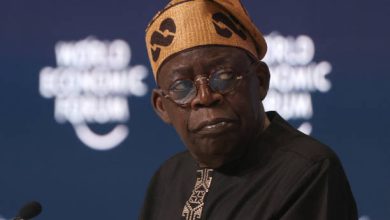
Seyi Makinde’s 2027–2031 manifesto has placed a three-year deadline on some of Nigeria’s most consequential reforms, including state policing, the restructuring of government-owned refineries, lower production costs and improved standards in public education.
But the document’s most important test may be whether its ambitious targets can be matched with clear funding arrangements, institutional capacity and measurable results.
Titled “The Reset Agenda: A Governing Programme for a Productive, Secure, Capable and Accountable Federation”, the manifesto is built around four pillars: economic reset, security reset, education reset and socio-political reset.
It allocates the first three years to implementing its principal commitments, while reserving the fourth for addressing shortcomings and publishing independently verified results.

The programme also promises a consolidated delivery plan within the first 100 days of the administration and quarterly public scorecards showing which commitments have been completed, delayed or abandoned.
That accountability mechanism could distinguish the proposal from familiar campaign promises. However, its credibility will depend on whether the government publishes baseline figures, identifies the institutions responsible for each target and makes its performance records accessible to independent scrutiny.
RELATED NEWS:
Economy: From cheaper production to refinery decisions
Makinde’s economic plan focuses on tackling the structural expenses that make goods costly before they reach consumers. It identifies poor roads, insecurity, unreliable electricity, expensive credit and agricultural storage losses as major contributors to Nigeria’s high cost of living.
The manifesto proposes priority road corridors linking farming communities to markets, alongside value-chain development for rice, maize, cassava, beans and tomatoes. The intention is to reduce transportation and post-harvest losses while improving the supply of food and opportunities for processors.
On petroleum, it proposes an independent assessment of the four government-owned refineries within six months. Each facility would subsequently be assigned a private operating partner, converted into another commercially viable establishment or placed under an orderly decommissioning arrangement within 12 months.
The proposal carries considerable financial implications. The US Energy Information Administration puts the combined installed capacity of Nigeria’s four state-owned refineries at 445,000 barrels per day, but reports that they have been largely shut down since 2020, with only intermittent operations at reduced capacity.
Makinde’s plan therefore raises a fundamental question: how much more public money should be committed to these facilities before the country accepts that some may no longer be commercially viable?
Another proposal, the Domestic Energy Value Credit, would give Nigerians a measurable benefit from crude oil refined and consumed locally, potentially lowering the effective cost of qualifying petroleum products.
However, the manifesto will need to explain the credit’s calculation, eligibility rules, funding source and verification process before households can assess its likely benefit.
The electricity proposal would also redistribute responsibilities, allowing states greater control over intrastate distribution while retaining a coordinated national market.
On public finance, Makinde targets a reduction of the federal fiscal deficit to the statutory ceiling of three per cent of GDP by the end of his third year. Section 12 of the Fiscal Responsibility Act 2007 already provides for that ceiling, subject to the law’s provisions. His manifesto also targets a debt-service-to-revenue ratio of no more than 50 per cent.
State police: A proposal meeting an active constitutional process
The security pillar proposes establishing state police through a phased process. The first year would focus on legislation, recruitment standards and the division of responsibilities between federal and state authorities. Training, preparations and oversight arrangements would follow in the second year, with compliant state police services expected to operate by the third.
This proposal enters a political environment in which constitutional changes are already advancing. On November 3, the National Assembly confirmed that 28 State Houses of Assembly had approved the constitutional amendment seeking to establish state police, exceeding the required 24-state threshold. The amendment still has to complete the remaining constitutional process before the proposed system can take effect.
Beyond creating state police, Makinde proposes a common coordination framework for security agencies, with clearly identified lead agencies, response timelines and operational responsibilities whenever credible threats emerge.
The manifesto also links security operations to rebuilding communities affected by terrorism, banditry and kidnapping. Its recovery proposals include restoring farms, schools, markets, healthcare facilities and transport services.
Education: Targets that can be measured
The education programme sets a target of ensuring that at least 50 per cent of Primary Three pupils attain minimum literacy proficiency and 65 per cent meet the required numeracy standard within three years.
It also seeks to reduce the performance gap between the five best-performing and five weakest-performing states by at least 25 per cent.
The targets address a serious national problem. UNICEF’s 2026 analysis of foundational learning highlights stark disparities across Nigeria, including a functional literacy rate of 89 per cent in Lagos compared with 14 per cent in Sokoto among children completing Grade Five.
The manifesto proposes improved teacher training, technical and vocational education, safer schools and stronger links between skills acquisition and employment. It also promises an essential primary healthcare guarantee and expanded insurance coverage for poor and vulnerable Nigerians.
The unanswered implementation question
The socio-political pillar proposes constitutional and fiscal changes to transfer more responsibilities to states and local governments, including greater state participation in solid-mineral decisions. It also supports changes to local government structures through transparent processes involving affected communities and legislatures.
On housing, the plan identifies serviced land, improved property documentation, housing finance and private-sector partnerships as instruments for expanding access to decent homes. It does not, however, provide a specific national housing construction target.
The central weakness to watch is the distance between setting targets and financing them. The manifesto outlines deadlines and desired outcomes, but the details presented do not establish the full cost of the programme, the funding allocation for each sector or the precise financial responsibilities of federal, state and local governments.
Its quarterly scorecards could help Nigerians track progress, but only if they disclose actual expenditure, measurable results and reasons for missed deadlines.
Ultimately, Makinde’s programme will be judged not by the number of promises it contains, but by whether Nigerians experience cheaper food, safer communities, functioning public services and better learning outcomes.
Its three-year reform clock has set the deadline. The challenge is to show how the country will pay for the changes and who will be held responsible when delivery falls short.
For More News Updates, Visit New Daily Prime News