Nigeria’s campaign season is facing a growing security crisis, with election monitors recording attacks on candidates, supporters and political gatherings across much of the country.
The Kimpact Development Initiative (KDI) says its election-violence monitoring project documented 124 incidents and 22 deaths between 1 July and 23 November 2026. The incidents affected 35 states and the Federal Capital Territory.
The figures, released on 24 November, raise concerns about the safety of campaigning ahead of the presidential and National Assembly elections scheduled for 16 January 2027.
A separate assessment by the Armed Conflict Location & Event Data Project (ACLED) recorded more than 30 attacks targeting campaigns, candidates, supporters, convoys and political gatherings after campaigning began on 19 August. ACLED reported more than 10 deaths in those incidents.

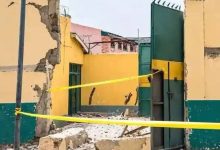
The two sets of figures should not be added together: they cover different periods and use different monitoring methods.
Read related news from New Daily Prime
Intruders break into Prince William and Kate’s Norfolk home in major security breach
Babachir Lawal predicts Peter Obi’s victory in 2027 presidential election
INEC warns youths over vote buying, ballot snatching ahead of 2027 elections
State-by-state: Where attacks have been documented
The following incidents are drawn from published monitoring reports and named accounts. They are not a complete list of the 35 affected states, and an incident appearing in a report does not mean that police have established who organised it.
State | Documented election-related security incident |
|---|---|
Delta | On 7 November, an attack on a political procession in Asaba reportedly killed one person and injured five. A separate attack on a campaign entourage in Ughelli North on 23 November left six people dead, according to police figures cited in subsequent reporting. |
Lagos | Armed men reportedly disrupted an opposition town hall meeting in Oregun on 12 November. A journalist covering the gathering said he was assaulted. |
Kano | A campaign convoy carrying Rabiu Kwankwaso was reportedly attacked in Bichi on 15 November, with vehicles damaged and supporters injured. |
Cross River | Peter Obi’s campaign convoy was reportedly attacked in Calabar on 4 November. |
Kebbi | Police reportedly used tear gas near a building housing Atiku Abubakar and members of his campaign team in Birnin Kebbi. |
Enugu | A supporter died following an attack connected to a campaign launch in October. Separate September attacks on political meetings were also reported. |
Ebonyi | Gunmen attacked candidate Rollins Offia-Nwali’s convoy on 22 October, reportedly killing one person and injuring three. |
Edo | An opposition candidate’s convoy was reportedly attacked in October. A separate shooting in Benin City on 25 November reportedly injured at least one person as supporters gathered for a campaign event. |
Oyo | An attack on supporters during a political procession in Ibadan on 14 October reportedly resulted in one death. |
Ekiti | An attack on presidential candidate Omoyele Sowore and members of his team was reported in Ado-Ekiti on 30 October. |
Benue | The obstruction of Peter Obi’s convoy was reported on 8 September. |
The October incidents are detailed in monitoring by the Centre for Democracy and Development, while the wider sequence of reported attacks was also cited by the Socio-Economic Rights and Accountability Project (SERAP) in its call for electoral prosecutions.
Why the violence is causing alarm
The danger goes beyond the number of people killed.
Attacks on campaign meetings can prevent parties from reaching voters. Assaults on supporters may discourage people from attending rallies, expressing political opinions or turning out on election day.
The Centre for Democracy and Development’s October security tracker recorded attacks affecting several political parties, including the APC, ADC, NDC and PDP. This suggests that the threat is not confined to one side of the political contest.
KDI’s findings show how quickly the problem has grown. Its monitoring recorded three incidents in July, 10 in August, 23 in September and 48 in October. A further 40 were recorded in November up to the reporting cut-off.
The organisation identified physical assaults and property destruction as the two largest categories of documented violence. Shootings, harassment and kidnappings also featured in its findings.
Delta killings demand answers
The 23 November attack in Delta State has become a test of the authorities’ ability to investigate election-related deaths.
Initial accounts differed over the number of victims. The campaign organisation of former Deputy Senate President Ovie Omo-Agege had earlier reported four deaths, while police subsequently confirmed six, according to published reports.
That difference matters. Accurate casualty figures, identification of victims and a clear account of what happened are essential if investigators are to establish responsibility.
It is equally important to distinguish allegations of political sponsorship from proven facts. An attack on a campaign does not, by itself, establish that a rival party ordered it.
Security concerns stretch beyond the South
ACLED has highlighted politically linked attacks and unrest in the North West, particularly Kano, Kaduna, Zamfara and Katsina.
Its analysis points to political grievances, economic pressures and public dissatisfaction as possible factors behind some disturbances.
However, the same level of risk should not automatically be assigned to every state. Different types of incidents require different responses. A disrupted rally, an assault on a candidate and a deadly armed attack are all serious, but they are not interchangeable.
KDI also identified Rivers, Ondo and Kebbi among states with significant numbers of incidents. Its public statement did not provide a full incident-by-incident breakdown for all 36 states and the FCT. It would therefore be misleading to publish invented state totals or rank every state by danger.
Police and electoral authorities face mounting pressure
The central question is whether Nigeria can protect political participation before polling day.
Police must investigate attacks, preserve evidence and explain publicly what their inquiries establish. They must also protect lawful campaign activities regardless of party affiliation.
The Independent National Electoral Commission has a stake in the outcome. An election cannot be judged only by what happens at polling units if candidates and voters have already faced intimidation during the campaign.
Global Rights, in its October assessment, identified concerns involving attacks on campaign events and the conduct of security agencies. It also noted that conflicting accounts of some incidents made accountability more difficult.
For voters, the consequences are immediate. A person who fears violence at a rally may avoid political activity altogether. A journalist prevented from covering an event cannot freely report what happened. A candidate whose convoy is repeatedly attacked may struggle to reach communities. These pressures can damage the fairness of an election before a single ballot is cast.
What must happen before January
With the presidential election approaching, the response needs to be practical.
Security agencies should publish credible updates on major investigations and explain whether suspects have been arrested or charged. Parties should reject threats by their supporters and cooperate with lawful inquiries. Election monitors should continue publishing evidence that separates confirmed incidents from allegations.
Authorities also need to consider the places where attacks have occurred: campaign venues, roads used by convoys, party offices and gathering points.
Nigeria’s election is not yet defined by the violence recorded so far. But the warning is unmistakable.
If candidates cannot campaign safely and citizens cannot take part without fear, the credibility of the 2027 election will be at risk long before polling day.