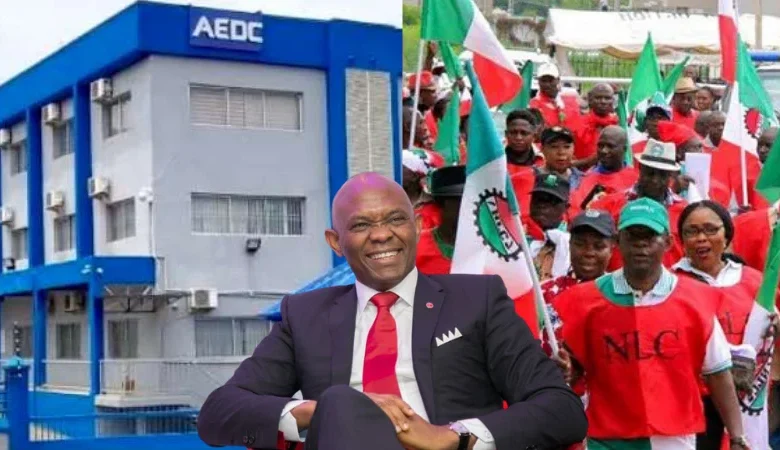
A growing crisis has engulfed the Abuja Electricity Distribution Company (AEDC), a key power utility now controlled by billionaire businessman Tony Elumelu, as protests by over 900 workers intensify scrutiny of the company’s recent restructuring and leadership decisions.
An investigation into the situation reveals a mix of labour unrest, disputed claims, and lingering operational challenges since AEDC came under the control of Transcorp Plc.
How Transcorp Acquired AEDC
Transcorp Plc, chaired by Elumelu, secured a 60% controlling stake in AEDC in August 2023, strengthening its position in Nigeria’s power sector. The acquisition followed years of financial complications tied to a $122 million debt owed to United Bank for Africa (UBA).
The previous core investor, KANN Consortium, had obtained its stake in 2013 through a UBA-backed loan but defaulted by 2021. This prompted UBA to seize the equity and initiate a divestment process. By May 2023, regulatory approvals cleared the path for Transcorp’s takeover, effectively resolving the long-standing debt issue.
Post-Acquisition Challenges
Despite expectations of a turnaround, AEDC has faced ongoing instability since the takeover. In 2024, the company restructured its leadership, dissolving the existing management team—a move management described as necessary to fix inherited inefficiencies.
However, insiders argue that the transition has exposed deeper systemic issues, with persistent disruptions reportedly affecting operations.
Mass Layoffs Spark Outrage
Tensions escalated in November 2025 when AEDC announced the dismissal of over 900 employees as part of a restructuring effort aimed at improving efficiency and service delivery.
While the company maintained that the exercise targeted underperforming and retiring staff, internal sources dispute this narrative. Some claim the layoffs were driven by the financial burden of implementing Nigeria’s new minimum wage.
Following the approval of a ₦70,000 minimum wage signed into law by President Bola Ahmed Tinubu in July 2024, AEDC reportedly adjusted salaries in October 2025. Critics allege the subsequent job cuts were a cost-control measure to offset increased wage obligations.
Reports indicate that as many as 1,500 workers were initially listed for disengagement, though between 800 and 900 were ultimately affected.
Labour Protest and Rising Tensions
The layoffs have triggered strong backlash from the Nigeria Labour Congress (NLC), which recently led a protest at AEDC’s Abuja headquarters.
Labour unions accuse the company of unfair labour practices and victimisation, while affected workers have demanded reinstatement and better working conditions.
Uncertain Path Forward
Nearly two years after the high-profile acquisition, AEDC remains under intense public and industry scrutiny. What was expected to mark a new phase of stability is now overshadowed by labour disputes, operational concerns, and questions about the effectiveness of ongoing reforms.
As tensions continue to rise, the coming months are likely to determine whether Transcorp’s intervention will deliver meaningful improvements—or deepen the controversy surrounding one of Nigeria’s key electricity distributors.
🚨BREAKING: Watch The Video Clip Here ➤