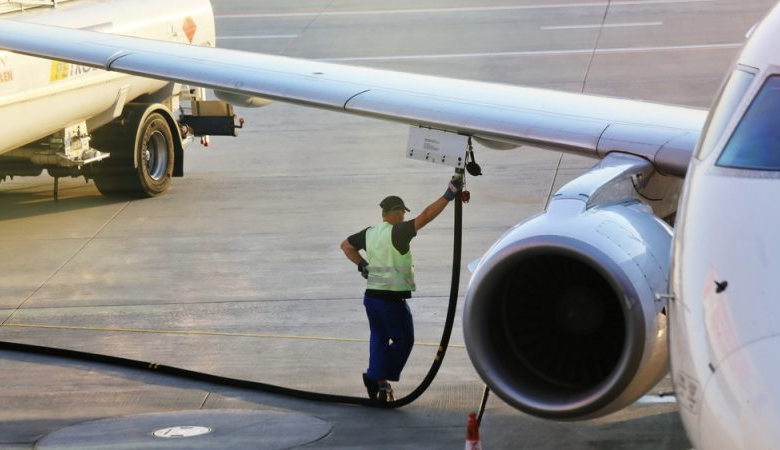
In a bid to stabilise supply and curb rising costs in the aviation sector, the Nigerian Midstream and Downstream Petroleum Regulatory Authority (NMDPRA) has pegged aviation fuel, also known as Jet A1, at a maximum of N2,037 per litre in Abuja, with the product costing between N1,760 and N1,988 per litre in Lagos.
The move comes amid mounting pressure from local airline operators who have threatened to shut down operations over the lingering fuel crisis and soaring operating expenses.


However, with airlines still threatening a shutdown and the federal government yet to reach a final resolution with operators, uncertainty continues to hang over Nigeria’s aviation sector.
Minister of Aviation and Airspace Management, Festus Keyamo, in an exclusive chat with LEADERSHIP, clarified that domestic carriers had not rejected government intervention through the reduction of airlines’ debt by 30 per cent, but are instead demanding fairness in pricing from fuel marketers.
“They have not rejected it. They are very grateful to Mr President. I think they are only pushing for fair pricing with the marketers,” Keyamo said.
Despite the intervention, airline operators have maintained their position, warning that operations could be disrupted if urgent measures are not implemented. The carriers had earlier issued a seven-day ultimatum, threatening to halt flights.
Industry data shows that the cost of fuelling aircraft has risen sharply in recent months. For instance, fuelling a Bombardier CRJ 900 or Airbus A220, which cost about N2.1 million per flight in January, has surged to approximately N7.6 million as of April 26, a 350 per cent increase.
The vice president, Airline Operators of Nigeria (AON), Allen Onyema, attributed the spike partly to global tensions, including the US-Iran crisis, but argued that local price increases are disproportionate to international trends.
“Since the advent of the US-Iran war, there has been a spike in aviation fuel price in Nigeria, which we feel is not proportionate to the hike internationally,” Onyema said.
“We expect that in the next 48 hours something drastic should be done because no airline will fly in this country in the next seven days if nothing is done—not because they don’t want to fly, but because fuel may not be available to us at sustainable pricing.”
In response, the NMDPRA has introduced a series of measures aimed at easing supply constraints and reducing costs. These include directing marketers to sell aviation fuel directly to airlines to eliminate middlemen and improve transparency within the supply chain.
The regulator said the new pricing benchmark is based on Platts average prices recorded between April 17 and 23, 2026, warning that purchases outside the window may attract higher rates due to global market volatility.
It also proposed the inclusion of aviation turbine kerosene (ATK) in the federal government’s naira-for-crude initiative, a move expected to reduce foreign exchange pressures and support price stability.
Additionally, the authority plans to engage refiners over rising premium charges and work with aviation agencies to streamline the number of airside fuel distributors, aimed at improving efficiency and safety compliance at airports.
“NMDPRA should direct marketers to sell directly to airline operators within this period. To ensure price stability, NMDPRA should engage Dangote Petroleum Refinery and Petrochemicals (DPRP) to adjust the premium on Platts and the cost variation element recently increased by the refinery.
“NMDPRA should work with FAAN and NCAA to validate airside distributors with infrastructure and trim the number of operators based on agreed criteria. The Ministry of Aviation should facilitate a consultative meeting between oil marketers and airline operators to resolve outstanding debts.
“Marketers should consider a 30-day credit window for airlines to pay for supplies made. NMDPRA should recommend the inclusion of ATK under the naira-for-crude initiative,” it said.
The authority further acknowledged existing financial strains between airlines and fuel marketers, urging the Ministry of Aviation to facilitate dialogue and resolve outstanding debts.
The measures follow a series of stakeholder meetings held in April involving regulators, airline operators and fuel marketers, as part of efforts to address the persistent Jet A1 crisis.
Meanwhile, the group manager, Marketing and Communication, Ibom Air, Aniekan Essienette, disclosed on Monday that the carrier could begin reducing flight frequencies in the coming days as fuel costs reach unsustainable levels.
🚨BREAKING: Watch The Video Clip Here ➤