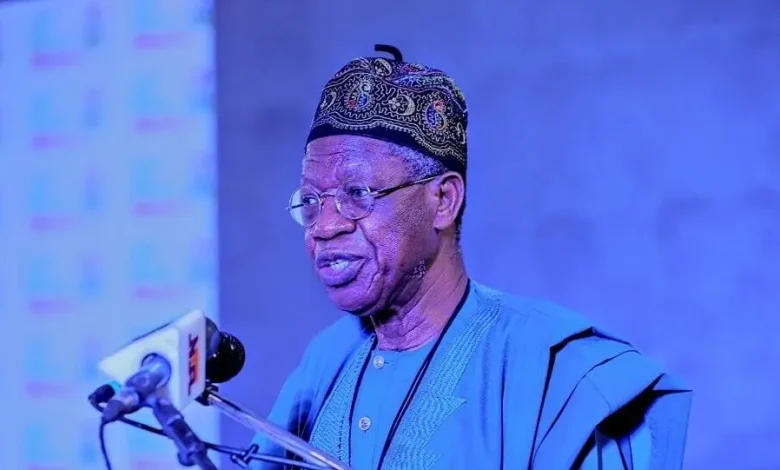
A former Minister of Information and Culture, Alhaji Lai Mohammed, has said that democracy is the most viable system of governance, despite its inherent imperfections.
Mohammed made this assertion during a high-level interactive session at St John’s College, Cambridge, convened by the Cambridge University Nigeria Society.
A statement on the session was made available to newsmen on Thursday in Abuja by Mr Nnamdi Atupulazi, Head of Strategic Communications in the former Minister’s media office.
Atupulazi said the event brought together Nigerian students and scholars in the diaspora for a candid discussion on the state of democracy, governance and development in Nigeria. He said participants at the sessionraised concerns about the effectiveness of democracy in Nigeria in the context of low educational penetration.

Atupulazi said, while responding to the concerns, Mohammed stressed that the real challenge was not in the principle of equal voting rights, but in the socio-economic conditions that shape voter behaviour. The former minister noted that improving access to education, healthcare and infrastructure, particularly in underserved regions, is critical to strengthening democratic outcomes.
Addressing the link between insecurity and social exclusion, Mohammed said insurgency and banditry were driven, in part, by poverty, lack of education and marginalisation. He emphasised that military action alone was insufficient and rather called for a balanced approach that integrates non-kinetic measures such as education and economic development.
Earlier in a presentation, Mohammed underscored the central role of communication in governance, describing it as the “lifeblood” that connects leadership to the people. He argued that governance in the modern era cannot succeed without deliberate, strategic and credible communication.
“Communication is not a supporting function of governance, it is central to it. It is the bridge between the state and its citizens, the system through which policies are explained, legitimacy is built and trust is sustained,” he said.
Drawing on his unique experience as both an opposition spokesman and government spokesperson, the former minister highlighted the transformation of political communication in the digital age.
“We have moved from top-down messaging to real-time public conversation. Citizens today do not just receive information, they interrogate it, challenge it and actively shape the narrative,” he said.
Mohammed warned that governments must adapt to this evolving reality by becoming more transparent, responsive and consistent in their communication strategies.
Reflecting on his time in office, Mohammed cited multi-platform communication as a defining achievement, shifting from one-way messaging to active engagement, integrating citizen feedback into governance and decision-making. He stressed communication’s central role, drawing from his book to show how it shaped narratives, managed crises, and defended national interests.
Mohammed recalled that during COVID-19, communication was Nigeria’s strongest tool, driving compliance with safety measures and significantly reducing the pandemic’s impact.
On the P&ID case, the former minister highlighted a dual approach of legal action and media engagement, stressing the need to influence both court proceedings and global public opinion.
He also recalled the many misinformation during EndSARS and justified the Twitter suspension on security grounds.
The former minister, who is on a three-day speaking engagement in the UK concluded that effective communication is indispensable in times of crisis.
What do you think about this?
Drop your opinion in the comment section.
FOLLOW US & Share this with someone who needs to see this.
🚨BREAKING: Watch The Video Clip Here ➤