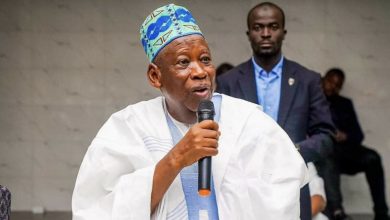
A former Minister of State for Finance, Bashir Yuguda, has criticised recent remarks attributed to former Vice-President Atiku Abubakar describing ex-President Goodluck Jonathan as “inexperienced,” saying the claim is inaccurate and misrepresents the former leader’s record.
In a detailed statement, Yuguda said while Atiku acknowledged Jonathan as “a decent man,” the characterisation of his administration as a product of inexperience “is not only inaccurate but difficult to reconcile with the facts.”


The former minister, who served under Jonathan in multiple capacities, said he initially considered remaining silent but chose to respond to prevent what he described as “a flawed narrative” from gaining ground.
“Having worked closely with President Jonathan across critical sectors of government, I find the label of ‘inexperience’ not only inaccurate but difficult to reconcile with the facts,” he said.
Yuguda argued that Jonathan’s political trajectory—rising from deputy governor to governor, vice-president, and eventually president—provided him with substantial governance experience before assuming office.
“Before he ever took the presidential oath, he had traversed the full spectrum of executive leadership… Those were not passive roles; they were defining experiences in governance at the highest levels,” he stated.
He described Jonathan’s leadership style as “deliberate rather than dramatic, thoughtful rather than impulsive,” noting that decision-making under his administration prioritised consultation and institutional independence.
Highlighting achievements during the period, Yuguda pointed to economic growth, improvements in agriculture, and infrastructure development, including the revival of rail transport.
“During that period, Nigeria’s economic profile expanded significantly… Poverty levels declined to some of the lowest recorded since the return to democratic rule in 1999,” he said.
On infrastructure, he recalled personally commissioning the rehabilitation of the Zaria–Gusau–Kaura Namoda rail line, which had suffered decades of neglect.
Yuguda also cited progress in education, noting the establishment of new federal universities and almajiri schools aimed at expanding access to learning.
In the international arena, he said Nigeria’s global standing improved during Jonathan’s tenure, including securing two terms on the United Nations Security Council and attracting recognition through the appointment of Nigerian technocrats to global positions.
Beyond policy achievements, Yuguda emphasised Jonathan’s temperament and commitment to democratic values, particularly his decision to concede defeat in the 2015 presidential election.
“At a critical juncture, he chose the path of honour, conceding power without hesitation and reinforcing the principle that the stability of the nation outweighs personal ambition,” he said.
He added that Jonathan’s calm disposition and respect for institutions set him apart, noting that “that restraint is not weakness; it is statesmanship.”
Yuguda maintained that while no leader is above criticism, reducing Jonathan’s presidency to inexperience ignores both his preparation and performance in office.
“Ultimately, Nigerians will judge based on evidence, not assertions… President Jonathan’s contributions are visible, documented, and enduring,” he said.
🚨BREAKING: Watch The Video Clip Here ➤