Iran has specified three conditions for the vessels’ passage: the vessels must be commercial and not military, unaffiliated with hostile countries, and follow Iran-determined routes with prior coordination with Iranian authorities, according to the source.
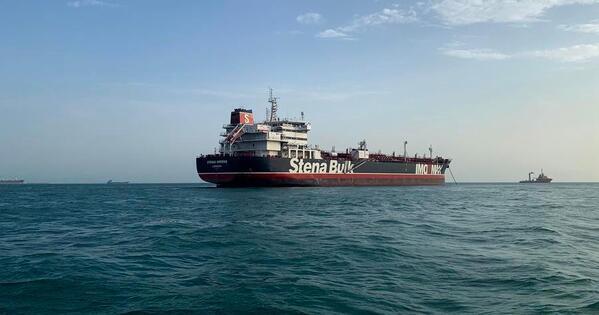
TEHRAN, April 18 (Xinhua) — Although the Strait of Hormuz, a vital waterway for the world’s oil supply, has been declared fully open for commercial vessels, its operational status remains contested.
Both Washington and Tehran confirmed on Friday that the strait had been completely open for all commercial vessels. However, U.S. President Donald Trump said on Truth Social that the U.S. naval blockade would “remain in full force.” In response, Iran warned of closing the waterway again if the U.S. blockade continues.
The conflicting statements have cast doubt on whether the strait is truly open. The following outlines the key developments against the backdrop of ongoing uncertainty.
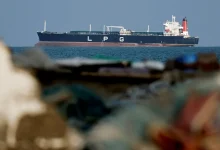
A WELCOME MOVE
On Friday, Iranian Foreign Minister Seyed Abbas Araghchi posted on X that the Strait of Hormuz is now declared completely open to commercial vessels during the remainder of the ceasefire.
“In line with the ceasefire in Lebanon, the passage for all commercial vessels through Strait of Hormuz is declared completely open for the remaining period of ceasefire,” Araghchi wrote.
However, citing an informed source close to the Supreme National Security Council, the semi-official Tasnim news agency reported that if the United States continues its naval blockade of the Strait of Hormuz, Iran will consider it a violation of the ceasefire between the two countries and will close the waterway.
The source said Iran had initially agreed to allow some vessels to pass through the strait under the Pakistan-mediated ceasefire plan, but suspended the arrangement because the ceasefire was not enforced in Lebanon and did not apply to the conflict between Hezbollah and Israel.
Iran has specified three conditions for the vessels’ passage: the vessels must be commercial and not military, unaffiliated with hostile countries, and follow Iran-determined routes with prior coordination with Iranian authorities, according to the source.
UN Secretary-General Antonio Guterres on Friday welcomed Iran’s announcement that the Strait of Hormuz is completely open for all commercial vessels during the Israel-Lebanon ceasefire, said his spokesman.
“The secretary-general considers this a step in the right direction,” said Stephane Dujarric, the spokesman, in a statement.
“The secretary-general remains fully supportive of the diplomatic efforts to find a peaceful path forward out of the current conflict in the Middle East,” said the statement.
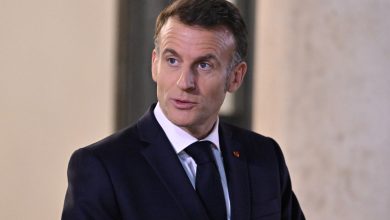
French President Emmanuel Macron also called Iran’s announcement of reopening the Strait of Hormuz a step in the right direction.
He further announced that a neutral, independent mission would be set up to ensure the openness of the Strait of Hormuz.
FRAGILE SITUATION
Although Iran has agreed to halt the disruption of shipping in the Strait of Hormuz, the situation remains fragile and complicated.
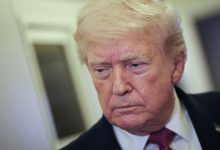
“Iran has agreed to never close the Strait of Hormuz again. It will no longer be used as a weapon against the World!” Trump wrote on Truth Social.
The U.S. president said that the naval blockade of Iranian ports and ships will remain in full force until a comprehensive deal to end the war is finalized.
“The naval blockade on Iran is helping to make a deal. I will not lift it until we make a deal,” he said.
Trump also said he would lift the blockade only after “our transaction with Iran is 100 percent complete,” adding that he was optimistic that negotiations on a broader deal with Tehran “should go very quickly.”
The reopening of the Strait of Hormuz triggered a massive sell-off in energy markets. West Texas Intermediate crude for May delivery plunged 10.84 U.S. dollars, or 11.45 percent, to settle at 83.85 dollars a barrel on the New York Mercantile Exchange.
“With the price of oil heading towards 80 (U.S. dollars) per barrel, this is a breakthrough,” said Brookings Institution Senior Fellow Michael O’Hanlon, adding that the political outlook, however, remains uncertain.
For politicians in Europe, some of Trump’s remarks are likely to fuel concerns.
“Now that the Hormuz Strait situation is over, I received a call from NATO asking if we would need some help. I TOLD THEM TO STAY AWAY, UNLESS THEY JUST WANT TO LOAD UP THEIR SHIPS WITH OIL. They were useless when needed, a paper tiger!” Trump said.
International Maritime Organization (IMO) Secretary-General Arsenio Dominguez said on Friday that the organization is verifying Iran’s announcement regarding the reopening of the Strait of Hormuz.
Dominguez told Xinhua that the verification is focused on “its compliance with freedom of navigation for all merchant vessels and secure passage using the IMO established traffic separation scheme.”
🚨BREAKING: Watch The Video Clip Here ➤