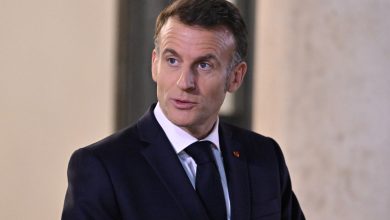
What the Lebanese President Joseph Aoun is attempting—at least on the level of political discourse—is nothing less than reclaiming the definition of the state from the grip of the “mini‑state.” His speech opens the door to a larger question: could what happened in Beirut be a precursor to what might one day unfold in Baghdad or Sana’a?
In Iraq, the state remains hijacked by parties and militias whose loyalty to Tehran often outweighs their loyalty to Iraq itself. Every attempt to restore national decision‑making crashes into a wall of entrenched interests, weapons, and ideology.
In Yemen, the country has become an Iranian dagger pointed at Saudi Arabia’s side, held firmly by the Houthis—who control territory, weapons, and a doctrinal narrative that recognizes neither statehood nor neighborliness.


From this angle, the Lebanese president’s speech feels like a small window opening in a very thick wall. If a fragile country like Lebanon—economically exhausted and sectarianly fractured—can dare to tell Hezbollah, “You are not the state,” then can we imagine a similar moment in Baghdad, where the state is richer but its sovereignty even more compromised?
This time, the president spoke with a confidence unfamiliar in a country where leaders traditionally weigh every word against the sensitivities of sects. Analysts quickly noticed that this confidence did not emerge from a vacuum, but from a deep awareness that Hezbollah is at one of its weakest points in years.
When the president says he is ready to go “anywhere” to reclaim Lebanon’s sovereign decision‑making, he is not offering a promise—he is announcing a rupture in Lebanon’s political language, a moment that suggests the era of fearing the “mini‑state” is no longer inevitable.
This is not the first time President Aoun has hinted at the limits of Iranian influence in Lebanon. He previously stated, with unmistakable clarity, that Lebanon cannot replicate Iraq’s Popular Mobilization Forces—an assertion that was not merely descriptive but a direct rejection of any militia model that devours the state from within. And today, when we recall his message to Ali Larijani during the latter’s recent visit to Beirut—“You must lift your hands off Lebanon”—we understand that this speech is not a momentary reaction but the continuation of a position years in the making.
READ: Trump says Israel, Lebanon agree to 10-day ceasefire starting Thursday evening
This raises a deeper question: are we witnessing a president seizing a moment of structural weakness within Hezbollah, or a bold attempt to redefine the state at a time when regional rules are shifting? Can language precede action—can it open the path to sovereignty before the tools of sovereignty are fully available?
What the president is saying, implicitly, is that Lebanon can no longer endure being a battleground, and that the state—even in its weakness—can raise its head when it senses that the balance of power is no longer absolute.
But the larger question remains: is confidence enough to open the door, or does the road to sovereignty require more than a speech—and more than a momentary weakness in an opponent accustomed to filling every vacuum the state leaves behind?
These questions are what make the president’s speech a political event rather than a rhetorical one. They reveal that Lebanon, however slowly, has begun to speak in the voice of the state rather than the voice of fear.
The issue here is not technical capacity but moral clarity—the courage to call a hostage situation by its name. Lebanon has done so linguistically. Iraq and Yemen remain trapped in a gray zone where everyone knows the truth, but few dare to articulate it.
In parallel with the Lebanese president’s speech, the U.S. Ambassador to Ankara and Special Envoy to Syria and Lebanon, Thomas Barak, declared that “a new global order is emerging—one in which regions resolve their own issues… and we will intervene when necessary.”
At first glance, this sounds like a call for political maturity: each state must take responsibility for its own affairs, and each region must manage its crises without relying on the security umbrella that has shaped the world since 1945.
But beneath this language lies a harsher question: are we witnessing genuine empowerment of states, or a managed withdrawal of the old guardian—leaving the vacuum to be filled by forces of de facto power?
When Barak describes the situation in Syria as “a successful experiment,” the phrase alone is enough to chill the blood.
From this perspective, the Lebanese president’s speech and Barak’s statement can be read together:
The first says, “I want to reclaim the state from the militia.”
The second says, “Every state must handle its own affairs—we will intervene only when we deem it necessary.”
But what happens when the state is weak, the militia strong, and the international guardian chooses to watch from a distance?
One can see in the Lebanese president’s words a seed of hope: that the state, even belatedly, can raise its head and say, “I am here.”
But one can also read them as a cry in a regional void being reorganized around the principle: “Handle your own chaos—we will step in only when the blood spills beyond the screen.”
READ: Netanyahu says Israel’s ‘mission’ against Hezbollah not over despite ceasefire with Lebanon
Iraq is a stark example: a state seeking to reclaim its sovereignty, yet surrounded by a web of interests, weapons, and cross‑border ideologies.
Yemen is an even harsher example: a country turned into a testing ground for Iranian missiles and Houthi messages, while neighbors are asked to “adapt” to a reality imposed by force.
So can we imagine a day when a Yemeni president speaks of Yemen as a state, not as a missile platform?
In this context, even optimism becomes suspect.
Is it reasonable to believe that Lebanon has begun a journey of self‑recovery, that Iraq might follow, and that Yemen might one day escape the Houthi grip?
Or are we merely witnessing a shift in rhetoric while the underlying structures of power remain unchanged?
Perhaps the truth lies somewhere in between:
The state cannot do it alone, and the international guardian is no longer truly interested in saving it.
But the moment a Lebanese president stands and says—implicitly—that Lebanon is not a branch of the Iranian Revolutionary Guard, that moment deserves to be recorded.
Not because it changes the equation overnight, but because it signals that the hostage has begun to speak.
The question remains open:
Are we witnessing the beginning of states reclaiming themselves from militias, or the beginning of a new era in which weak states are left to negotiate with their captors while the world watches—and calls the chaos a “successful experiment”?
OPINION: The illusion of a substitute: Turkey is not the region’s replacement for Iran
The views expressed in this article belong to the author and do not necessarily reflect the editorial policy of Middle East Monitor.
🚨BREAKING: Watch The Video Clip Here ➤