Hidden Crisis: Thousands of Nigerian Children Living with Undiagnosed HIV as Treatment Gaps Persist

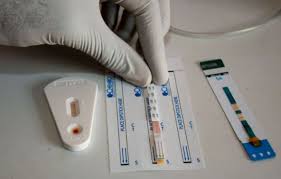
(HIV testing kit. Photo by punch Newspaper)
Despite continued efforts to combat the disease, health experts and development partners are concerned that thousands of children in Nigeria remain HIV-undiagnosed and untreated.
Stakeholders addressed on Wednesday at the 2026 Paediatric Breakthrough Partnership Linking and Learning Meeting in Abuja.
The Society for Family Health convened the meeting in partnership with the Elizabeth Glaser Pediatric AIDS Foundation, with the goal of improving outcomes for HIV-positive children.


Yusuf Dayyabu, Chief Executive Officer of the Society for Family Health, stated that many children were still being missed.
“Too many children continue to be missed. Too many infants do not receive an early diagnosis. “Too many opportunities to prevent transmission are missed,” he stated.
Data presented at the meeting showed that approximately 285,000 children, adolescents, and pregnant and breastfeeding women had received HIV services since 2023, with 2,879 persons identified and registered in care.
However, national data show that Nigeria continues to have one of the highest rates of paediatric HIV in the world, with around 260,000 children aged 0 to 14 infected.
Only about 45 percent of HIV-positive children are now receiving antiretroviral medication, although adults have a greater coverage rate.
The National Coordinator of the National AIDS, Viral Hepatitis and STIs Control Programme, Dr Adebobola Bashorun, described paediatric HIV as both a public health and moral concern.
Represented by Iyaniwura Ozimede, Bashorun said, “Some of the most vulnerable are those who had no choice in their exposure… our children. This is why the work we are reviewing today is not just programmatic, it is deeply human.”
She noted improvements in prevention of mother-to-child transmission but warned that major gaps remain.
She said, “These are not small victories; they represent lives protected and futures preserved.” Despite this, she warned that major gaps remain across the care continuum.
She added, “Too many HIV-positive pregnant women are still not being reached, especially in hard-to-reach communities. Too many HIV-exposed infants are lost to follow-up… and too many children remain undiagnosed in the community.”
Dr Aisha Dadi, Country Lead of the Paediatric Breakthrough Partnership, also spoke, stating that the project intended to address diagnostic and treatment gaps through coordinated efforts.
She explained that children are more difficult to recognize because they rely only on adults, and that many slide through the cracks of the healthcare system.
Dadi reported that focused initiatives, such as involvement with traditional birth attendants and community actors, have increased treatment coverage to 60-65 percent in some locations.
Stakeholders have warned that relying too much on donor money could jeopardize long-term viability if not accompanied by increasing domestic investment.
“The future of our HIV response must increasingly rely on domestic resources and government ownership. “This is more than just a financial necessity; it is a strategic imperative,” Dayyabu stated.
He asked stakeholders to implement effective solutions for improving early diagnosis and ensuring that no child falls behind.
Nigeria continues to record a high number of new infections among children each year, owing primarily to inadequacies in maternal-to-child transmission prevention efforts.
Globally, Nigeria has one of the highest rates of new pediatric HIV infections, emphasizing the importance of tailored therapy.
🚨BREAKING: Watch The Video Clip Here ➤