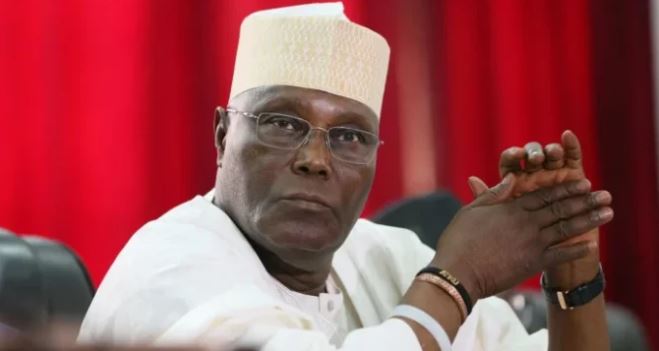
Former Vice President, Atiku Abubakar, on Sunday criticised the economic policies of President Bola Tinubu, saying recent findings by the International Monetary Fund merely confirmed the biting hardship being experienced by Nigerians.
Reacting to the Fund’s latest assessment of Nigeria’s economy, Atiku described the current situation as organised hardship “dressed up as reform,” blaming what he called policy inconsistencies, weak leadership, and a disconnect from the realities facing ordinary citizens.
In a statement issued by his Senior Special Assistant on Public Communication, Phrank Shaibu, the former presidential candidate said the IMF report only echoed what Nigerians have long been enduring.
He said, “At a time when Nigerians were promised renewed hope, what they have received is renewed hardship—raw, relentless, and unforgiving. The IMF is not breaking news; it is confirming a national emergency that this administration refuses to acknowledge.”
Atiku argued that while government officials highlight macroeconomic indicators, citizens are grappling with shrinking purchasing power and rising living costs.
He noted that while government officials speak in polished economic jargon, Nigerians are living a different reality—one where wages have become worthless paper, markets have turned into museums of unaffordable goods, and survival has become a daily gamble.
The former vice president lamented that despite rising global oil prices, many Nigerians are slipping deeper into poverty, weighed down by soaring food prices, high transportation costs, exchange rate instability and a rapidly depreciating currency.
“At the grassroots, the story is even more brutal,” he continued. “Parents are pulling children out of school because education is now a luxury. Farmers are abandoning their lands out of fear of violence.
“Young people roam the streets, degrees in hand, but hope in short supply. Small businesses are folding up like a pack of cards under the weight of electricity tariffs, taxes, and a suffocating business climate.”
Atiku warned that the country is facing more than a routine economic downturn, describing it instead as a crisis eroding citizens’ dignity.
“This administration has turned sacrifice into a one-way street where the people bleed and the government lectures,” Atiku said. “You cannot ask a hungry people to be patient while policies choke the life out of them. That is not reform—that is punishment.”
He also raised concerns over Nigeria’s rising debt profile, warning of long-term consequences.
“We are borrowing like there is no tomorrow, yet there is nothing to show today. No jobs, no relief, no visible improvement in the lives of the people—only mounting debt and mounting pain.
“Governance is not a classroom exercise. It is about whether a pot boils in the kitchen, whether transport fare can be afforded, whether a small trader can restock, and whether a nation’s youth can dream again. Today, those simple things have become distant luxuries,” he stated.
The criticism follows a recent report by the International Monetary Fund, which downgraded Nigeria’s 2026 growth forecast to 4.1 per cent in its April 2026 Global Financial Stability Report.
The Chief of the IMF Research Department’s World Economic Studies Division, Denz Igan, said the downgrade reflects competing pressures on the economy.
“War-related higher fuel and fertiliser prices and higher shipping costs are going to weigh on non-oil activity in Nigeria.
“There’s some offset coming from higher oil prices, but the net balance is weaker growth in 2026, with some recovery built in for 2027,” Igan said.
The IMF also projected rising inflation across Sub-Saharan Africa and emphasised the need for tight monetary policies in Nigeria to stabilise prices, even as declining bilateral aid continues to strain fiscal buffers across the region.
🚨BREAKING: Watch The Video Clip Here ➤