Jobs, Skills, Innovation: How NASENI’s Projects Are Creating Opportunities For Nigerian Youths

According to the International Labour Organization (ILO), about 183 million people were unemployed worldwide in 2024, representing roughly 5 per cent of the global labour force, with projections suggesting the rate will hover around that level through 2026. However, the burden is disproportionately borne by young people aged 15–24, where an estimated 64–65 million youths are unemployed globally, translating to about 13 per cent, nearly three times the adult rate.
Across Africa, data compiled from international labour databases indicate that while overall unemployment in many African countries ranges between 2 and 10 per cent, youth joblessness remains significantly elevated. On average, about 17.5 per cent of young people across the continent; representing tens of millions within Africa’s over 200 million youth labour force are unemployed, according to aggregated estimates from global economic datasets.


In Nigeria, recent labour force data published by the National Bureau of Statistics (NBS) indicate a sharp drop in headline unemployment following a rebasing of methodology. The country recorded an unemployment rate of about 3 to 5 per cent in 2024, equivalent to roughly 5 to 6 million unemployed persons out of a labour force exceeding 100 million. Among youths, the unemployment rate is estimated at about 5 to 6.5 per cent, translating to approximately 2 to 3 million young Nigerians without jobs.
The reduction of unemployment in Nigeria is not far fetch from the activities of one of the organizations that is working hard toward youth employment; which is the National Agency for Science and Engineering Infrastructure (NASENI).
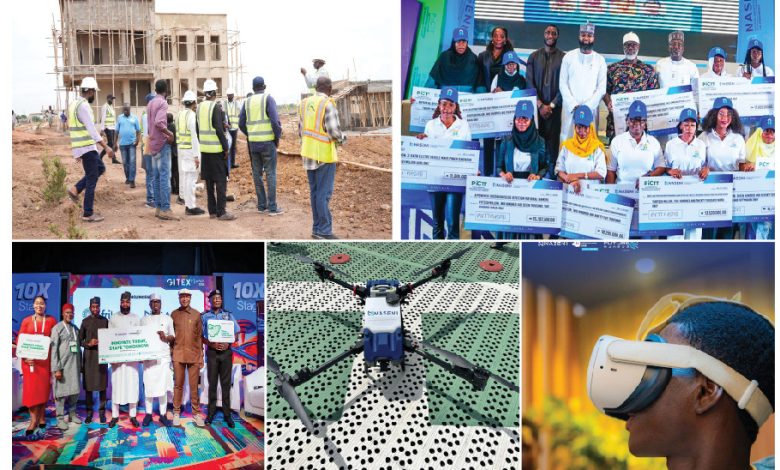
Through targeted interventions anchored on innovation, skills development and enterprise support are beginning to shift the narrative. Through a combination of technology-driven projects, hands-on training programmes, and entrepreneurship support schemes, NASENI is steadily building pathways that enable Nigerian youths to transition from job seekers into job creators.
Nigeria’s youth unemployment crisis is not merely about the absence of jobs; it is deeply tied to structural issues such as skills mismatch, limited industrial capacity, and weak linkages between education and the labour market. Studies and policy reviews have consistently highlighted how many youth-focused programmes struggle with coordination, funding, and long-term sustainability, limiting their impact on employment outcomes.
Against this backdrop, interventions that integrate skills acquisition with real economic opportunities have become increasingly critical.
NASENI’s approach reflects this understanding. Rather than focusing solely on short-term employment schemes, the Agency has positioned itself as a driver of industrialisation, innovation, and technical capacity development. Established to promote indigenous technology and engineering infrastructure, NASENI’s mandate places it at the heart of Nigeria’s push for self-reliance and economic diversification.
Across the country, the Agency’s projects are designed to respond to both the immediate and long-term dimensions of youth unemployment. By investing in local manufacturing, renewable energy, agricultural mechanisation, and digital technologies, NASENI is creating new layers of economic activity that generate jobs directly and indirectly.
For instance, its expansion of solar manufacturing capacity at NASENI Solar Energy Limited (NSEL) and construction of NASENI Renewable Energy Industrial Park (NREIP) at Karshi, FCT and Gora both in Nasarawa State respectively, and other industrial initiatives like Coal fertilizer and Liquid fertilizer plants projects, signal a deliberate effort to localise production and reduce dependence on imports, while simultaneously opening up employment opportunities for engineers, technicians, and other support workers.
Technology-driven job creation remains central to NASENI’s strategy. In an era defined by rapid technological change, the Agency recognises that future employment will increasingly be shaped by innovation. Programmes aligned with emerging technologies such as artificial intelligence (AI), robotics, and the Internet of Things (IoT) are equipping young Nigerians with skills relevant to the Fourth Industrial Revolution (4IR).
With the construction of Sustainable and Emerging Technologies Institute (SETI), at the Bayero University Kano, new campus, this forward-looking approach ensures that beneficiaries are not only employable today but are also prepared for the evolving demands of tomorrow’s workforce.
Beyond industrial projects, NASENI has placed significant emphasis on skills acquisition and technical training. Its programmes are deliberately structured to prioritise hands-on learning, bridging the gap between theoretical education and practical application. Across various states, the Agency’s skill acquisition initiatives have trained youths in fields such as electrical installation, fabrication, and engineering processes, enabling participants to develop competencies that are directly applicable in the labour market.
With establishment of NASDNI Skill Acquisition Centres, in strategic locations across six geopolitical zones of the nation, this practical orientation is particularly important in a country where employers often cite lack of experience and technical proficiency as major barriers to hiring young graduates. By embedding real-world training into its programmes, NASENI is addressing this gap and enhancing the employability of participants. At the same time, the focus on technical and vocational skills aligns with broader efforts to reposition such fields as viable and respectable career paths.
Meanwhile, the Agency’s interventions go beyond training alone. Recognising that employment cannot be sustained without enterprise development, NASENI has built a strong ecosystem to support entrepreneurship and innovation. Through initiatives such as the InnovateNaija Challenge, young Nigerians are provided with platforms to showcase their ideas, access funding, and receive mentorship needed to scale their innovations.
Similarly, programmes like the FutureMakers initiative are nurturing innovation from an early stage, fostering creativity and problem-solving skills among young Nigerians. By targeting younger age groups, NASENI is laying the foundation for a future workforce that is not only skilled but also innovation driven.
Another critical component of the Agency’s strategy is the NASENI Research Commercialisation Grant Programme (NRCGP), which addresses a longstanding gap in Nigeria’s innovation ecosystem—the disconnect between research and industry. By supporting researchers to transform their findings into marketable products, the programme ensures that ideas do not remain confined to academic institutions but are translated into real economic value.
The Agency’s entrepreneurship support also extends to start-ups and small and medium enterprises (SMEs), which are widely recognised as engines of job creation. Through access to funding, technical resources, and mentorship, NASENI is enabling young entrepreneurs to overcome some of the most significant barriers to business growth through its Delta-2 Programme in partnership with the Czech Republic’s Technical Agency (CR-TA). This support is particularly crucial in a context where access to capital remains a major constraint for many aspiring business owners.
In addition, targeted initiatives such as Developing Engineering Leaders Through HER (DELT-Her) are promoting inclusivity by empowering women in science, technology, and engineering fields. By addressing gender gaps in these sectors, NASENI is ensuring that its impact on job creation and innovation is broad-based and inclusive.
Beyond large-scale industrial and training interventions, NASENI is also deploying targeted, community-level programmes that directly impact livelihoods while creating economic opportunities. One such initiative is the Sustainable Empowerment Programme scheduled to hold in Kano today, April 28, 2026, which is aimed at expanding access to clean and reliable energy solutions, particularly for households in rural and semi-urban communities.
🚨BREAKING: Watch The Video Clip Here ➤